




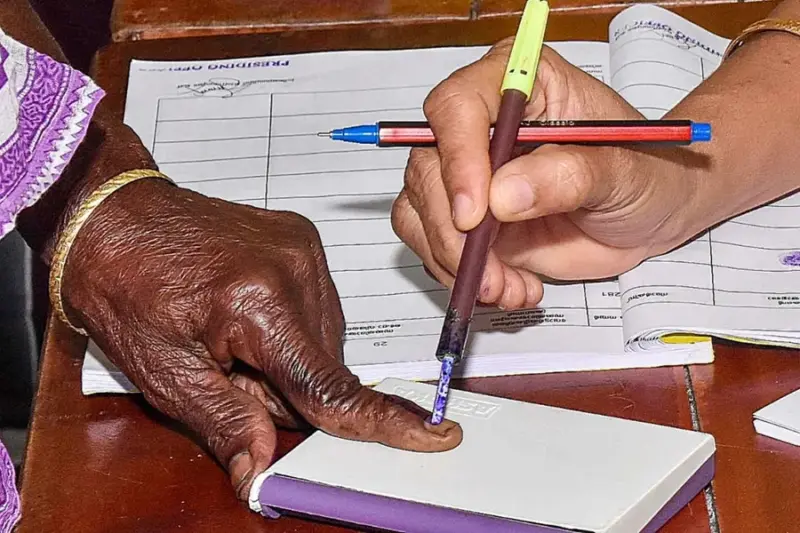

The Election Commission of India (EC) announced the schedule for the 2026 Kerala Assembly elections on Sunday. Polling in Kerala is set to take place on April 9. Counting will take place on May 4.
Elections will also be held in West Bengal, Tamil Nadu, Assam, and the Union Territory of Puducherry, covering over 800 Assembly seats in total. Chief Election Commissioner Gyanesh Kumar, along with Election Commissioners Sukhbir Singh Sandhu and Vivek Joshi, shared details on polling, counting, and other key election-related information at a press conference in Vigyan Bhavan, New Delhi.
Polling phases and schedule
Kerala and Puducherry will vote in a single phase, while West Bengal, Tamil Nadu, and Assam are expected to have multi-phase polling. The EC's announcement also includes counting dates and the complete election schedule. These elections are particularly notable as they are the first major polls after the Special Intensive Revision (SIR) of electoral rolls, a process aimed at verifying voter eligibility across multiple states.
Recap of Kerala Assembly elections 2021
The last Kerala Assembly elections, held in April 2021, saw the Left Democratic Front (LDF) achieve a historic victory, securing 99 seats and marking the first consecutive term for a ruling alliance since 1977. The United Democratic Front (UDF) managed 41 seats, six fewer than in the previous assembly, while the National Democratic Alliance (NDA) failed to retain its single seat. Chief Minister Pinarayi Vijayan became the first Kerala CM to be re-elected after completing a full five-year term. This result highlighted Kerala's unique political landscape, where electoral outcomes are often closely contested.
Kerala Legislative Assembly structure
The Kerala Niyamasabha is a unicameral assembly with 140 elected members and one nominated member representing the Anglo-Indian community. Of these, 14 constituencies are reserved for Scheduled Castes (SC) and 2 for Scheduled Tribes (ST). Assembly members serve five-year terms, unless the assembly is dissolved earlier. Elections follow the first-past-the-post system, and voters also have the option to select NOTA (None of the Above).
Key political alliances
Three main alliances dominate Kerala politics:
- Left Democratic Front (LDF): Led by CPI(M), it also includes CPI and smaller parties. LDF is currently in power.
- United Democratic Front (UDF): Led by Congress, this centrist-centre-left alliance remains the principal opposition.
- National Democratic Alliance (NDA): Led by BJP, includes BDJS and other regional groups, but has struggled to gain significant traction in the state.
Political developments before 2021 polls
Ahead of the 2021 elections, Kerala Congress (M) joined the LDF after being suspended from the UDF, while four other smaller parties strengthened the ruling coalition. The 2020 local body elections showed strong LDF performance, especially in 11 of 14 district panchayats. Party switches, mergers, and strategic alliances reshaped political dynamics, setting the stage for a highly competitive assembly election.
Looking ahead to 2026
With Kerala polling set on April 9, political parties are preparing for a high-stakes contest. Given Kerala's history of narrow victory margins and strong regional alliances, the 2026 elections are expected to be closely watched. Outcomes in Kerala, along with West Bengal, Tamil Nadu, Assam, and Puducherry, will be critical indicators of political trends and could have significant implications at both state and national levels.