




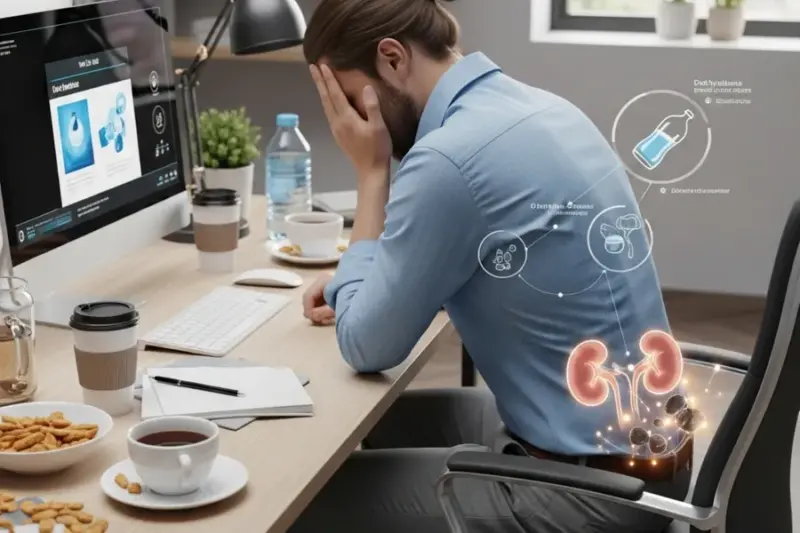

Kidney stones were once largely associated with middle age. Now, an increasing number of young professionals are being diagnosed, especially those tied to desk-based jobs.
Low water intake, frequent salty snacks, and long hours of sitting have slowly set the stage for stone formation in everyday office life.
Here's what's driving this trend and what young office-goers need to know.
1. Dehydration Is the Biggest Culprit
Many office workers go through the day with minimal water intake. Meetings run long, breaks get skipped, and caffeine often replaces plain water.
When the body doesn't get enough fluids, urine becomes concentrated. This allows minerals like calcium, oxalate, and uric acid to crystallise more easily in the kidneys. Over time, these crystals can grow into stones.
Air-conditioned office environments add to the problem by increasing fluid loss without people realising it. Thirst is often ignored until the end of the day, by which time dehydration has already set in.
2. High-Salt, Convenience Snacks Add Up
Office snacking habits have changed dramatically. Packaged chips, instant noodles, processed sandwiches, and salty biscuits are easy to grab between tasks-but they come at a cost.
High sodium intake increases calcium excretion in urine. The more salt consumed, the more calcium the kidneys have to filter out, raising the risk of calcium-based stones-the most common type.
Many young adults don't associate these "small snacks" with health risks, but daily exposure makes a significant difference over time.
3. Long Sitting Hours Affect Kidney Health
Spending much of the day sitting alters how the body functions. Limited movement slows circulation and can affect the way minerals and fluids are processed. Regular activity helps maintain calcium balance and naturally encourages drinking water. Long hours at a desk also tend to mean fewer water breaks and delaying urination, which can quietly place extra strain on the kidneys over time.
In some cases, people even delay urination because of work pressure, which can further concentrate urine.
4. Caffeine Without Balance Can Backfire
Coffee and energy drinks are office staples, but leaning on them without enough water can worsen dehydration. Some caffeinated drinks increase urine output without replacing fluids, and when they take the place of water, the kidneys end up under added strain.
5. Early Symptoms Are Often Missed
In younger patients, kidney stone symptoms are frequently dismissed as back pain, muscle strain, or gastric discomfort. Mild flank pain, burning during urination, nausea, or cloudy urine may be ignored until pain becomes severe.
By the time medical care is sought, stones are often large enough to require intervention rather than simple hydration-based treatment.
6. Stress and Irregular Routines Play a Role
Persistent work stress can upset the hormones that manage fluid balance and metabolism. Along with missed meals, late nights, and irregular sleep, this creates an internal environment where kidney stones are more likely to develop.
Stress also reduces awareness of basic health cues like thirst and fatigue.
7. Prevention Is Simple-but Needs Consistency
The encouraging part is that most kidney stones in young office-goers are preventable.
Small changes make a big difference:
- Drinking water regularly through the day, not just when thirsty
- Limiting salty and heavily processed snacks
- Taking short movement breaks every hour
- Balancing caffeine with adequate water intake
- Not delaying urination during work hours
- Clear or pale-yellow urine is a simple sign of good hydration.
Kidney stones in young professionals are no longer rare. They reflect how modern work habits affect internal health in quiet but powerful ways. Paying attention to hydration, diet, and daily movement can protect the kidneys long before pain becomes a wake-up call.
For office-goers in their 20s and 30s, kidney health deserves a place on the priority list-right alongside deadlines and meetings.
- Dr Khizar Raoof Mohammed , Head Minimal Invasive Urology, Arete Hospitals