
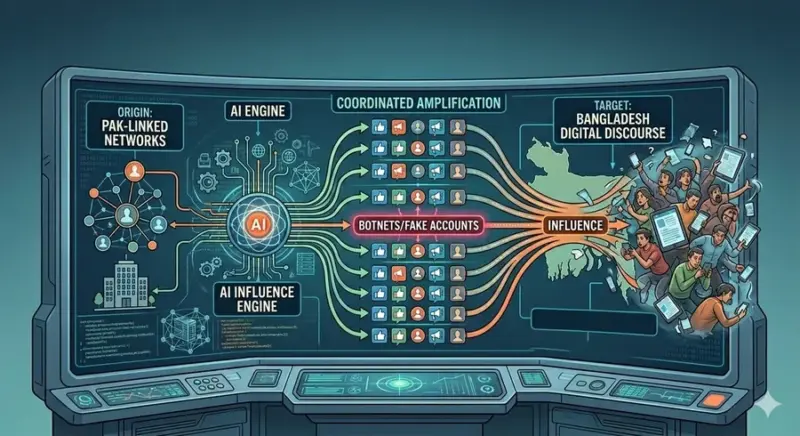

New Delhi: Networks associated with Pakistan are actively directing disinformation campaigns at Bangladesh, using coordinated digital strategies that involve social media platforms, artificial intelligence tools and local amplification channels, a recent investigation has found.
Narratives shaping regional perceptions
The report outlines how these actors are systematically promoting narratives that depict India as a destabilising presence in the region, while presenting Pakistan as a more favourable strategic partner for Bangladesh.
Dissemination through social media networks
According to the findings, such campaigns often originate on the social media platform X before spreading into Bangladesh's digital ecosystem. Content is then circulated widely through Facebook groups and pages, where local accounts further amplify the messaging. This process gives the material an appearance of organic engagement and helps it gain traction in wider public discourse.
Recurring messaging patterns identified
The investigation highlights consistent themes within these campaigns, including fear-driven narratives, identity-based messaging and attempts to influence public opinion on regional security issues.
False claims around intelligence operations
One notable example cited in the report involves the circulation of misleading claims about alleged operations by India's external intelligence agency, Research and Analysis Wing. These claims were widely shared online and, in certain cases, were picked up by segments of Bangladeshi media, further extending their reach.
Defence cooperation narratives
Another strand of messaging focused on defence ties. Accounts linked to Pakistan promoted assertions that Bangladesh was moving towards acquiring JF-17 Thunder fighter jets.
The report notes that there was no official confirmation from Bangladeshi authorities regarding such plans. However, the claims were amplified in a way that suggested an imminent policy shift.
From speculation to perceived fact
The investigation finds that these campaigns frequently begin with limited or speculative information. Through coordinated amplification, such content is gradually presented as established fact. The report suggests that this method is intended to create a sense of consensus and shape public debate on strategic and policy matters.
Use of Artificial Intelligence tools
A key concern highlighted is the growing use of artificial intelligence in generating content. This includes fabricated videos, synthetic voiceovers and altered visuals designed to increase the credibility and spread of misleading information across digital platforms.
Ideological messaging and strategic framing
The report also identifies an ideological dimension within the campaigns. Messaging often includes references to broader notions of "Muslim unity" and promotes closer defence cooperation with Pakistan, frequently positioned in contrast to India's role in the region.
IANS inputs