
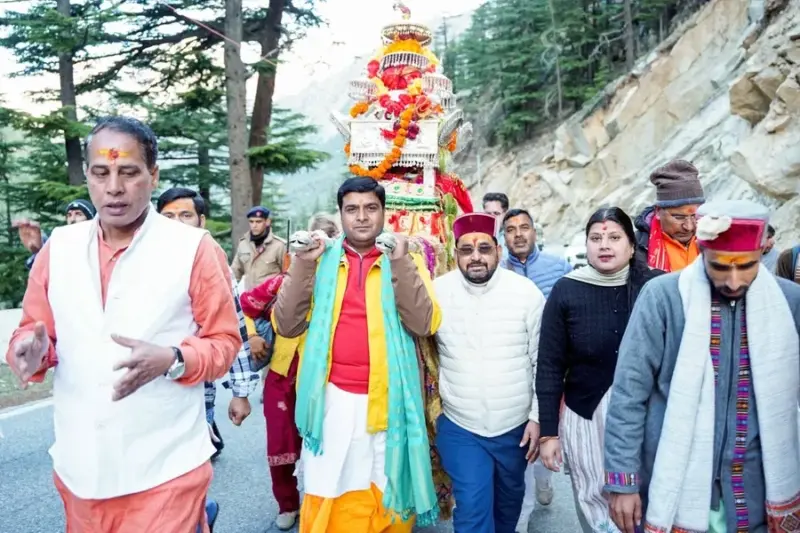

The implementation of the entry protocol wherein every pilgrim must now consume a small measure of panchgavya -- a mixture of cow milk, curd, ghee, urine, and dung -- mixed with Ganga Jal before being allowed onto the revered the Gangotri Temple premises has triggered nationwide debate.
Temple authorities say the measure is aimed at "ensuring spiritual purity" and "weeding out non-believers," while critics view it as a discriminatory, faith-based entry check in a constitutional democracy.
To note, the annual Char Dham Yatra officially began on April 19, coinciding with the auspicious occasion of Akshaya Tritiya, as the portals of the Gangotri and Yamunotri shrines were thrown open to the public following a six-month winter hiatus.
The ceremonial reopening was marked by the traditional chanting of Vedic hymns and religious slogans from hundreds of gathered devotees. The doors to the Gangotri temple were opened at 12:15 PM, followed shortly by the Yamunotri temple at 12:35 PM.
Expectations for this year's Yatra are high, with approximately 19 lakh devotees already registered for the pilgrimage. But more than the pilgrimage, the implementation of panchgavya consumption has made headlines.
What is panchgavya?
Derived from Sanskrit panch (five) and gavya (from the cow), panchgavya refers to the five primary products of the cow: milk, curd (yogurt), ghee (clarified butter), cow urine, and cow dung.
In many Hindu traditions, these are regarded as ritually purifying and spiritually efficacious, and are used in temple rituals, homas, and certain Ayurvedic practices sometimes called "cow-pathy". Some alternative-medicine advocates claim therapeutic benefits, but mainstream medical bodies generally treat such assertions with caution.
Why the new rule at Gangotri?
The Shri Panch Gangotri Temple Committee, which manages the Gangotri Dham in Uttarkashi district, announced the mandatory-panchgavya rule in the run-up to the Char Dham Yatra's official opening on April 19.
According to committee officials, the move is meant to "confirm adherence to Sanatan Dharma" and to ensure that only those with "unshaken spirituality and deep faith" enter the sacred shrine.
Temple secretary Suresh Semwal told one media outlet that consuming panchgavya with Ganga Jal is considered an "ultimate form of purification" in Hindu tradition, and that anyone respectful of its tenets should have "no issue" with the ritual.
Personnel have now been positioned at the main gates to administer the concoction, and entry is reportedly denied to those who refuse to consume it.
"Weed out non-believers" language fuels backlash
Several reports paraphrase committee members as saying the rule is intended to "weed out non-believers" or "non-Sanatani" visitors from the temple environs. International media, including outlets such as The Independent, have highlighted that the rule effectively screens pilgrims based on their willingness to ingest a highly symbol-laden substance, thereby creating a soft religious bar to entry.
Secular and minority-rights groups have criticised the move as exclusionary, arguing that mandating a specifically Sanatani purificatory rite for entry into a major pilgrimage site runs counter to the constitutional guarantee of freedom of religion and equal access to public-religious spaces.
Some commentators have also flagged the health and safety concerns of large-scale consumption of cow urine and dung, even in small quantities, particularly among children, elderly visitors, or those with medical conditions.
Temple defence and regional context
Defenders of the decision, including the committee chairman Dharmendra Semwal, frame the rule as a religious-disciplinary measure, not a sectarian security one. They argue that panchgavya has long been consumed by priests and certain devotees entering the sanctum sanctorum, and extending it to all pilgrims is merely "deepening faith" and "spiritual discipline."
The move also reflects a broader trend of tightening ritual gatekeeping at several Hindu shrines across India, where committees have sought to reinforce "sanctity" through stricter dress codes, pre-screening, and faith-linked rituals. However, in the case of Gangotri -- a high-altitude, nationally-celebrated pilgrimage node on the Char Dham circuit -- such a symbolic litmus test has drawn sharper scrutiny, given the shrine's pan-Indian and increasingly international visitor base.
Legal and political implications
No formal legal challenge has yet been reported in the early days of the rule, but constitutional experts contacted by national outlets have questioned whether a privately-managed temple committee can legally deny entry on the basis of a specifically Sanatani purification rite, especially when the site is integral to a government-facilitated pilgrimage infrastructure.
Some legal commentators stress that while religious bodies can prescribe internal rituals, using a mandatory ingestion of a specific substance as a condition for entering premises open to millions of pilgrims may invite judicial review on grounds of reasonable restrictions and proportionality.
As the Char Dham Yatra ramps up, the Gangotri panchgavya rule has become a flashpoint symbolising the collision between religious authority, ritual symbolism, and constitutional pluralism. Whether the practice is scaled back, modified, or enshrined by larger debate will likely test how India's courts and political class balance sanatani tradition with the ethos of inclusive pilgrimage.
Is the panchgavya mandate legally enforceable?
The panchgavya "mandate" at Gangotri is not clearly settled in law and sits in a grey zone: temple authorities can prescribe internal rituals, but using mandatory consumption of a specific substance as a gatekeeping device for entry into a major pilgrimage shrine is likely to face constitutional and administrative scrutiny.
What is and is not legally settled
Freedom of religion and temple autonomy: Under Article 25 of the Constitution, religious denominations have the right to manage their own religious affairs, and many Hindu temples have historically imposed dress codes, purity rules, and ritual pre-conditions. However, courts have repeatedly held that this authority cannot override constitutional principles such as equality (Article 14) or reasonable restrictions in the public-order and health domain.
Panchgavya as a practice vs. as a condition of entry: The use of panchgavya itself is not illegal; traditional-medicine and Ayurvedic-aligned practices involving panchgavya have been recognised as legally valid in earlier rulings, though they are not equivalent to mainstream allopathic medicine. The legal friction arises when the state-linked Char Dham infrastructure effectively allows a temple committee to impose mandatory ingestion as a prerequisite for access, which can be challenged as excessive or discriminatory.
Key legal vulnerabilities
Discrimination and equality angle: If the rule is interpreted as effectively screening out "non-Sanatanis" by forcing them to consume a substance central to one religious tradition, it can be challenged as a de facto religious test for entry, which may violate the spirit of equality and non-discrimination. This risk is heightened because the Gangotri-Char Dham route is heavily supported by state-run roads, security, and disaster-management systems, making the "purely private-temple" defence weaker.
Public-health and coercion concerns: Requiring mass, compulsory ingestion of cow urine and dung -- even in small quantities -- opens questions about public-health regulation, consent, and liability in case of adverse reactions. Courts or regulators could argue that such a condition is unreasonable or disproportionate compared to the stated goal of "spiritual purity.
Also Read: 'The more educated, the more jobless?' Report reveals India's graduate unemployment surge