




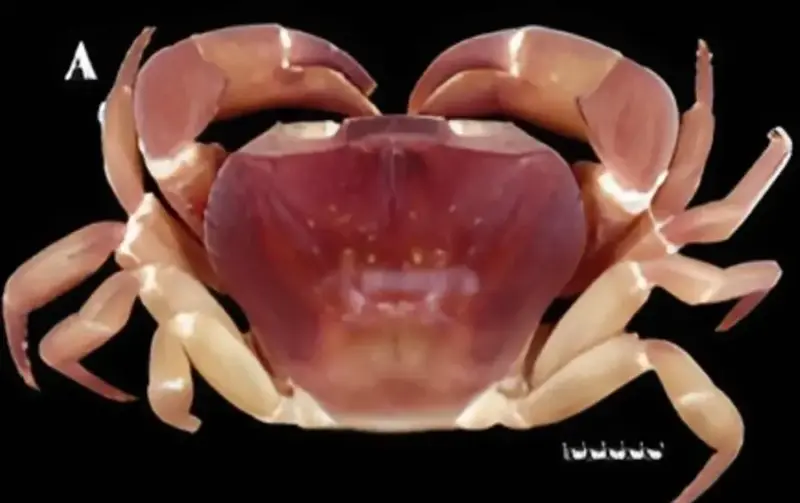

Scientists studying freshwater crabs in Kerala's Silent Valley have discovered a rare crab exhibiting both male and female characteristics - a biological condition known as gynandromorphy.
The unusual finding highlights the unique biodiversity of the Western Ghats and has sparked interest among researchers studying reproductive biology in aquatic species.
In a rare scientific discovery from the Western Ghats, researchers have identified a tiny crab in Kerala's Silent Valley that displays both male and female biological traits on the same body - a condition known as gynandromorphy.
The discovery was made in tree hollows within the forested landscape of Silent Valley by scientists Dr. K.S. Anoop Das and K.T. Fahis from the Centre for Conservation Ecology at Mampad MES College. They worked alongside researchers Dr. Sameer and Poornima from the Zoological Survey of India. Their findings have been published in the international scientific journal Crustaceana.
What makes the crab unusual
Crabs normally show clear differences between males and females, a phenomenon known as sexual dimorphism. Male crabs possess specialised reproductive organs called gonopods, while females typically have a broader abdomen that allows them to carry eggs.
However, the specimen discovered in Silent Valley displayed characteristics of both sexes simultaneously. Parts of its body had male reproductive structures, while other parts showed features typically found in females. This rare biological condition - gynandromorphy - occurs when an organism develops both male and female characteristics due to unusual cell division patterns during early development.
The crab belongs to the species Velacarlias, a group known for its limited distribution. These crabs are found only in specific regions of the Western Ghats, particularly in parts of Kerala and Tamil Nadu. Because of their restricted habitat, discoveries involving this species are considered important for biodiversity research.
Why the discovery matters
Scientists believe the unusual development may be linked to differences in cell formation during early growth stages. Such conditions are rarely documented in crustaceans, making the finding scientifically valuable.
Researchers also note that environmental factors - including temperature fluctuations and climate change - could potentially influence reproductive systems in some aquatic organisms. However, they stress that further studies are needed to understand the exact causes behind this rare phenomenon.
The discovery once again highlights the ecological richness of the Western Ghats, one of the world's recognised biodiversity hotspots, and underscores the importance of continued scientific exploration in protected forests like Silent Valley.