
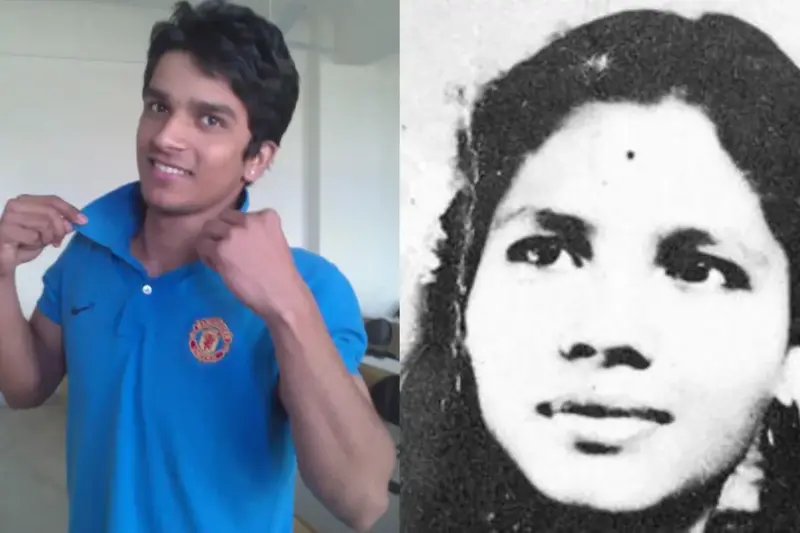

A 31-year-old man, who has been in a vegetative state for the past 13 years after a tragic accident, can now die as the Supreme Court today allowed the withdrawal of life support on his parents' request.
The court has also urged the Centre to consider bringing a law on passive euthanasia, which is allowed in India only after the Supreme Court studies the opinions of two medical boards on the patient's condition.
Harish Rana, a student of Punjab University, fell off the fourth floor of a paying guest accommodation in 2013 and suffered serious injuries. He was put on life support. Since then, he has been confined to a bed with a tracheostomy tube for respiration and a gastrojejunostomy tube for feeding.
The bench of Justice JB Pardiwala and Justice KV Viswanathan said in its order, "'Gods ask no man if he accepts life, you must take it'. These are the words of (US minister) Henry Ward Beecher, which hold significance when courts are asked if individuals can choose to die."
Justice Pardiwala also quoted William Shakespeare's famous line from Hamlet, "To be or not to be", while reflecting on the deeply complex questions surrounding the "right to die".
The case has once again brought the debate around passive euthanasia into the spotlight, reviving memories of one of India's most heartbreaking legal battles, that of Aruna Shanbaug.
Aruna Ramchandra Shanbaug was a young nurse working at Mumbai's King Edward Memorial (KEM) Hospital when her life changed forever on November 27, 1973. The 25-year-old was brutally sexually assaulted by a hospital ward attendant in the hospital basement while she was changing after duty.
During the assault, she was strangled with a dog chain, which cut off oxygen supply to her brain and caused severe and irreversible brain damage. The attack left Shanbaug in a persistent vegetative state, unable to move, speak or recognise people.
For decades, she remained bedridden at KEM Hospital, where the nurses and staff cared for her like a family member. She could breathe on her own but had lost higher brain functions.
Her condition continued for more than four decades, making her case one of the longest-known instances of a patient surviving in a vegetative state.
The case returned to public attention in 2009 when journalist and author Pinki Virani filed a petition in the Supreme Court seeking permission for euthanasia for Shanbaug, arguing that she had no meaningful quality of life and should be allowed to die with dignity.
The plea triggered a nationwide debate involving doctors, legal experts, religious groups, and activists over whether a person in a permanent vegetative state should be allowed to have life support withdrawn.
In response, the Supreme Court appointed a medical panel to assess Shanbaug's condition. The panel found that she was in a permanent vegetative state but was medically stable and not brain dead.
In a landmark judgment delivered on March 7, 2011, the Supreme Court rejected the plea to withdraw Shanbaug's life support. The court noted that the KEM Hospital staff, who had cared for her for decades, opposed the move.
However, the ruling marked a historic moment in India's legal history. For the first time, the Supreme Court allowed passive euthanasia under strict conditions.
Passive euthanasia refers to withdrawing or withholding life-sustaining medical treatment, such as ventilators or feeding tubes, in cases where recovery is considered impossible. Active euthanasia, where a substance is administered to deliberately cause death, remains illegal in India.
The court laid down guidelines requiring approval from the High Court and medical boards before life support could be withdrawn, ensuring safeguards against misuse.
Years later, the Supreme Court expanded the framework further in 2018 by recognising the validity of "living wills", allowing individuals to state in advance whether they want life-prolonging medical treatment if they become terminally ill or incapacitated.
Aruna Shanbaug herself remained in a vegetative state for 42 years before she died of pneumonia on May 18, 2015, at the same hospital where she had been treated since the attack. Her story continues to shape conversations around dignity in death and medical ethics in India.
With the Supreme Court once again confronted with questions surrounding the right to die, Shanbaug's tragic case serves as a reminder of the legal and moral dilemmas that arise when medicine prolongs life but cannot restore it.