
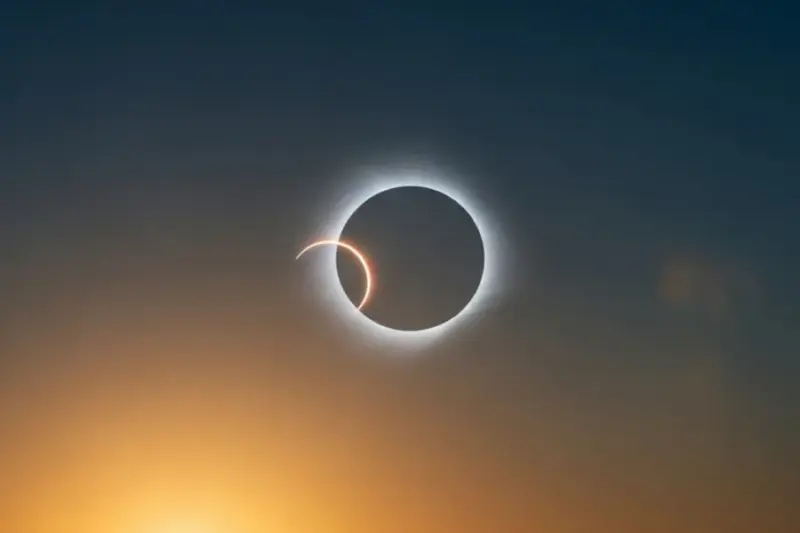

A rare solar eclipse will light up the skies in 2026, drawing attention from across the world. If you are planning to witness this spectacular event, knowing exactly where it will be visible makes all the difference.
The August 12, 2026 event marks the first total solar eclipse visible from mainland Europe in nearly three decades. The path of totality will move across the Arctic, Greenland, Iceland, and into northern Spain.
What makes it stand out is its timing-it will occur late in the evening, turning it into a rare "sunset eclipse" where the Sun appears low on the horizon as it is completely covered.
Best places to watch the eclipse
- Spain: best mix of weather and accessibility
Spain offers the most reliable viewing conditions, especially in inland regions like Burgos and Palencia, which have lower cloud cover in August.
Coastal areas and islands such as Mallorca provide a unique chance to watch the eclipse over the sea, creating a visually striking sunset scene.
Regions like Asturias and Cantabria offer dramatic coastal cliffs, though weather can be more unpredictable.
- Iceland: dramatic landscapes and longer totality
Iceland is a top choice for those seeking stunning scenery. Locations like the Snaefellsnes Peninsula will experience one of the longest durations of totality on land.
Reykjavík also lies within the path, though closer to the edge, offering a shorter viewing window. Weather here can be variable, so flexibility is key.
- Greenland and Arctic regions: extreme experience
Remote regions in Greenland offer a unique backdrop of glaciers and fjords. However, these locations are difficult to access and usually require specialised travel arrangements such as expedition cruises.
Also read | Artemis II crew clicks rare 'Earthset' photo from Moon's dark side
Timing and viewing conditions
In Spain, totality will occur around 8:27 pm to 8:32 pm local time, with the Sun sitting very low-just a few degrees above the horizon.
In Iceland, the eclipse will happen earlier in the evening with the Sun higher in the sky, making viewing slightly easier.
Because of the low Sun angle in Spain, choosing a location with a completely clear western horizon-such as beaches, hilltops, or open plains-is essential.
Will the eclipse be visible in India?
The total solar eclipse on August 12, 2026 will not be visible from India. The path of totality remains limited to parts of Europe, the Arctic, and surrounding regions.
Observers in India will not be able to see even a partial phase of this eclipse due to the Earth's position at the time of the event. As a result, it will mainly be followed through live streams, global coverage, and updates from international observatories.
Travel and planning tips
- Book early: Accommodation in key locations is already seeing high demand. Prices are rising, especially in smaller towns and popular coastal areas.
- Stay flexible: Weather plays a crucial role in eclipse viewing. Keeping travel plans flexible allows you to move to clearer skies if needed.
- Consider mobility: Renting a car or choosing well-connected locations helps in adjusting plans quickly, especially in regions prone to cloud cover.
Safety and viewing precautions:
- Use certified solar eclipse glasses during all partial phases
- Never look directly at the Sun without protection
- Remove glasses only during the brief totality
- Arrive early at your viewing spot to avoid crowds and blocked views
What makes this eclipse unique
Unlike most eclipses, this one combines the dramatic lighting of sunset with the rare phenomenon of totality. The golden evening sky fading into darkness, followed by the glowing solar corona, creates a visual effect often described as once-in-a-lifetime.
The August 2026 solar eclipse offers a rare combination of accessibility, scenic beauty, and dramatic timing. Whether viewed from inland Spain or the rugged landscapes of Iceland, it promises an unforgettable experience for travellers and skywatchers alike.