
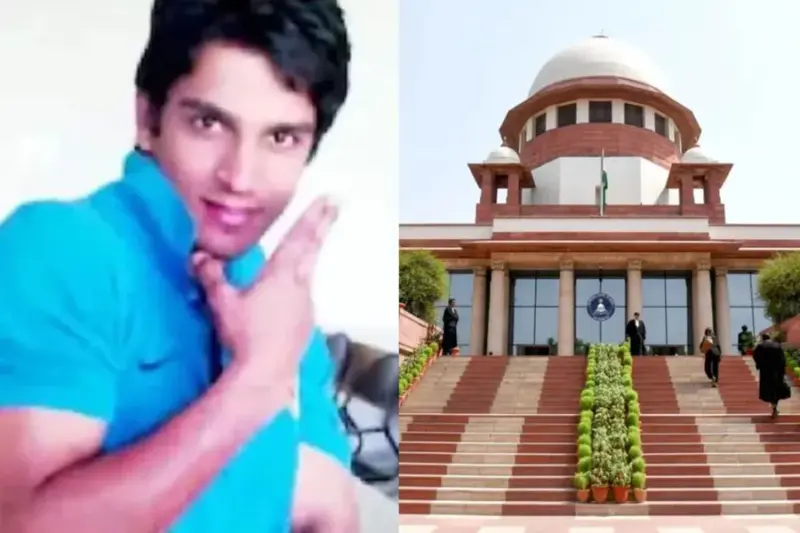

The Supreme Court on Wednesday delivered a landmark verdict in the heartbreaking case of Harish Rana, a 31-year-old man who has lived in a permanent vegetative state for over 13 years.
A Bench comprising Justice JB Pardiwala and Justice KV Viswanathan ruled that life-sustaining treatment could be withdrawn.
The ruling centers on the tragic story of a former civil engineering student who suffered a fall in 2013, leaving him with 100% disability and dependent on feeding and breathing tubes ever since.
While delivering the judgment, Justice Pardiwala expressed deep empathy for the family, observing that Harish's parents had cared for him with complete selflessness for over a decade, selling their home and moving cities just to remain by his hospital bed.
A critical legal breakthrough came from Justice KV Viswanathan, who penned a separate but concurring opinion. He emphasized that in such agonizing cases, the "best interest of the patient" is the only interest the court should consider. He pointed out that the Delhi High Court had previously erred by dismissing the family's plea on the technicality that Harish was not "terminally ill."
The Supreme Court clarified that the 2018 Common Cause judgment-which first recognized passive euthanasia-is not restricted only to the terminally ill. The Bench ruled that if a person is in a permanent vegetative state (PVS) with no hope of neurological recovery, they qualify for the constitution of a medical board to oversee the withdrawal of life support. This decision ensures that families are not forced to watch their loved ones suffer indefinitely in a state of "living death" simply because they do not fit a narrow medical definition.