
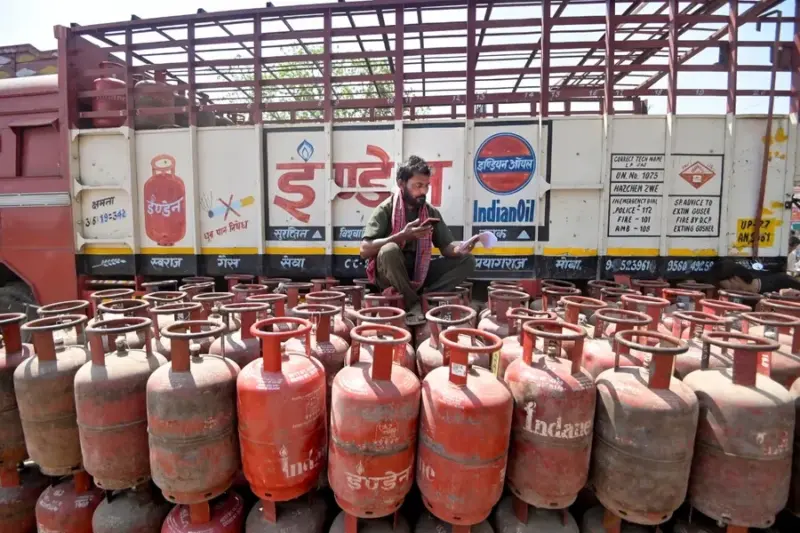

New Delhi: The Indian government has mandated that household supplies of liquefied petroleum gas (LPG) will be terminated if consumers fail to transition to piped natural gas (PNG) in areas where infrastructure is available, according to a sweeping new directive aimed at bolstering national energy security.
The Ministry of Petroleum and Natural Gas notified the "Natural Gas and Petroleum Products Distribution Order, 2026," on March 24. The policy seeks to accelerate the expansion of the domestic gas network and diminish the nation's dependence on imported fuel as the ongoing war in West Asia continues to disrupt global energy markets.
India is currently navigating a significant LPG shortage caused by regional hostilities, including the continued blockade of the Strait of Hormuz and damage to major liquefaction facilities in the Gulf. By transitioning urban households to domestically produced and diversified PNG, the government intends to redirect limited LPG stocks to rural regions that lack pipeline access.
The Three-Month Ultimatum
Under the new order, which was issued under the Essential Commodities Act, LPG deliveries "shall cease after three months" if a household refuses to adopt a PNG connection despite its availability.
The mandate includes a critical exemption: supply will not be cut if an authorised gas entity deems a piped connection "technically infeasible" and issues a formal no-objection certificate (NOC). However, the entity must withdraw the NOC and operationalise the connection as soon as technical hurdles are resolved.
Oil Secretary Neeraj Mittal characterised the shift on social media as a strategic pivot, stating that "a crisis (has been) turned into an opportunity" through reforms designed to improve the ease of doing business.
Streamlining Infrastructure
To facilitate a rapid transition, the government has introduced several measures to bypass bureaucratic gridlock:
- Automated Approvals: Public authorities must grant "right of way" permissions within strictly prescribed timelines. Should they fail to act, approvals will be "deemed granted."
- Rapid Last-Mile Connectivity: In residential complexes, entities controlling access must provide permissions within three working days, with last-mile PNG installation required within 48 hours of an application.
- Legal Enforcement: Designated officers will be granted powers akin to a civil court to resolve land-use disputes and enforce the right of way.
- Provider Accountability: Companies authorised to lay pipelines must begin construction within four months of approval or face penalties, including the potential loss of market exclusivity.
Monitoring and Compliance
The Petroleum and Natural Gas Regulatory Board (PNGRB) has been appointed as the nodal agency responsible for tracking the rollout and ensuring compliance.
The order further stipulates that if a housing society or access-controlling entity refuses to allow the installation of gas lines, a formal notice will be issued. Three months after that notification, oil marketing companies will be legally required to halt all LPG cylinder deliveries to that address.
Beyond the security benefits, officials noted that PNG offers a more convenient alternative for consumers, as fuel is delivered continuously via pipeline, removing the necessity of booking and waiting for cylinder refills.
With inputs from PTI