

At the southern tip of India's coastline, Dhanushkodi in Tamil Nadu's Ramanathapuram district stands as both a stark reminder of destruction and a powerful symbol of resilience.
Once a thriving town with rail connectivity, Dhanushkodi was completely devastated by the 1964 Rameswaram cyclone. Despite the tragedy, nearly 300 families-most of them fishermen-have gradually rebuilt their lives here. Their return and survival have largely been driven by their own determination, without structured state-led rehabilitation.
Also watch: Road woes spark blindfold protest in Namakkal villages
Today, many residents continue to live without legal land ownership. Authorities remain reluctant to allow permanent settlements, citing cyclone vulnerability, fragile ecology, and coastal regulation zone regulations.
According to Ravi Kumar, Fisherman: "This place was a big city before 1964. There was a harbour here and enough transport facilities even to reach Sri Lanka. After the 1964 cyclone, everything was gone. Dhanushkodi entirely collapsed; it was reduced to nothing. Now, people who had left during the cyclone have returned. All the families are back. They have set up small shops here and are rebuilding their lives."
Fishing continues to be the backbone of the local economy, but it offers uncertain and modest returns. Daily earnings depend entirely on the sea, making survival unpredictable. Typically, a single boat supports seven to eight fishermen, with the catch divided into small shares.
Muthulakshmi, vendor/hotel owner, says, "We buy goods from outside and sell them here, we don't make huge profits. We earn around Rs 500 to Rs 1,000 - we can hardly expect more. The men go fishing. In one boat, seven to eight people sail. They may earn around Rs 2,000, which means just Rs 200 to Rs 300 per person. We cannot go to the sea every day - it is a blessing when we can. Even then, the earnings are just enough to manage expenses. Families survive mainly on the small profits from these shops."
Beyond economic struggles, residents face a lack of essential services. There is no nearby hospital, forcing people to travel to Rameswaram during emergencies. Educational facilities are limited to primary schooling.
Locals also express deep frustration with political leaders, accusing them of neglecting basic needs while seeking votes.
Balachandran, a fisherman, says, 'This place was once called 'mini-Singapore'. The king of Ramanathapuram lived here and named it Dhanushkodi. We don't have any hospitals here now. There is only an elementary school here. There is actually no support from the government. They encourage us to come and vote, that's it."
Dhanushkodi continues to feature in discussions on coastal development, tourism, and environmental protection at both state and national levels. While the central government has improved road connectivity and introduced solar electrification in parts, and the Tamil Nadu government has proposed relocation plans and welfare schemes, many residents remain unwilling to move.
For them, relocation means losing their livelihood.
According to a hotel owner, Muriesuri, "They laid a road here. We live in huts. They ask us to move from place to place. Officials come again and again, asking us to move, saying they will develop this area. We have to protest every day just to stay in Dhanushkodi. We only want to live our lives without interruption..."
Uma Ganesh, another fisherman, said, "We just don't want to be disturbed. We are fishing people. Officials come here and say they will build this and that, asking us to move. We don't want any of it. Let us live the way we do."
Umaeseri, a fisherwoman: "The government says they will build roads here and ask us to relocate. But if we relocate, we will lose our livelihood."
Despite constant challenges-from natural disaster risks to economic instability and policy restrictions-the people of Dhanushkodi continue to hold on.
For them, this is more than just a place to live. It is a way of life shaped by the sea, hardship, and survival.
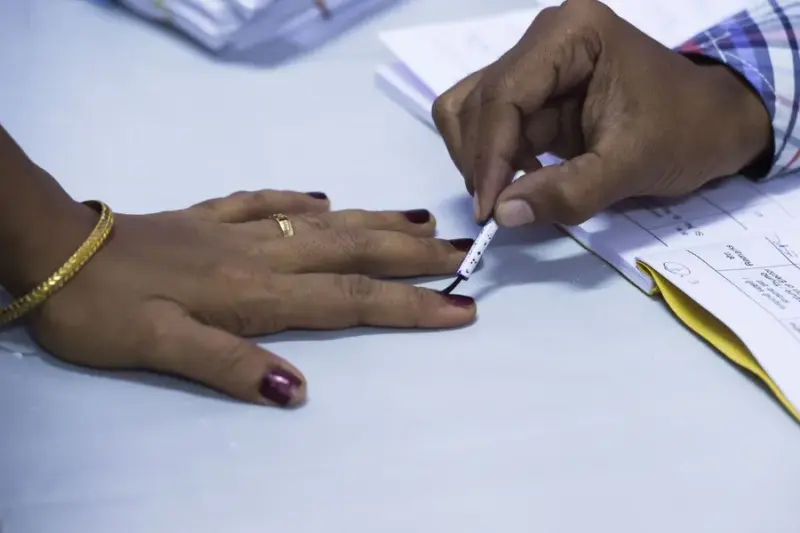
As the state Assembly elections approach, their demands remain clear: secure land rights, access to basic facilities, and the freedom to live without fear of displacement.
Their aspirations for a stable and dignified livelihood are likely to influence how they vote in the upcoming elections.