






During a recent family vlog, YouTuber Diya Krishna aka Ozy Talkies addressed a question from subscribers about why she calls her in-laws "aunty" and "uncle" instead of "mom" and "dad", as is common in many Indian families.
One can always say that ultimately it is a personal choice and that therefore nobody is obligated to address their in-laws in a particular way. But what shocked many was the way she chose to respond to it: "Why would I call any Tom, Dick and Harry my mother or father? Even if tomorrow my son starts calling his mom-in-law as mom, I will get stressed. Maybe those who have no parents of their own can do that." The issue was never about whether she calls her in-laws "mom" or "dad". It was the sheer insensitivity and hostility of the statement itself.
Firstly, the tone came across as deeply disrespectful, not just towards her in-laws, but also towards viewers who had followed her for years believing that she shared a warm and affectionate bond with them.
Secondly, the remark casually revealed a rather possessive and toxic idea of relationships and parenting. It is there in the belief that love or emotional closeness is somehow diminished if another parental figure enters someone's life.
And finally, the comment was painfully insensitive towards people who have lost their parents. For many, calling an in-law "mom" or "dad" comes from love, comfort, healing or emotional belonging, and not just because they "lack" parents. You can always reject a social tradition without demeaning the people who follow it.
When it comes to the Krishna Kumar family, they can very well be rechristened as Kerala's "YouTube family". Almost every member runs a successful channel of their own, collectively building a massive digital presence over the years.
Their popularity is undeniable. But so is the criticism they have consistently attracted. From accusations of right-wing leanings and casteist remarks to charges of self-objectification and an often-dismissive attitude towards others, the family has remained a constant subject of internet discourse.
Yet, what truly sets them apart is their ability to convert backlash into visibility. Ever since their rise during the Covid era, the family seems to have mastered the algorithmic economy of controversy. And that also means, criticism, outrage and trolling often translate directly into engagement, views and subscribers.
Take this recent Diya Krishna controversy, for instance, which has now triggered a wave of reaction videos from fellow YouTubers. But then again, the influencer ecosystem often functions in exactly this circular manner in which you see creators feeding off other creators' content, controversies and personal lives to sustain engagement.
Perhaps that is what made Diya make a rather blunt observation when asked about the backlash against her: "Some days I do charities like that for my fellow YouTubers. Let them make a little money with my cute pictures and stolen content."
Let's face it, if you are willing to strip off its arrogance and poor phrasing, there is actually a sharp observation buried underneath that statement. In fact much of the influencer commentary today survives on repackaging, reacting to and monetising the visibility of other influencers. Afterall, outrage itself has become content.
The problem, however, is that Diya's point gets overshadowed by the dismissive and disrespectful way she expresses it. It's a recurring pattern often used even by her family and that also means such valid observations are often diluted due to their unnecessary hostility.
In fact, when Diya Krishna was once criticised for her attitude online, her mother Sindhu Krishna reportedly responded by saying: "I told her, why are you bothering to respond to such jobless people?"
The irony, of course, is difficult to miss. Today, Sindhu herself is a household name largely because of YouTube and the very audience that consumes, discusses and engages with their content on a daily basis.
That contradiction perhaps captures the complicated relationship many influencers share with the internet audiences. Validation, visibility and income are all drawn from the public, yet the same public is often dismissed as "jobless" or irrelevant the moment criticism enters the conversation.
However, what remains baffling is the family's apparent inability to take even the mildest criticism in its intended spirit, more so as their entire digital ecosystem thrives on subscriber goodwill and public engagement.
Take the controversy surrounding Krishna Kumar recalling a deeply regressive custom from the past with longing. He speaks about a time when the domestic workers in his house would allegedly be fed by placing food on a leaf kept near a hole in the ground rather than allowing them inside the house. Unsurprisingly, the internet reacted strongly. Then of course, it spiraled into reaction videos, social media debates and endless discourse cycles.
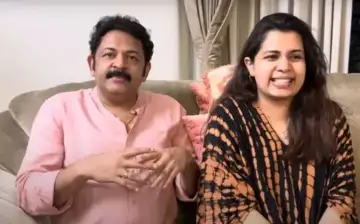
In fact, what once again stood out was not merely the backlash, but the family's response to it. Diya Krishna appeared to reduce the criticism into an inside joke, subtly mocking the outrage instead of engaging with why people found the anecdote disturbing in the first place.
A similar attitude surfaced when members of the family casually mocked the uproar surrounding the Hema Committee report, an issue many viewed as serious and emotionally charged within the Malayalam film industry.
There is also a striking dichotomy between Sindhu Krishna and the image her subscribers have built around her. It is motherhood that forms the emotional core of her popularity. Her channel largely revolves around her daughters and domestic life, and much of her appeal lies in how ordinary and emotionally accessible she appears.

For many viewers, she represents warmth, patience and quiet resilience, the familiar "Sindu Amma" figure they feel emotionally attached to. Which is perhaps why her dismissive attitude towards criticism feels particularly jarring. Time and again, she appears to turn her back on the very audience that finds comfort in her content, often reducing criticism to bitterness, jealousy or "joblessness" instead of engaging with it meaningfully.
Perhaps that is what makes the family dynamic particularly fascinating. Despite their vastly different online personas, the glamorous influencer daughters and the warm, domestically relatable mother there often seem to be a shared discomfort with criticism running through all their platforms. Whether through sarcasm, dismissal or mockery, criticism is rarely engaged with sincerely, even when their entire digital success depends on sustained public goodwill.
Which raises an uncomfortable question: is this carefully engineered rage bait designed to sustain relevance and engagement? Or does it reflect a level of privilege so insulated that genuine public hurt simply registers as entertainment?
Or perhaps, after years of relentless public scrutiny, criticism itself has become something the family instinctively deflects through sarcasm, mockery and emotional detachment, a defense mechanism for surviving the internet age.
May be that is also the paradox of influencer culture itself. The audiences are encouraged to emotionally invest in the creators' lives, their homes, routines, relationships and vulnerabilities until subscribers begin to feel like they are their extended family. But when that emotional investment turns into criticism or disappointment, the same audience is often dismissed as "haters", "jobless people" or faceless trolls.
And yet, when influencers build entire careers on intimacy and relatability, viewers will inevitably expect accountability along with access. But then what gets lost in this constant cycle of visibility, backlash and defensiveness is empathy, on all sides.