





For months now, the world has been subjected to a spectacle that would be amusing were it not so dangerous. Every few days, Donald Trump emerges to declare that peace is at hand, that a settlement with Iran is within reach, that a breakthrough is imminent, and that history is about to be made.
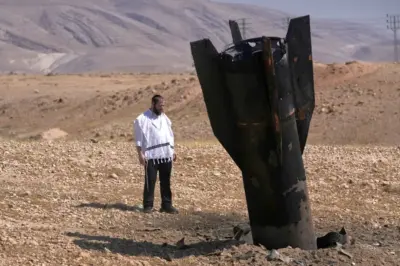
The statements are delivered with the confidence of a man announcing tomorrow's weather after having ignored every forecast for the past decade. Then reality intrudes. Iran says negotiations are continuing. Israel launches another operation. Missiles fly. Shipping insurers panic. Oil markets twitch. Diplomats scramble. The promised breakthrough dissolves into yet another round of uncertainty. And thus continues the great theatre of West Asia.
The tragedy is that uncertainty itself has become policy. No figure embodies this more than Benjamin Netanyahu. For nearly four decades, Netanyahu has warned that Iran is on the verge of acquiring a nuclear weapon. He has made the same argument to successive American administrations. He made it during the Clinton years. He made it to Obama. He made it to Biden. He made it to Trump. The language changes, and the timelines change, but the warning remains the same. Iran is always months away. Iran is always weeks away. Iran is always one final step away. Yet, four decades later, the apocalypse that was perpetually around the corner remains exactly there, around the corner.
Special Coverage: US-Israel War Against Iran
While Netanyahu's defenders would argue that the bomb has not materialised precisely because of constant vigilance, his critics would say that a prediction repeated for forty years ceases to be a prediction and becomes a political instrument. Whatever one's conclusion, it is impossible to ignore the context in which these warnings are issued.
Netanyahu is not merely a wartime leader. He is also a politician fighting for survival and facing serious corruption proceedings. He presides over a deeply divided society, and carries the burden of one of the gravest intelligence failures in Israel's history.
War changes the political conversation, like wars so often do. Questions that dominate peacetime become secondary, and criticism becomes muted. National security eclipses every other issue. Whether this is a deliberate strategy or a political consequence is a matter of debate. The effect, however, is undeniable.
Yet if Netanyahu is one actor in this drama, Donald Trump is another. The extraordinary thing about Trump is not that he supports Israel. American support for Israel predates Trump by decades. Presidents of both parties have sustained that alliance.
The extraordinary thing is that Trump simultaneously presents himself as the consummate dealmaker while having personally dismantled one of the most significant diplomatic achievements between Washington and Tehran. The Joint Comprehensive Plan of Action was not perfect. No serious observer claimed otherwise. But it imposed restrictions, inspections and limitations that had been painstakingly negotiated over years. And Donald Trump abandoned it. The consequences are still unfolding.
Today, the same administration that walked away from a functioning agreement speaks once again of a historic settlement with Iran. It is difficult to avoid the irony. If a deal does emerge, it is unlikely to resemble the triumphalist rhetoric surrounding it. Iran is not in a position of surrender. Nor is the United States. That is the central reality that much of the public discussion ignores.
Iran possesses cards that few countries possess. It sits astride one of the most strategically important waterways on Earth. It possesses significant missile capabilities. It has spent decades building networks of allies and partners across the region. The mere suggestion of disruption in the Strait of Hormuz can send tremors through energy markets. The mere possibility of instability around the Bab el Mandeb can alter shipping patterns and insurance premiums across continents. Iran does not always need to act. Sometimes it merely needs to remind the world that it can.
At the same time, the notion that Iran holds all the cards is equally mistaken. The United States retains immense economic, financial and military leverage. Sanctions, access to global banking, investment, and trade matter. Neither side possesses sufficient leverage to impose its preferred outcome without paying an unacceptable price. That is why negotiations continue.
The truth is that every major actor in this confrontation is constrained. Iran cannot achieve everything it wants. Israel cannot achieve everything it wants. The United States cannot achieve everything it wants. And yet, each continues to behave publicly as though victory is just one more decision away.
Meanwhile, the deeper wound of the region remains unresolved. The Palestinian question refuses to disappear. Israel's occupation of Palestinian territories remains one of the most enduring and controversial realities of modern politics. Settlement expansion continues. Millions of Palestinians continue to live under conditions that much of the international community regards as fundamentally unequal.
The devastation of Gaza has transformed global opinion. The images have travelled further than any diplomatic communiqué. No amount of public relations can erase the sight of destroyed neighbourhoods, displaced families and dead children. The legal arguments will continue for years. The political arguments may continue for generations. But the moral shock has already occurred.
Against this backdrop, every new missile launch and every new diplomatic announcement acquires an almost surreal quality. The region oscillates between catastrophe and negotiation. One day, the world is told that war is imminent. The next day, it is told that peace is imminent. Neither arrives. What persists is uncertainty.
Perhaps that is the defining feature of this moment. Not war or peace, but uncertainty. An uncertainty cultivated by politicians, amplified by media cycles and monetised by markets. An uncertainty in which every actor insists that events are under control while behaving as though they are not.
The most likely outcome is not a grand settlement that resolves every dispute from Gaza to Tehran. The most likely outcome is something far more modest. A temporary arrangement. A pause. A framework. A document that reduces immediate tensions while leaving the underlying conflicts intact. And so, the dance continues.
Trump declares victory before the negotiations conclude. Netanyahu warns of existential threats. Iran insists on sovereignty. Markets hold their breath. The world waits. And West Asia remains suspended between diplomacy and disaster, trapped in a theatre of uncertainty whose final act nobody can yet see.
The author is a National Award winner for Best Narration and an independent political analyst. Views expressed are personal