
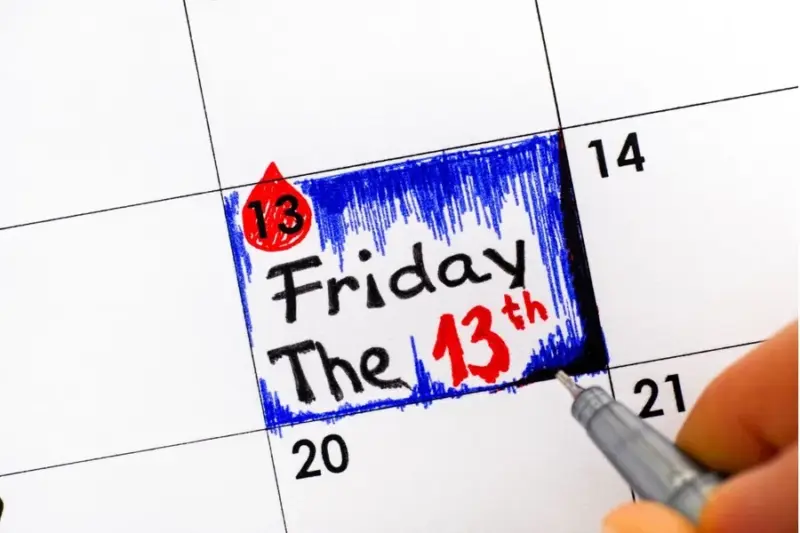

As the first Friday the 13th of 2026 arrives - coincidentally falling on the eve of Valentine's Day - superstition is once again taking centre stage.
This year is particularly notable for the superstitious, with the calendar delivering three such Fridays in February, March and November, an unusually concentrated dose of what many call the unluckiest date of the year.
For decades, Friday the 13th has been linked with misfortune, phobias and urban legends. It has even inspired an entire horror franchise and continues to influence behaviour despite the lack of scientific evidence suggesting the day is any more dangerous than others.
A date steeped in religious and medieval lore
Many historians trace the symbolism of the number 13 to biblical tradition. At the Last Supper, Jesus Christ dined with his 12 disciples, marking Judas Iscariot - the disciple who betrayed him - as the thirteenth guest. Jesus was crucified the next day, giving rise to the association of 13 with imperfection and ill omen, particularly compared with the number 12, which mirrors the months of the year.
Another widely cited origin dates back to Friday 13 October 1307, when King Philip IV of France ordered the arrest of the Knights Templar. Acting under pressure from Pope Clement V, the French king used unfounded allegations - including forced denials of Christ and other fabricated initiation rituals - to justify dismantling the wealthy order and erasing debts owed to them. Many Templars, including their Grand Master Jacques de Molay, were eventually executed.
De Molay is said to have declared a final curse as he faced execution flames near Notre Dame Cathedral, "God knows who is wrong and has sinned. Soon a calamity will occur to those who have condemned us to death."
Over time, these events fused into folklore, cementing Friday the 13th as a day of doom in Western imagination.
Phobias and superstition
The fear of Friday the 13th carries its own name: paraskevidekatriaphobia - or friggatriskaidekaphobia. Anxiety surrounding the date has real-world impact; some reports suggest businesses lose as much as $900 million each time it occurs, as people postpone travel, avoid major events or even stay home from work.
In addition to the date itself, the number 13 triggers its own specific fear, triskaidekaphobia. According to the History Channel, researchers estimate that as much as 10% of the U.S. population harbours fear of the number. Sociologist Barry Markovsky notes that while the true origins are unclear, its contrast with "lucky 12" - the number of zodiac signs, Olympian gods and Jesus's apostles - may play a role.
Markovsky also references Norse mythology, where Loki arrived as the 13th guest at a feast in Valhalla and tricked another god into killing Baldur, further cementing the number's reputation.
Despite the myths, he argues the number's unlucky status is largely driven by "rumours and urban legends", with Western culture continuing to treat the day cautiously even without evidence of heightened danger.
Three Friday the 13ths in 2026
According to Time and Date, 2026 brings a rare trio of Friday the 13ths:
- Friday, 13 February 2026
- Friday, 13 March 2026
- Friday, 13 November 2026
This week's occurrence is unique as it aligns with the Valentine's Day weekend, offering an unusual mix of romance and superstition.
In contrast, 2025 saw only one Friday the 13th, in June.
How people observe the day
For some, Friday the 13th is a date to avoid travel or postpone major decisions. For others, it's a cultural phenomenon - even a celebration. Some enthusiasts mark every occurrence with tattoos or themed events, embracing the superstition rather than fearing it.
Worldwide, the unease varies. In Greece and Spanish-speaking countries, Tuesday the 13th is considered unlucky, while Italy designates Friday the 17th as its most ominous date.
And beyond the calendar, long-standing omens survive: black cats crossing one's path, broken mirrors, walking under ladders, opening umbrellas indoors and speaking the name of Shakespeare's "Scottish play" inside a theatre.