
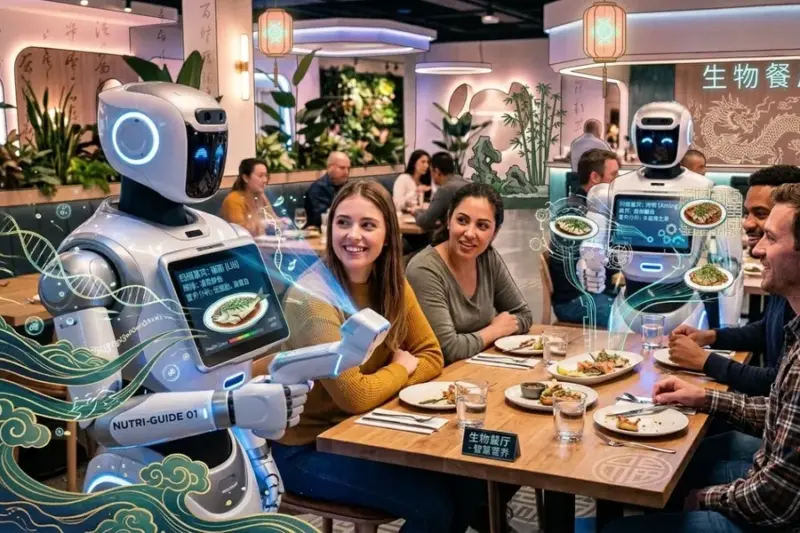

Eating out in China is getting a futuristic twist, where robots are not just cooking food but also telling you what you should eat. At one restaurant, AI even studies your face and tongue before suggesting a meal, making dining feel more like a tech experiment than a casual outing.
A robot that reads your face and tongue
According to South China Morning Post reports, the 24 Jieqi Robot Restaurant in Xihu district has gone viral for its "AI diagnosis robot". This machine scans customers' faces and tongues to assess their lifestyle, emotions and even digestive health.
Based on this analysis, and even considering the current weather, it creates a detailed report and recommends dishes that are meant to improve the customer's overall well-being. It is like having a health check-up and a menu suggestion rolled into one.
Robots handling the entire kitchen
The use of technology in these restaurants goes far beyond just giving advice. At these modern dining spaces, a team of eight robots handles almost everything, from cooking and serving food to cleaning up afterwards.
Reports suggest these machines take on around 60 percent of the kitchen workload, making operations faster and more automated than traditional setups.
For human workers, the job has changed quite a bit. Instead of doing heavy manual work during busy hours, chefs now focus more on supervising the machines.
This shift also gives them more time to pay attention to ingredient quality and try out new ideas in cooking, rather than just managing constant rush orders.
Customers are surprised, but mostly impressed
Reactions from diners have been mixed but mostly curious. Some regular customers say they are surprised by how good the food tastes, often noting that robot-cooked meals are almost impossible to distinguish from human-made ones. Many also feel the meals are more affordable.
Older customers, in particular, seem to appreciate the machines, saying they prefer the healthier, lightly seasoned food that is being served.
Not everyone is comfortable with it
Despite the novelty, not everyone is convinced. The rise of AI-powered dining has triggered backlash online, with critics worried about job losses in the service industry.
For some, it represents progress, efficiency and innovation. For others, it raises questions about what happens to people when machines start taking over roles that were once purely human.