





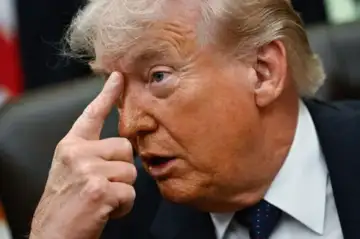
Donald Trump now claims that he paused another attack on Iran after Gulf leaders urged him to step back and give diplomacy another chance.
One almost has to admire the absurdity of the moment. After weeks of thunderous rhetoric, cinematic bombing campaigns and declarations of imminent victory, the self-proclaimed master of escalation now presents himself as the reluctant peacemaker being gently restrained by nervous Arab monarchs!
And, honestly, that may very well be true. Because, unlike Washington, the Gulf kingdoms actually live in the Gulf. For the United States, the war with Iran is just another projection of power conducted from aircraft carriers, command centres and television studios thousands of miles away. But, for Saudi Arabia, the UAE, Bahrain, Qatar, and Kuwait, it is a question of whether their ports, pipelines, desalination plants, airports and financial districts remain standing next month. The Americans can lose money. The Gulf states can lose countries. That is the uncomfortable reality now hanging over West Asia after Trump's latest admission. The war has failed to achieve any of the grand objectives advertised at the beginning. Iran's political structure has not collapsed, its military capabilities remain intact enough to threaten the entire region, and its missile and drone networks continue to function. Most importantly, Iran has demonstrated that it possesses what every regional power fears most: survivable retaliation. And once a country proves that, the entire strategic equation changes. The truly darkly comic part is that Washington entered the confrontation claiming it was restoring deterrence. Instead, Gulf monarchies are now reportedly pleading with Washington not to escalate further, as they may not survive the consequences of restoring deterrence. There is something almost poetic about oil kingdoms built on glass towers, luxury islands, and curated futurism suddenly rediscovering geography. Dubai's skyline looks magnificent in drone shots. It looks considerably less magnificent when one remembers that modern cities that depend on aviation, finance, desalination, and imported food are not designed for prolonged missile warfare. Iran understands this perfectly.
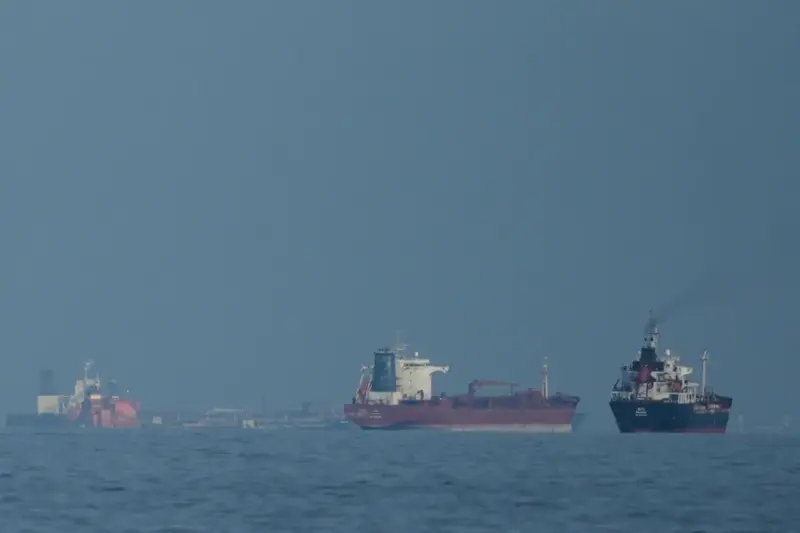
The Strait of Hormuz has now become less a waterway and more a loaded gun placed on the table. Legally, Iran does not own it. Militarily, however, Iran has spent decades ensuring that nobody can use it peacefully without accounting for Tehran's presence. Every tanker crossing the Gulf now carries not just oil, but the possibility of global economic panic. And, as it turns out, panic is profitable. With oil prices soaring and sanctions regimes wobbling under geopolitical pressure, Iran suddenly finds itself in a far more comfortable position than Washington expected. A country that was supposed to be economically strangled has instead become central to the very crisis destabilising the global energy market.
Meanwhile, the Gulf states are trapped in a nightmare of their own making. For decades, they outsourced their security to the United States while simultaneously trying to monetise stability through tourism, finance and spectacle. The arrangement worked beautifully as long as wars remained conveniently contained somewhere else. Yemen could burn, Syria could collapse, and Libya could disintegrate. But the Gulf itself remained untouchable. Not anymore. The 2019 attacks on the Abqaiq and Khurais oil facilities, which were among the world's most important oil processing installations, already exposed the region's true vulnerability. A handful of drones and missiles briefly shook the foundations of the global energy system, knocking out roughly half of Saudi Arabia's oil production, which amounted to around 5 per cent of global oil supply at the time. That was merely a preview. A direct regional war with Iran would not resemble the old American campaigns against shattered states already destroyed by sanctions and invasion. This would involve missile saturation, drone warfare, maritime disruption and attacks on infrastructure across one of the world's most economically concentrated regions. And this is precisely why Trump's latest statement matters. Because it quietly admits that America's own allies are terrified of where this is heading.
The irony becomes sharper when one considers how this war has unfolded militarily. Iran has relied heavily on relatively inexpensive drones and missile systems, while the United States has burned through extraordinarily expensive interceptors, aircraft operations and naval deployments trying to contain them. Reports now suggest significant American aircraft losses during Operation Epic Fury, much of it involving drones and support systems. Even if every reported figure is debated, the broader point remains undeniable. Modern warfare is becoming brutally asymmetrical in economic terms. A cheap drone forcing the launch of a multi-million-dollar interceptor is not sustainable warfare, but financial self-harm performed at hypersonic speed.
And now comes the real problem. If bombing campaigns fail to achieve political objectives, the escalation logic leaves very few options. The next step eventually becomes a ground operation. That is where the entire fantasy collapses into something much darker. Iran is not Iraq in 2003, nor is it Afghanistan in 2001. It is larger, more populous, more industrialised, and geographically more difficult to invade. Mountains, deserts, hardened infrastructure, ideological security institutions, and decades of preparation for exactly this scenario make any invasion an invitation into strategic quicksand. One suspects many in Tehran would almost welcome such a mistake. Because the danger for Washington is not necessarily military defeat in the conventional sense. The United States still possesses overwhelming firepower. The danger is entrapment. A sprawling, grinding, politically exhausting war where tactical victories produce no strategic resolution. Vietnam taught that lesson, Iraq reinforced it, and Afghanistan engraved it into history with painful clarity.
Iran has clearly studied all three. Which explains why the Gulf states are suddenly sounding less like enthusiastic allies and more like nervous neighbours watching two armed men pour petrol around their apartment building. Trump may frame his decision as an act of restraint, but, in reality, it sounds far more like an admission that America's regional partners no longer believe escalation is survivable. And that may be the clearest indication yet of who actually holds the leverage in this crisis.
(The author is a National Award winner for Best Narration and an independent political analyst. Views expressed are personal.)