

Washinton DC: The month-long conflict involving the United States, Israel, and Iran-backed groups is intensifying, with fresh explosions reported in Tehran and continued military activity across multiple fronts.
The situation remains highly volatile, as both military escalation and diplomatic messaging unfold simultaneously.
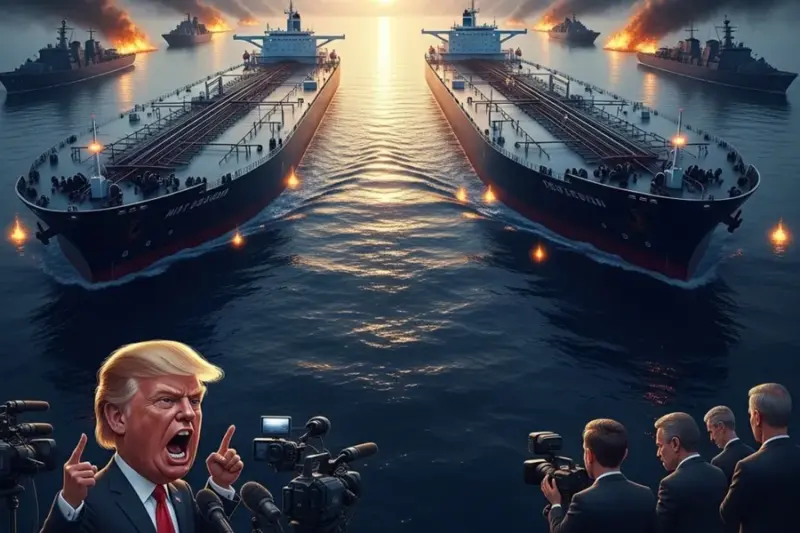
US president Donald Trump has indicated to aides that he is willing to bring the conflict to an end even if the strategically vital Strait of Hormuz remains largely closed. According to reports, his administration is concerned that efforts to forcibly reopen the chokepoint could significantly prolong the war beyond the preferred timeline.
However, Iran has denied any ongoing negotiations, contradicting claims of backchannel talks. The absence of clear diplomatic engagement suggests that tensions remain far from resolution.
On the ground, the conflict continues to escalate. Reports indicate intense US-Israeli strikes on the Iranian city of Isfahan, while explosions have also been heard in Tehran. Israel's air defence systems have been activated in response to incoming Iranian missile threats, pointing to a continuing cycle of attack and retaliation.
The conflict has also expanded beyond Iran's borders. In southern Lebanon, Israeli military operations targeting Hezbollah have resulted in rising civilian casualties and the deaths of UN peacekeepers, raising international concern.
Meanwhile, maritime security has come under strain. A Kuwaiti oil tanker was reportedly struck by a drone near Dubai, triggering a fire but causing no casualties. Such incidents underline the growing risks to global energy supply routes.
The war is already having a visible impact on global markets. Oil supply concerns have prompted countries like the Czech Republic to consider releasing reserves, while fuel prices in the United States are seeing upward pressure. The Strait of Hormuz, a key global oil transit route, remains central to these concerns.
Inside Iran, daily life has been significantly disrupted. Residents in Tehran are facing power outages, tight security restrictions, and internet blackouts, reflecting the broader civilian toll of the conflict.
Key developments at a glance
- Explosions reported in Tehran amid ongoing strikes
- US signals willingness to end war without reopening Hormuz
- Iran denies any negotiation talks with the US
- Israeli operations in Lebanon increase civilian and UN casualties
- Oil tanker attack near Dubai raises maritime security concerns
- Global oil supply and prices affected by escalating tensions
Overall, the conflict continues to evolve rapidly, with no clear resolution in sight. Military escalation, economic consequences, and diplomatic uncertainty are all shaping what could be the next phase of this high-stakes geopolitical crisis.