
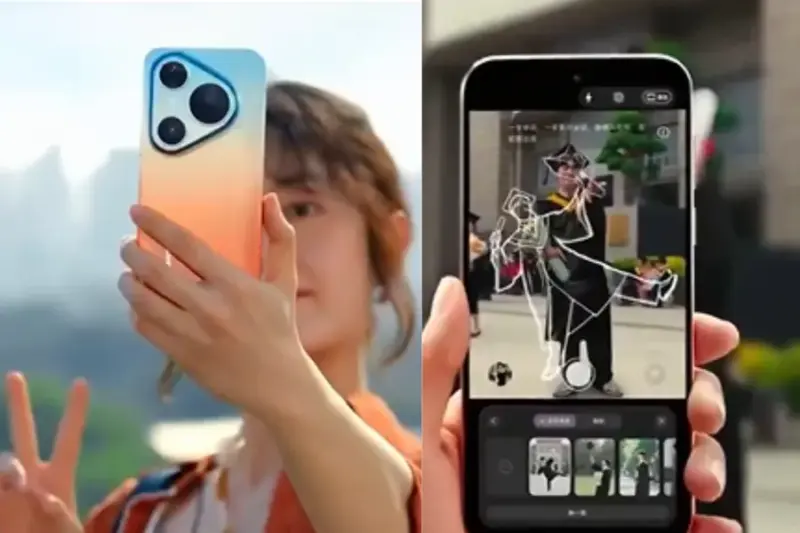

As smartphone cameras continue to evolve, Huawei is taking things a step further with its Pura 90 series. Set to launch on April 20, the lineup is drawing attention for an AI feature designed to guide users into better photo poses.
Launch details and lineup
The Huawei Pura 90 series will include the Pura 90 Pro and Pura 90 Pro Max models.
Ahead of the official launch, Huawei has offered glimpses of the devices, showcasing a distinctive triangular rear camera module featuring XMAGE branding. The phones also sport a premium metal frame and visually striking dual tone gradient colour finishes.
Among the highlights, one camera feature has particularly caught the attention of users on social media. Called "AI Posture Recommendation", the tool introduces a new way to take photos using artificial intelligence.
This feature works within the camera application and analyses the scene in real time. It then suggests suitable poses for the subject or subjects in the frame, aiming to improve the overall composition and visual appeal of the photograph.
How the feature works
Instead of relying on familiar or repetitive poses, users can tap the AI Posture Recommendation option located below the shutter button. Once activated, an outline appears on the screen, guiding the subject into a suggested posture.
The system generates multiple pose ideas based on the surroundings, helping users capture more natural and creative images without much effort. Huawei is presenting this as a way to introduce fresh ideas into everyday photography and make the process more intuitive and enjoyable.
A cultural reference behind popular poses
Reports also note that the well known V sign, or peace gesture, has remained popular in parts of Asia since the 1980s. Although its widespread adoption is not fully documented, some believe it gained traction after Japanese actor Jun Inoue featured it in an advertisement for Konica cameras.
Camera specifications
While the Pura 90 series has not yet been officially launched, reports suggest that the Pura 90 Pro Max could feature a 200 megapixel telephoto lens with support for up to 20x zoom. The primary camera is expected to include a one inch sensor capable of producing 50 megapixel images.