
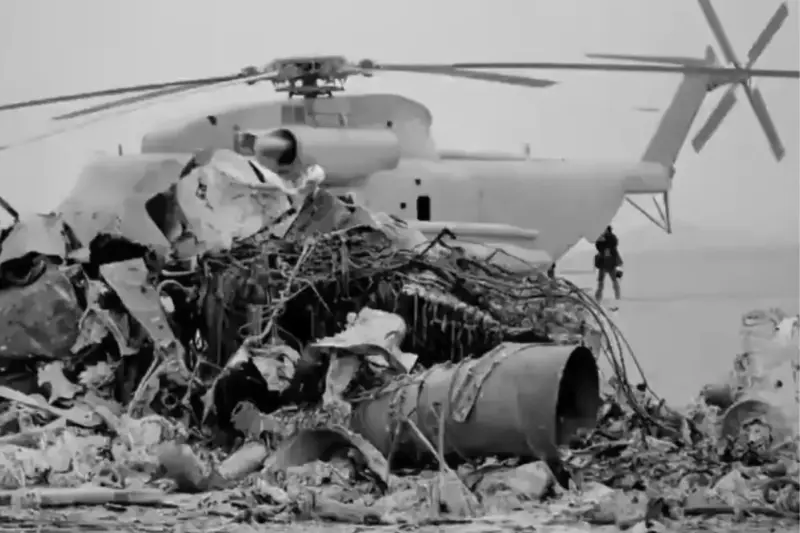

Operation Eagle Claw has once again entered the spotlight in the context of current US-Iran tensions. Following recent remarks by Donald Trump over the Strait of Hormuz, Iranian officials and diplomatic missions referenced the failed 1980 mission as a warning.
What is Operation Eagle Claw?
Operation Eagle Claw was a United States military operation carried out on April 24-25, 1980, during the Iran hostage crisis. Its objective was to rescue American diplomats and citizens held hostage at the US embassy in Tehran.
The mission was authorised by then US President Jimmy Carter after months of failed diplomatic efforts to secure the hostages' release.
Background: The Iran hostage crisis
The crisis began in November 1979, when Iranian revolutionaries seized the US embassy in Tehran and took dozens of Americans captive. The standoff lasted 444 days and became one of the most serious confrontations between the two countries.
With negotiations yielding little progress, the US leadership decided to attempt a risky military rescue deep inside Iran.
The rescue plan
Operation Eagle Claw was highly complex and involved multiple branches of the US military, including special forces, the Air Force and the Navy.
The plan required:
- Transport aircraft to fly troops to a remote desert site known as "Desert One"
- Helicopters launched from a US aircraft carrier to meet them there
- Refuelling operations in the desert before moving towards Tehran
- A covert assault on the embassy to free the hostages
- Evacuation by air after the rescue
Around 100 to 160 personnel were involved in different stages of the mission.
What went wrong
The operation encountered serious problems from the outset.
Several helicopters failed to reach the staging area due to mechanical faults and severe dust storms in the Iranian desert. By the time the aircraft assembled at Desert One, too few helicopters remained operational to continue the mission safely. Commanders decided to abort the operation.
However, during the withdrawal, a helicopter collided with a US transport aircraft carrying personnel and fuel. The crash triggered a massive explosion, killing eight American servicemen and destroying both aircraft.
Casualties and immediate aftermath
The mission ended without rescuing any hostages. Eight US military personnel lost their lives, and several others were injured.
Iranian authorities later recovered the wreckage, and the incident was widely seen as a humiliating failure for the United States.
The hostages remained in captivity and were eventually released in January 1981.
Why the mission failed
Investigations identified several key reasons behind the failure:
- Overly complicated planning involving multiple moving parts
- Poor coordination between different branches of the military
- Inadequate preparation for harsh desert conditions
- Mechanical issues with aircraft
- Communication and command challenges
These shortcomings exposed weaknesses in how US military operations were organised at the time.
It prompted major reforms in US military structure and planning, including the creation of a unified command for special operations forces. The episode is still studied as a case of operational failure and risk management in military strategy.