

If you have spent even a few minutes scrolling through TikTok recently, chances are you have come across the term "black cat girlfriend".
What began as a playful internet label has quickly evolved into a widely shared framework for understanding relationship dynamics, especially among Gen Z users navigating personality differences in dating and friendships.
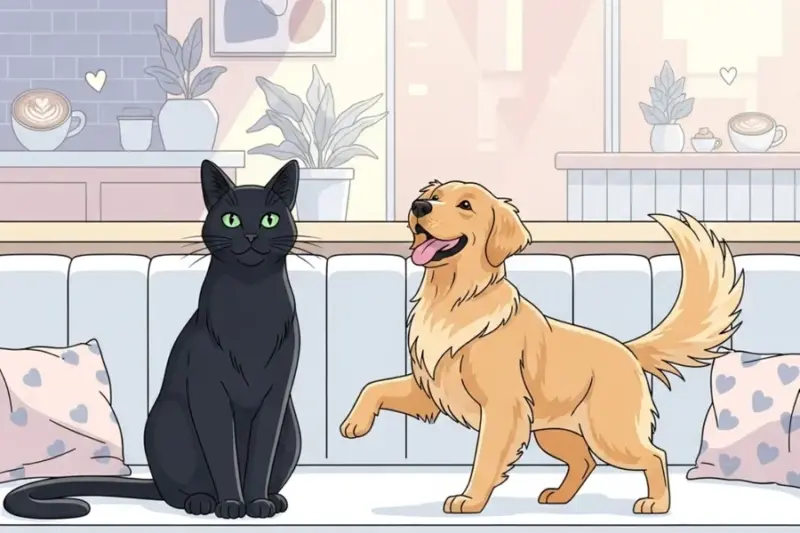
At its core, the black cat girlfriend theory uses animal metaphors to explain how opposites attract. It suggests that many relationships thrive on contrast, pairing a reserved, independent partner with a more expressive, affectionate one. The idea has resonated strongly on social media, where users regularly identify themselves or their partners as either "black cats" or "golden retrievers".
Where the black cat theory comes from
The trend originated on TikTok, where creators began describing certain personality traits through the lens of a stereotypical black cat. These individuals are often portrayed as introverted, mysterious, emotionally guarded, and slow to warm up. Like a black cat, they may seem distant or intimidating at first, but once trust is built, they are loyal, protective, and deeply affectionate.
As the theory gained popularity, users began pairing the black cat personality with its opposite: the "golden retriever boyfriend". Videos highlighting this contrast quickly went viral, reinforcing the idea that emotional balance often comes from difference rather than similarity.
Black cat vs golden retriever: opposites that attract
Psychologists explain that this metaphor mirrors long-standing ideas in relationship psychology, including the "opposites attract" theory. Black cat personalities are typically introverted, calm, and emotionally reserved, while golden retriever types are extroverted, enthusiastic, openly affectionate, and socially confident.
This dynamic is not limited to romantic relationships. Many people recognise the same pattern in friendships, where one person initiates plans and conversations while the other prefers solitude and minimal communication.
Experts note that such contrasting traits can complement each other, creating balance. The extroverted partner may encourage social engagement, while the introverted partner offers emotional depth and stability.
Traits linked to the black cat personality
According to psychologists, individuals who identify as black cats often share certain behavioural tendencies. They are more guarded, slow to trust, and selective about emotional intimacy. They tend to listen more than they speak and are often perceived as calm, elegant, or intimidating.
Once emotional safety is established, black cat personalities usually become more expressive, loyal, and deeply connected to their partner. Their affection may be less overt, but it is consistent and intentional.
What defines the golden retriever partner
Golden retriever personalities are generally more outgoing and emotionally expressive. They are known for warmth, optimism, trust, and a strong desire for connection. These individuals are often eager to communicate, quick to show affection, and comfortable with vulnerability.
Psychologists stress that these labels are not value judgments. Being a golden retriever does not mean being emotionally needy, just as being a black cat does not mean being cold or avoidant. The traits describe tendencies, not fixed identities.
Why this relationship dynamic feels exciting
Experts suggest that the appeal of the black cat and golden retriever pairing lies in the emotional tension it creates. The push and pull between independence and closeness can keep relationships engaging and dynamic.
A golden retriever partner may help a black cat become more socially open, while a black cat can encourage the golden retriever to slow down, listen, and respect emotional boundaries. This exchange of strengths often deepens emotional bonds and mutual understanding.
When the dynamic becomes challenging
Despite its popularity, psychologists caution that this relationship style can also create friction. Conflicts may arise when one partner needs constant interaction while the other requires solitude to recharge.
Miscommunication is another common issue, as extroverts often express emotions abstractly, while introverts prefer clarity and structure. Without clear communication, these differences can lead to misunderstandings or emotional imbalance.
A warning about overusing labels
Experts warn against using the theory to excuse unhealthy behaviour. In some cases, the black cat label may be used to justify emotional distance, while the golden retriever role may normalise over-dependence.
Critics also argue that the trend risks creating a hierarchy, positioning black cats as dominant and golden retrievers as submissive. Psychologists emphasise that real relationships are fluid and evolve over time, with partners often shifting roles based on life circumstances.
Does the theory really explain relationships?
While the black cat girlfriend theory offers a relatable way to talk about personality differences, experts agree it should be treated as a loose framework rather than a rulebook. Healthy relationships are built on communication, respect, and adaptability, not labels.
The trend's real value lies in sparking self-awareness and conversation. Ultimately, lasting relationships depend not on fitting a viral category, but on two people willing to understand, adjust, and grow together.
(Disclaimer: This article discusses the trends as observed on social media and among Gen Z users. It is generalised information intended for entertainment and discussion, not a scientifically validated guide to relationships. Individual experiences and dynamics may vary.)