

The US Congress has moved a step closer to making all Justice Department records related to Jeffrey Epstein public, after both chambers passed a bipartisan measure compelling their release.
The legislation now awaits President Donald Trump's signature, triggering fresh questions about when the long-sealed files could finally be disclosed.
Congress clears bill with overwhelming support
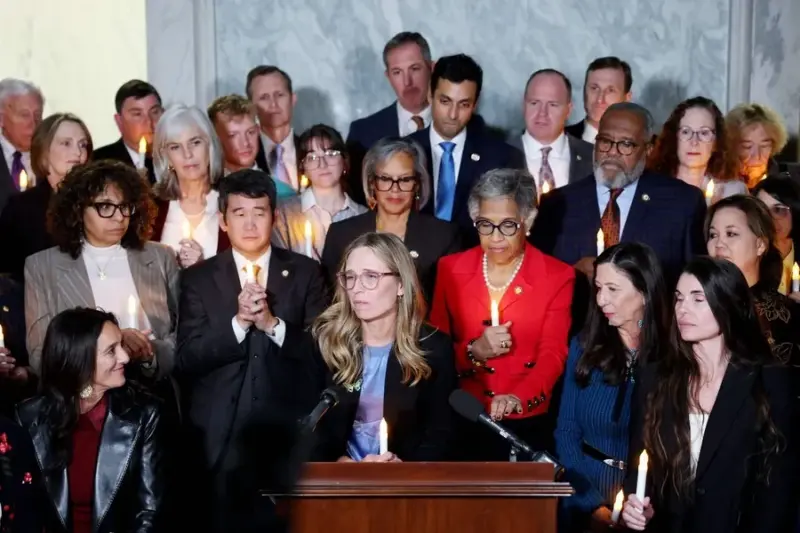
Lawmakers in the House of Representatives voted 427-1 to advance the bill on Tuesday, following hours of debate and lobbying from Epstein's victims who travelled to Capitol Hill urging its passage. Only one member, Louisiana Republican Clay Higgins, opposed the measure; two Republicans and three Democrats were absent.
The Senate later agreed unanimously to approve the resolution after Senate Minority Leader Chuck Schumer requested immediate passage by unanimous consent. With no objections, the upper chamber cleared the legislation in a matter of minutes.
The bill orders the Justice Department to publish all Epstein-related files "in a searchable and downloadable format" within 30 days of being enacted.
Thousands of documents from Epstein's estate have already been released through the House Oversight Committee, but the new measure targets Justice Department material that could include references to co-conspirators, government officials and internal communications not previously made public.
Trump reverses course, urges republicans to back release
The vote came just a day after President Trump used Truth Social to encourage congressional Republicans to support the measure, writing that "we have nothing to hide". His administration had earlier declined to release the documents, prompting anger from victims and growing dissent within his own party.
Before Trump's post, several House Republicans had signalled they were prepared to break ranks with both the president and House Speaker Mike Johnson to vote for transparency.
Trump later told reporters that the scandal was "really a Democrat problem". On Tuesday, as the Senate advanced the bill, he posted that the issue "didn't matter to him" and warned Republicans not to lose focus on what he described as recent party victories.
What happens next?
With both chambers now aligned, the bill must be formally transmitted to the White House. House Majority Leader Steve Scalise said on Tuesday that the chamber had already "started the process" of sending the measure to the Senate, though the upper chamber passed it before its official arrival.
Because the Senate is now adjourned, the bill will be deemed fully cleared by Congress on Wednesday morning (local time). It is expected to reach President Trump's desk by Wednesday afternoon, though a White House official told CNN the president had not yet determined when he would sign it.
Trump's schedule remains tight as he hosts Saudi Crown Prince Mohammed bin Salman at the White House. Officials said they are still waiting for the physical bill to arrive from Capitol Hill before confirming a signing time.
Once Trump gives his approval, the Justice Department will have 30 days to release the full set of Epstein files, including records related to Ghislaine Maxwell, who remains imprisoned as Epstein's convicted co-conspirator.
Potential delays in disclosure
Despite the momentum, legal and procedural hurdles could slow the release. The bill explicitly allows the attorney general to withhold or redact portions of documents that contain personal data amounting to "a clearly unwarranted invasion of personal privacy". Law enforcement techniques or sensitive investigative material may also be shielded.
Jonathan Entin, a constitutional law professor at Case Western Reserve University, told the BBC that "simply letting anything out could reveal a lot of private information that's not relevant or appropriate for public consumption". He added that prosecutors may resist releasing materials tied to any active federal investigations or possible future charges.
The House bill notes the Justice Department can temporarily withhold files that would "jeapordise an active federal investigation or ongoing prosecution", a clause that could become significant given Trump's call for new probes into the ties between Epstein and prominent Democrats, including Bill Clinton and Larry Summers.
Republican lawmakers Thomas Massie and Marjorie Taylor Greene have both expressed concern that Trump's push for further investigations could be used to delay transparency. "I'm concerned that now he's opening a flurry of investigations," Massie said, warning that such moves might be used as grounds to withhold records. Greene added that the documents could become "tied up" in the new inquiries.
Victims and advocacy groups continue to demand full disclosure, arguing that any withholding will fuel further suspicion and public anger. Activists projected messages onto buildings in Washington this week, urging Congress to back the Epstein files transparency act.