




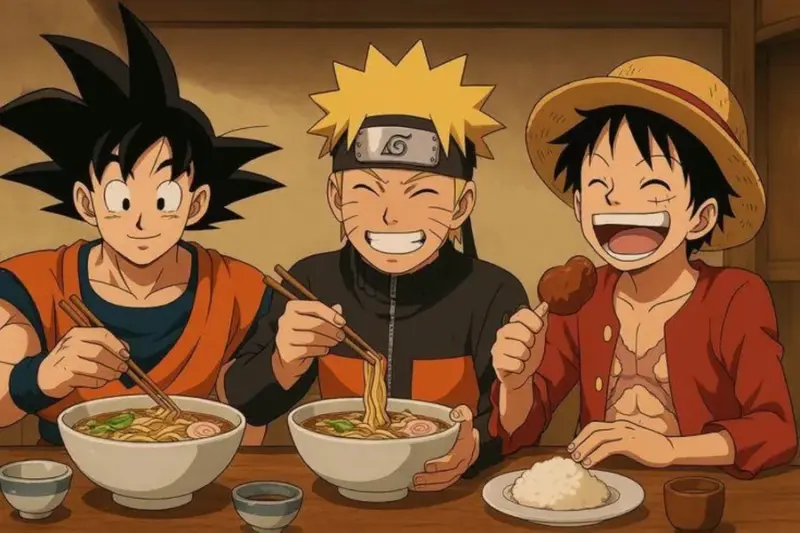

There is a very specific kind of hunger that does not come from skipping a meal. It comes from watching anime.
You can be completely full, and still feel strangely drawn to a steaming bowl of ramen from Naruto, a comforting breakfast from Attack on Titan, or a perfectly plated meal from a Studio Ghibli film.
The food looks unreal, even when the story around it is intense, emotional or completely unrelated to eating.
Anime food does not just look good. It looks perfect. And that is exactly why it stays in your mind long after the episode ends.
Why anime food looks so visually perfect
Anime food is designed with intention, not realism. Artists do not aim to replicate what food looks like in a kitchen. Instead, they exaggerate the best possible version of it.
One major reason it looks so appealing is the way light and texture are drawn. Soups in anime often have a soft glow that makes them look warm and fresh, while sauces appear slightly glossy, almost as if they have just been poured. Even something as simple as rice is given a soft shine that makes it look fluffy and perfectly cooked.
Another reason is animation style. Studios often slow down food scenes and add extra detail frames, especially when characters are eating something important. The steam rising from ramen in Naruto, for example, is often drawn in slow, gentle waves, making the dish feel comforting and alive.
Also Read:Anime therapy in Japan: Could animated avatars help treat depression and reduce stigma?
Colour also plays a big role. In Shokugeki no Soma, food is shown in vibrant, almost hyper-real colours during tasting reactions. In contrast, Studio Ghibli films like Spirited Away and Howl's Moving Castle use warm, earthy tones that make simple meals like eggs, bacon or soup feel deeply comforting.
Food in anime is tied to emotion, not just hunger
In anime, food is rarely just about eating. It is almost always tied to emotion, memory or storytelling.
In Naruto, ramen from Ichiraku Ramen is not just a favourite meal. It represents comfort, friendship and routine for Naruto himself, especially during lonely parts of his life. That is why even simple ramen scenes feel emotionally powerful.
In Attack on Titan, shared meals like bread, soup and stew often appear during rare peaceful moments. These scenes contrast heavily with the chaos outside, making the food feel like a symbol of safety and normal life.
Also Read:Why we love watching cooking videos but rarely cook the recipes
In Demon Slayer, meals are often used to show bonding and recovery. After intense battles, characters are frequently shown eating simple dishes together, reinforcing themes of healing and human connection.
In Spirited Away, the scene where Chihiro's parents eat transformed food is one of the most iconic examples of food in anime. The dishes are drawn in extreme detail, making them look almost irresistible, which adds to the surreal and unsettling mood of the story.
Why anime food feels more appealing than real food
The reason anime food often feels better than real food is not because of taste, but because of control.
In real life, food depends on cooking skill, ingredients, time and presentation. In anime, everything is controlled perfectly. There is no overcooking, no uneven plating, no bad lighting and no mess.
Even a simple egg and rice dish can look like a restaurant-quality meal because every detail is enhanced. This creates an ideal version of food that does not exist in everyday life.
Also Read: From Labubu to Melody toffee: What is viral panic shopping trend?
Another factor is repetition. Popular anime often return to certain comfort foods again and again. Ramen in Naruto, rice balls (onigiri) in One Piece, curry rice in Pokemon, and simple home meals in My Hero Academia all appear frequently. Over time, viewers start associating these foods with comfort, familiarity and nostalgia.
Why we start craving anime food in real life
The craving is not just visual. It is psychological.
When people watch anime food scenes, the brain responds to cues like steam, warmth, colour and texture. These cues are strongly linked to appetite and comfort. Even though the food is animated, the emotional response is real.
There is also a strong nostalgia factor. Many viewers watch anime during late nights, stressful study periods or moments of relaxation. Over time, food scenes become linked to those emotional states.
So when someone sees Ichiraku ramen in Naruto or a homemade breakfast in Attack on Titan, they are not only reacting to food. They are reacting to a feeling of comfort and escape.
Some anime dishes have become so iconic that fans actively recreate them in real kitchens. These are not random trends but dishes directly linked to popular anime scenes.
BONUS: Recipes
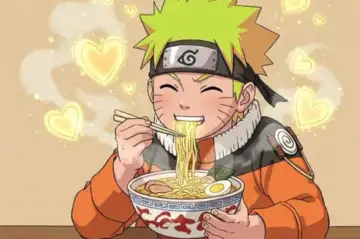
Naruto's Ichiraku Ramen
Naruto's obsession with Ichiraku ramen turned the dish into one of anime's most recognisable foods.
While Ichiraku itself is fictional, official Naruto collaborations and Japanese anime cafés have recreated ramen bowls inspired by the series.
Ingredients:
- Fresh ramen noodles
- Chicken or pork broth
- Soy sauce or miso paste
- Chashu pork slices
- Soft boiled egg
- Spring onions
- Bamboo shoots
- Nori sheets
Method:
Prepare a rich broth using stock and soy sauce or miso for depth. Cook ramen noodles separately to maintain texture.
Assemble the bowl with broth, noodles and toppings arranged neatly on top.
The soft boiled egg is especially important for recreating the anime appearance.
The visual layering and steam are what make this dish feel instantly recognisable to anime fans.
One Piece Meat-On-The-Bone Recipe
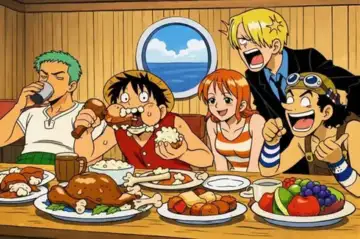
Whether the Straw Hat crew is celebrating after a battle or simply eating together aboard the Thousand Sunny, oversized roasted meat has become one of the show's signature foods.
Ingredients:
- 500g minced chicken or minced beef
- 1 large chicken drumstick bone (cleaned) or a thick food-safe bone
- 1 egg
- ½ cup breadcrumbs
- 2 garlic cloves (minced)
- 1 teaspoon black pepper
- 1 teaspoon paprika or chilli powder
- Salt to taste
- Oil or butter for cooking
Method:
Start by cleaning the exposed drumstick bone properly. This becomes the "handle" that gives the meat its classic One Piece appearance.
In a bowl, combine the minced meat, egg, breadcrumbs, garlic, pepper, paprika and salt. Mix until the texture becomes firm enough to shape easily.
Take portions of the meat mixture and mould them around one end of the bone, shaping it into a large oval or cartoon-style drumstick just like the anime version.
Once shaped, refrigerate it for around 20 to 30 minutes so it holds together while cooking.
You can then either:
bake it in the oven at 200°C for around 25-30 minutes, or
pan-fry and finish cooking on low heat
Cook until browned outside and fully cooked inside.
For extra anime-style presentation, brush lightly with butter before serving so the surface looks glossy and rich like the meat shown in the series.
Pokémon Japanese Curry Rice
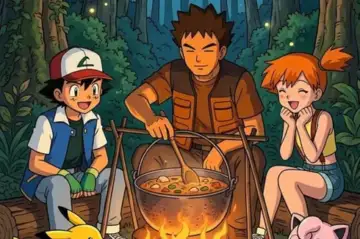
Japanese curry appears often in Pokémon, especially in cosy travel and campfire scenes.
The franchise later embraced curry culture even more through games like Pokémon Sword and Shield, where players could cook curry recipes.
Ingredients:
- Japanese curry cubes
- Potatoes
- Carrots
- Onions
- Chicken or tofu
- Steamed rice
Method:
Cook vegetables and protein until tender. Add water and curry cubes, allowing the sauce to thicken into a rich gravy. Pour over hot rice and serve warm.
Japanese curry is milder and slightly sweeter than Indian curry, which is why it feels especially comforting in anime scenes.