




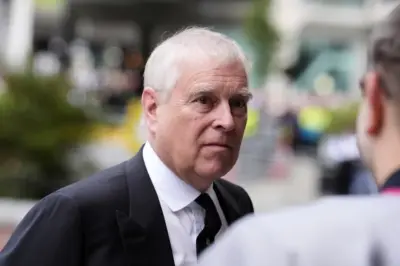

Ex-royal Andrew Mountbatten-Windsor is under intense scrutiny after British media reported that he was arrested at the Sandringham Estate on suspicion of misconduct in public office, a development tied to long-running controversies connected to Jeffrey Epstein.
According to multiple outlets, including the BBC News, officers arrived in unmarked vehicles at Wood Farm on Thursday afternoon, where Andrew, who turned 66 this week, was taken into custody. Police also carried out searches at addresses in Berkshire and Norfolk as part of the investigation.
Authorities have not disclosed the specifics of the allegations, though they are understood to relate to material contained in recently released US files associated with the disgraced financier, Jeffrey Epstein.
What the charge means under UK law
The accusation centres on "misconduct in public office," a longstanding common-law offence in England and Wales. The Crown Prosecution Service defines it as "serious wilful abuse or neglect of the power or responsibilities of the public office held."
Four criteria apply to this charge:
- a public officer, acting as such
- who "wilfully neglects to perform their duty and/or wilfully misconducts themselves"
- in a way that represents an abuse of public trust
- and does so "without reasonable excuse or justification"
If proven in court, the offence carries a maximum penalty of life imprisonment.
Why the charge is considered unusual
Legal commentator Joshua Rozenberg told Sky News the use of this particular offence is notable because it is judge-made rather than statutory, meaning Parliament has never formally set a maximum sentence.
The UK government is currently advancing the Public Office (Accountability) Bill, which would replace the historic offence. The bill would require public officials to act with "candour, transparency and frankness" and make it a criminal act to mislead the public.
How the allegations emerged
Earlier this month, Thames Valley Police confirmed it was examining claims that Andrew may have shared confidential government material with Epstein while serving as Britain's trade envoy. Police say the assessment prompted a full investigation.
US documents also reportedly include photographs appearing to show Andrew with a woman whose identity is redacted. Additional emails and images released in the United States suggested continued contact between Andrew and Epstein even after the latter's 2008 conviction.
Additional allegations under review
The BBC reported that police are now looking into claims that Epstein brought a second woman-, then in her twenties and not a British national, to the UK in 2010 for a meeting with Andrew at Royal Lodge in Windsor.
Investigators say they are also "assessing" claims the former royal sent trade-related reports to Epstein in the same period.
Background: Epstein links and civil settlement
Andrew's association with Epstein has drawn years of global scrutiny. Virginia Giuffre, who died last year, alleged she was trafficked by Epstein and forced into sexual encounters with Andrew when she was 17, allegations Andrew has consistently denied.
In 2022, he reached an out-of-court settlement with her in the United States, reportedly worth several million pounds, without admitting liability.
Impact on his royal role
The fallout from a 2019 interview with the BBC, widely criticised for his defence of the Epstein friendship, led Andrew to step back permanently from royal duties. He later relinquished his honorary military titles and royal patronages.
He is the second son of Queen Elizabeth II and the younger brother of King Charles III. King Charles III has released a formal statement responding to the arrest of his younger brother, Andrew Mountbatten-Windsor, saying the investigation must be allowed to proceed without interference.
In the statement, the King said, "What now follows is the full, fair and proper process by which this issue is investigated in the appropriate manner and by the appropriate authorities," adding that the Royal Family would continue to support the inquiry. "In this, as I have said before, they have our full and wholehearted support and co-operation."
He stressed that legal proceedings should unfold independently: "Let me state clearly: the law must take its course."
The monarch also noted that he would not speak further on the matter while the investigation continues. "As this process continues, it would not be right for me to comment further on this matter. Meanwhile, my family and I will continue in our duty and service to you all," the statement said.
What happens next?
Police stated that the man arrested "remains in custody" and reiterated that an arrest does not equate to a charge. Investigators must now determine whether the evidence meets the threshold for prosecution.