
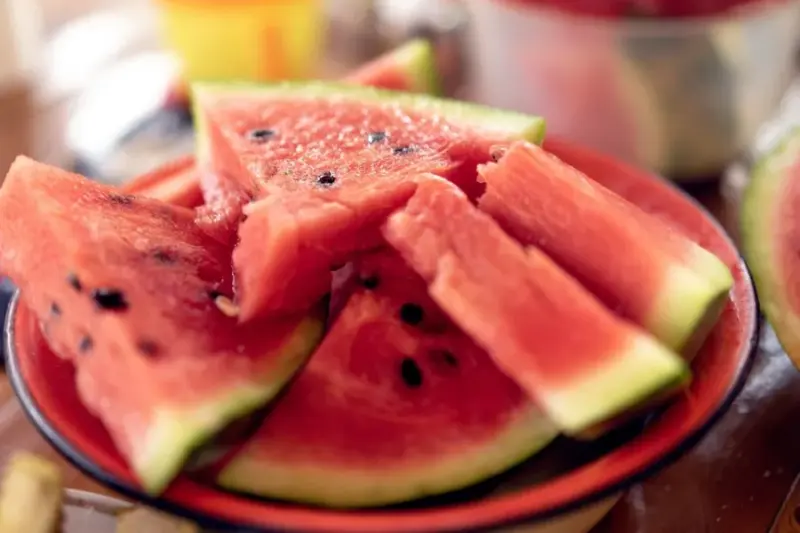

Nutritionist Lovneet Batra is urging people to stop discarding watermelon rind, calling it one of the fruit's most overlooked nutritional powerhouses.
In a recent video, she highlighted that the tough green skin and its thin white layer, often thrown away, offer significant health benefits, particularly for cardiovascular function.
Watermelon, commonly celebrated as a hydrating summer staple, is known for its vibrant red, pink or yellow flesh. But Batra says the lesser-loved rind carries nutrients that can support heart health, blood flow and overall metabolism.
Nutritionist urges people not to discard the rind
Batra noted that most people enjoy the sweet inner pulp and throw out the rest, despite its value. "Most people eat the red flesh and discard the white rind. But that 'waste' is actually a hidden nutritional asset," she wrote.
In her video, she added: "Stop throwing this part of the watermelon. It is actually more powerful than the part that you do eat," pointing out that "The white part of the watermelon contains Citrulline," an amino acid that converts into arginine in the body and helps produce nitric oxide, essential for maintaining healthy blood vessels.
She listed several benefits of citrulline, noting its role in promoting heart health, supporting vascular function and improving circulation.
Nutrient profile of the watermelon rind
According to Batra, the rind contains a range of nutrients, including fibre, vitamin C, vitamin B6, riboflavin, vitamin A precursors and additional phytonutrients. She also explained that L-citrulline found in the rind can support better blood circulation, help relax blood vessels, improve overall vascular function and contribute to heart health.
How to use the rind in everyday cooking
The nutritionist also shared simple ways to incorporate the rind into meals, encouraging people to use it creatively rather than throw it away. Her suggestions include:
- Adding it to smoothies
- Making chutney
- Stir-frying with spices
- Pickling it
"What you're throwing away could be supporting your circulation, gut health, and overall metabolism," she said.
Additional benefits
Health website Healthline also reports that watermelon rind carries noteworthy health advantages. Though the fruit is 92 percent water and packed with vitamins A and C, potassium and magnesium, its entire structure, much like cucumbers, is edible.
According to the platform, watermelon rind may:
- Support sexual and athletic performance: While not a replacement for medical treatments, citrulline in the rind has been linked to potential improvements in mild to moderate erectile dysfunction and may help boost athletic endurance, though evidence remains largely anecdotal.
- Help lower blood pressure: Studies show that watermelon extract supplements can help obese adults manage blood pressure. The fruit also acts as a natural diuretic, which may aid those with hypertension.
- Provide valuable fibre: The rind's fibre content can improve digestion and bowel regularity, help lower cholesterol and regulate blood sugar, and increase satiety, supporting healthy weight management.