
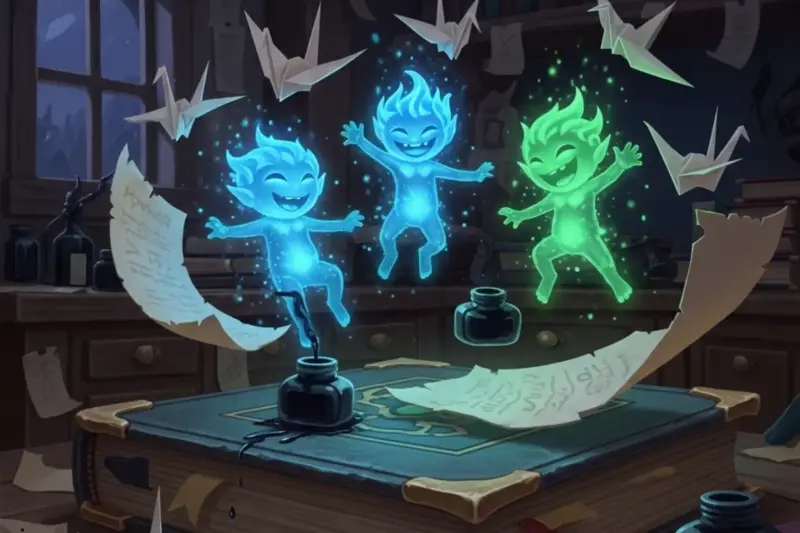

Word of the Day: SHENANIGANSPronunciation: She-nan-i-ganz /ʃəˈnæn.ɪ.ɡənz/ or /ʃɪˈnæn.ɪ.ɡənz/
Meaning:
'Shenanigans' is a plural noun referring to secret or dishonest activity, maneuvering, or-more commonly in modern usage-silly, high-spirited, and mischievous behavior.
It captures a specific type of "playful trouble" that isn't necessarily malicious but is definitely disruptive.
Example for daily usage:
- "I don't know what you two are planning, but I won't have any shenanigans in the kitchen while I'm cooking."
- "The political campaign was marred by a series of back-room shenanigans that confused the voters."
Origin and History:
The true origin of shenanigans is one of the great mysteries of the English language. It first appeared in California in the mid-1800s. Many linguists believe it comes from the Irish word sionnachuighim, meaning "I play the fox" or "to be crafty." Others suggest it may have roots in the Spanish treta (trick) or even a slang version of an old German word for "to work hard/cheat." Regardless of where it started, it has become a quintessential Americanism for calling out "funny business."
Cultural Significance and Modern Usage:
In today's culture, shenanigans has shifted from a word describing genuine fraud to a term of endearment for chaos. It is the "official" word for what happens during bachelor parties, sibling rivalries, and April festivities.
On April 7th, as the weather turns warmer and people head outdoors, the spirit of shenanigans is often in the air-it's the energy of a world shaking off the winter blues and getting a little bit rowdy. It serves as a reminder not to take life too seriously.
Also read Word of the day April 04
Interesting Facts:
- The word is almost always used in the plural. You rarely hear of a "single shenanigan," as mischief usually comes in a series.
- Despite its "fun" vibe today, in the late 19th century, it was a very serious accusation of swindling or "shyster" behavior in the Wild West.
- It is a "lexical chameleon"-it can sound like a lighthearted joke or a stern warning depending on the tone of the speaker.
Examples from Literature:
- "The tavern was alive with the sound of laughter and the typical shenanigans one expects when sailors return to port." - Tales of the High Seas
- "He suspected some sort of shenanigans was afoot when he saw the cat wearing a tiny top hat." - The Everyday Surrealist
Synonyms:
Mischief
Tomfoolery
Skulduggery
Monkey business
Antics
Antonyms:
Seriousness
Solemnity
Honesty
Gravity
Decorum
Read more word of the day here.