

Iran is facing its most intense wave of unrest in years as anger over a collapsing economy has triggered nationwide demonstrations and prompted authorities to impose a sweeping shutdown of internet and telephone services.
Iran has closed the main airport in Tehran and deployed air defence systems nationwide, according to international aviation notices, as anti-government demonstrations intensified significantly on Thursday night.
The disruption, confirmed by watchdog groups including NetBlocks, has obscured the true scope of the protests but has done little to quell them.
The unrest comes at a moment of extraordinary pressure for Tehran, still grappling with the aftermath of a 12-day conflict with Israel in June, during which the United States carried out strikes on Iranian nuclear sites. The economic pain deepened further in September when the United Nations reinstated sanctions linked to Iran's nuclear activities, accelerating the free fall of the rial, which has plunged past 1.4 million to the dollar.
Against this backdrop, U.S. President Donald Trump has issued unusually stark warnings to Iranian authorities, saying Washington would intervene if security forces "violently kill peaceful protesters," adding that the U.S. "will come to their rescue." Trump said Sunday: "We're watching it very closely. If they start killing people like they have in the past, I think they're going to get hit very hard by the United States."
A protest movement spreading across the country
Human rights monitors say the demonstrations have erupted in every one of Iran's 31 provinces. The U.S.-based Human Rights Activists News Agency has tracked more than 390 gatherings, reporting at least 42 deaths and over 2,270 arrests since late December. Restrictions on media access, combined with the nationwide communications blackout, have made independent verification challenging.
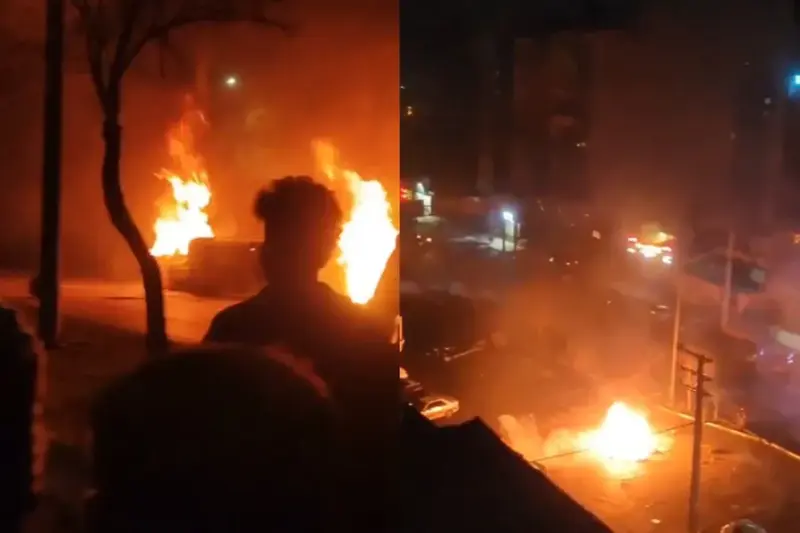
Videos posted online-often shaky, brief and filmed covertly-show crowds chanting, fires burning and, in some cases, the sound of gunfire. Iranian state media has remained largely muted but has accused "terrorist agents" linked to the U.S. and Israel of instigating violence and arson.
Despite calls by Supreme Leader Ayatollah Ali Khamenei insisting "rioters must be put in their place," protests have continued, including the toppling of a statue of slain Revolutionary Guards commander Qassem Suleimani in Fars province.
The economic collapse driving public anger
The collapse of Iran's currency has fuelled an already deep economic crisis. Inflation sits at around 40 percent, pushing up the cost of staples such as rice and meat. A new tiered pricing system for the country's subsidised fuel has sharply raised petrol costs, with officials signalling further increases.
The Central Bank's scrapping of a preferential exchange rate for most imported goods-except wheat and medicines-has also triggered steep rises in food prices. What began as frustration among shopkeepers in Tehran has spiralled into broader calls for change, with demonstrators chanting against the government and the political system.
Discontent has simmered since the 2022 death of Mahsa Amini in police custody, which sparked nationwide protests under the "Woman, Life, Freedom" banner.
A weakened 'Axis of Resistance'
Iran's network of regional allies and proxy forces-long referred to in Tehran as the "Axis of Resistance"--has suffered major setbacks over the past two years. Israel's offensive in Gaza has decimated Hamas; Hezbollah in Lebanon has lost senior commanders; Yemen's Houthis have been struck repeatedly by U.S. and Israeli firepower; and a rapid offensive in December 2024 toppled Syrian President Bashar Assad, one of Iran's most significant partners.
While China continues to buy Iranian oil, neither it nor Russia-preoccupied with its war in Ukraine-has offered military support. That isolation has diminished Tehran's strategic leverage at a time of domestic upheaval.
Nuclear tensions add to Western concern
Iran has long insisted its nuclear programme is peaceful, though officials have increasingly hinted at the possibility of pursuing nuclear weapons. Before the June conflict with the U.S., Iran had been enriching uranium close to weapons-grade levels, making it the only country without a declared weapons programme to do so.
The International Atomic Energy Agency has warned that Iran possesses enough material to build multiple devices if it chose to weaponise. U.S. intelligence agencies say Iran has not yet begun such a programme but has taken steps that "better position it to produce a nuclear device."
Tehran recently announced it had halted uranium enrichment at all domestic facilities, a move interpreted as an attempt to signal readiness for potential negotiations. No substantial diplomatic progress has followed.
A long and fraught history with the United States
Iran and the U.S. have endured decades of confrontation, dating back to the CIA-backed 1953 coup that cemented Shah Mohammad Reza Pahlavi's rule. The 1979 Islamic Revolution, the subsequent hostage crisis, opposing sides in the Iran-Iraq war and numerous maritime clashes have entrenched mutual distrust.
An easing of tensions came with the 2015 nuclear agreement, but relations deteriorated sharply after Trump withdrew from the deal in 2018. Regional hostilities escalated again following Hamas' 2023 attack on Israel.
Fresh violence and a growing crackdown
Rights groups say the current crackdown has involved tactics such as raids on hospitals to detain wounded demonstrators. According to Iran Human Rights, at least 45 protesters-including eight children-have been killed. Wednesday was reportedly the deadliest day yet, with 13 confirmed deaths.
Government-aligned media have highlighted attacks on security forces, including the killing of a police officer west of Tehran and an assault on a station in Chenaran that left five people dead.
President Masoud Pezeshkian has urged restraint, appealing for "dialogue, engagement and listening to the people's demands," though security forces appear to be escalating their response.
Exiled crown prince calls for mass demonstrations
The blackout has complicated communication among protesters, but crowds still took to the streets late Thursday after exiled crown prince Reza Pahlavi urged nationwide demonstrations. Bonfires, blocked roads and chants against the government were documented in multiple cities.
Pahlavi has called for further gatherings at 8 p.m. Friday. His involvement marks a rare test of whether the public might heed appeals from the former royal family, once taboo under the Islamic Republic.
(With inputs from agencies)