




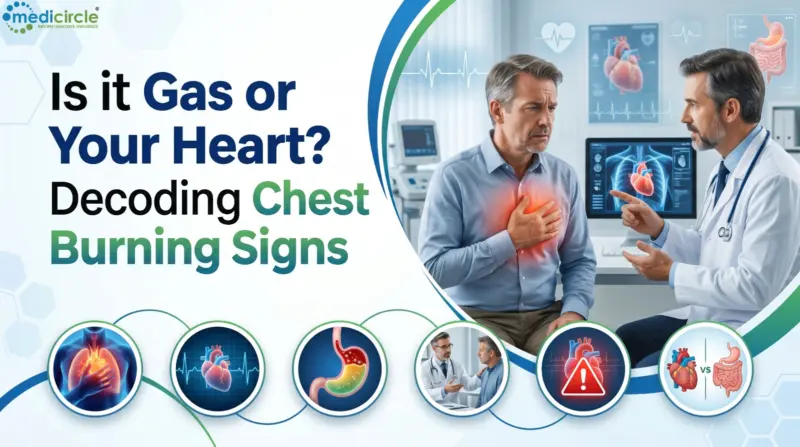

Is it Gas or Your Heart? Decoding Chest Burning
An uncomfortable flare-up in the chest is a remarkably common experience in India. Because our traditional diets are rich in spices and our daily routines often involve late-night dinners, most people naturally blame their last meal when discomfort strikes.
The go-to solution is usually a cold glass of milk, a spoonful of antacid gel, or a home remedy. Many individuals assume that their distress is just a basic stomach problem, completely ignoring the fact that major cardiovascular events can mimic these exact sensations.
While a faulty digestive system is frequently the culprit, the heart lies in the exact same part of the body. The nerves that supply the stomach, the esophagus, and the heart follow similar paths to the brain. This anatomical setup makes it incredibly easy for the mind to confuse a digestive issue with a serious cardiovascular event. The high prevalence of unhealthy eating habits, sedentary lifestyles, and rising stress levels has made both chronic gastric issues and cardiac diseases incredibly widespread across the Indian population.
Knowing how to separate a harmless bout of indigestion from a true medical emergency is a critical life skill that can save lives. Medical professionals look at a specific matrix of symptoms, triggers, and physical indicators to figure out exactly what is going wrong. Understanding the core differences between these health issues helps patients avoid unnecessary panic while ensuring they do not delay critical treatment when the heart is actually at risk.
Physical Sensations
When you describe your discomfort to a doctor, the precise vocabulary you use matters immensely. The way the pain actually feels provides the very first diagnostic clue.
Reflux and acidity typically present as a distinct, fiery irritation that starts behind the breastbone. This sensation tends to travel upward, sometimes reaching the back of the throat. It is frequently accompanied by a sour, metallic, or bitter fluid taste in the mouth, which confirms that stomach acid has traveled north into the sensitive lining of the food pipe. This condition, often linked to gastroesophageal reflux disease, can cause significant irritation but does not directly threaten life.
Cardiac issues, including angina or an active heart attack, rarely present as a simple burning sensation. Patients experiencing a heart issue are much more likely to describe a deep, crushing pressure. It feels like an intense squeezing, a tight band wrapping around the ribcage, or a heavy weight pressing down on the sternum. When a physician hears words related to constriction rather than heat, their focus shifts immediately to the cardiovascular system. This heavy pressure indicates that the heart muscle might be starving for oxygenated blood.
Triggers and Timing
Looking at exactly when the discomfort started and what you were doing at the time can help pin down the underlying cause.
Food and Movement
Acidity is intimately tied to digestion and mechanics. If your chest discomfort flares up within an hour of eating fried foods, heavy curries, or a large feast, your stomach is the likely source.
Furthermore, gastroesophageal reflux disease is highly sensitive to gravity. If the burning intensifies the moment you lie down on the bed or bend forward to tie your shoes, it is almost certainly a digestive issue. Without gravity helping to keep contents down, stomach acid easily spills upward into the esophagus.
Exertion and Stress
The heart reacts to physical effort and emotional strain rather than the contents of your dinner plate. Cardiovascular discomfort typically strikes when the heart muscle is forced to work harder and demands more oxygen.
If the pressure builds up while you are walking up a steep incline, climbing stairs, lifting heavy objects, or experiencing a sudden burst of anger, the heart is the prime suspect. Changing your posture, such as sitting upright or standing up, will not change or relieve cardiac pain, whereas it often eases acid reflux.
Pain Mapping
The location of the discomfort and where it travels can help identify the source of the problem.
Acid-related burning is generally well-contained. It stays firmly in the center of the chest or moves vertically toward the neck. It does not wander into the limbs or lateral areas of the body.
Cardiac distress is famous for traveling along shared nerve pathways, a phenomenon known as radiating pain. Doctors watch closely for discomfort that leaves the chest area and migrates into the left shoulder, down the left arm, or up into the jaw and teeth. It can also manifest as a dull, heavy ache between the shoulder blades.
In women, diabetics, and elderly individuals, classic chest pressure may not happen at all. Instead, a heart issue might show up primarily as isolated jaw, neck, or back discomfort. This is often referred to as a silent heart attack, which is highly dangerous because patients do not realize their life is in jeopardy.
Secondary Symptoms
Doctors never look at chest pain in isolation; they assess the systemic state of the entire body to ensure an accurate clinical picture.
Digestive Signs | Cardiovascular Signs |
Upper abdominal bloating | Sudden breathlessness |
Frequent burping | Unexplained cold sweats |
Sour taste in mouth | Dizziness or vertigo |
Feeling overly full | Profound fatigue |
When acidity is the root cause, the secondary symptoms are restricted to the gut. You might feel bloated, experience frequent burping, or have a sensation of fullness in the upper abdomen. These symptoms highlight a struggling digestive tract but confirm that the cardiovascular system is operating normally.
A cardiovascular crisis, however, throws the entire nervous system into a state of shock. This triggers systemic warning signs that have nothing to do with digestion. Breaking into a sudden cold sweat in a cool room, feeling unexpectedly lightheaded, experiencing shortness of breath, or feeling a wave of unexplained nausea are clear signs that the heart muscle is struggling. These symptoms require an immediate medical response.
Medical Protocols
When evaluating chest discomfort, the medical community follows a strict rule. Always eliminate the most dangerous possibility first. Even if a patient suspects gas, the medical team will evaluate the heart first to ensure safety.
- Electrocardiogram: This non-invasive test maps the electrical rhythms of the heart. Any irregularities or signs of a lack of blood flow to the heart muscle show up on the paper strip within minutes.
- Cardiac Enzyme Panels: If a heart attack is underway, injured heart cells release specific proteins called troponins into the blood. A quick blood test can confirm or rule out myocardial damage.
- The Antacid Test: If the heart checks out completely clear, a doctor might administer a strong liquid antacid. If the chest discomfort vanishes shortly after ingestion, it acts as a practical confirmation of esophageal irritation.
- Endoscopy: For chronic, recurring chest burning, a specialist may guide a small camera down the food pipe. This visual inspection identifies structural issues like reflux, stomach ulcers, or severe tissue inflammation.
Emergency Action
It is natural to want to wait out discomfort, but attempting to self-diagnose at home can be risky. The golden rule of chest pain management is to avoid overthinking the symptoms if they are severe or unfamiliar.
If you experience new, intense chest pressure that lasts longer than ten to fifteen minutes, especially if it is accompanied by sweating, nausea, or breathing difficulties, skip the home remedies and head straight to the nearest emergency clinic. The first sixty minutes after a cardiovascular event represent the golden hour, where immediate medical treatment is most effective at preventing permanent muscle damage.
It is far better to be sent home with a prescription for antacids than to compromise your health by ignoring a cardiovascular event. With heart disease appearing at younger ages across India, taking a cautious, proactive approach to chest health is essential.
Final Summary
Distinguishing between a digestive flare-up and a cardiac event requires looking at the nature of the pain, its triggers, and accompanying body signals. While acidity is a routine part of life for many, it shares the same physical space as the heart. Recognizing the differences, such as heaviness versus burning, radiation versus localized pain, and exertion versus food triggers, allows you to make informed decisions about your health.
If you struggle with frequent chest burning, schedule a consultation with a healthcare professional. Managing your digestive health with expert guidance ensures you can live comfortably while confirming that your heart remains in excellent condition.
Frequently Asked Questions
Q1: Can a panic attack feel like acidity or a heart problem?
Yes. Panic attacks can cause hyperventilation, a racing pulse, chest tightness, and even acid reflux due to sudden stress. Because the symptoms overlap significantly with a heart issue, any first-time episode of severe chest tightness should be evaluated by a doctor to rule out physical causes.
Q2: Why does gas sometimes cause pain near the heart?
When gas accumulates in the stomach or the splenic flexure, which is the turn in the large intestine located just below the ribs, it can physically push upward against the diaphragm. This pressure can cause localized discomfort on the left side of the chest, mimicking cardiac discomfort.
Q3: Can taking antacids regularly hide a heart condition?
Yes, this is a distinct risk. If someone assumes their chronic chest discomfort is merely acid reflux and continuously self-medicates with over-the-counter antacids, they might mistakenly ignore stable angina, delaying vital cardiac care.