




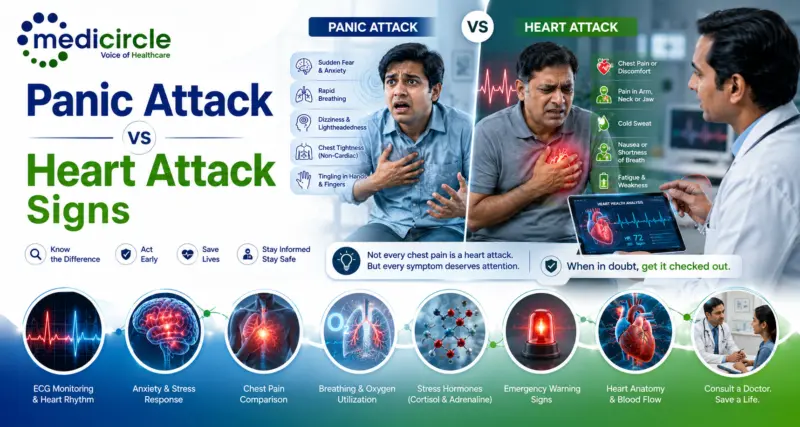

Panic Attack vs Heart Attack Signs
Imagine sitting at your desk or relaxing at home when, out of nowhere, your chest tightens, your heart starts pounding like a bass drum, and you can barely catch your breath.
A wave of pure terror washes over you. In that moment, your mind jumps to the most logical, terrifying conclusion that you are having an acute myocardial infarction.
This exact scenario plays out every single day across India, driving individuals to search for a clear comparison of a panic attack vs heart attack. Millions of people rush to emergency rooms convinced their cardiovascular system is failing, only to discover that their blood vessels and heart muscle are perfectly fine. Instead, they have experienced a severe anxiety episode. Because the physical sensations of intense psychological distress mirror actual cardiovascular conditions so perfectly, it is incredibly easy for the brain to misinterpret the signals.
Understanding the deep connection between our mental state and physical health symptoms is vital for our overall well-being. When we cannot tell the difference between severe stress and a true medical crisis, it leads to a cycle of constant health anxiety and unnecessary hospital visits. On the flip side, we also want to ensure that no one dismisses a genuine cardiac emergency as simple stress. Breaking down exactly why these two issues feel so identical can give you the clarity you need to handle these frightening moments with calm confidence.
Fight or Flight Activation
To understand why severe anxiety feels like a full-blown medical emergency, we have to look at our body's built-in survival tool which is the fight or flight response. This autonomic nervous system feature evolved to protect humans from immediate physical danger, like encountering a predator. However, our modern nervous system cannot always distinguish between an actual physical threat and a massive buildup of mental and emotional stress.
When your brain registers a perceived crisis, it instantly floods your bloodstream with stress hormones like adrenaline and cortisol. This chemical wave forces your body into overdrive. Your blood vessels narrow, forcing your blood pressure up. Your heart rate skyrockets to quickly pump blood to your major muscles. Your respiratory system speeds up to bring in extra oxygen.
When this happens while you are simply driving through heavy city traffic or sitting on your couch, it feels entirely terrifying. Because there is no external threat to justify why your body is reacting this way, your brain assumes the danger must be coming from an internal organ failure.
Overlapping Chest Pain Symptoms
The physical changes brought on by sudden severe anxiety trigger a cluster of sensations that closely look like real cardiac conditions. Let us look closer at the three primary symptoms that cause the most confusion.
Anxiety Chest PainChest discomfort is usually the first symptom that causes immediate alarm. During a severe anxiety episode, the intense muscle tension in your chest wall, combined with rapid breathing, can cause sharp, stabbing pains. A cardiovascular event also causes chest discomfort, but it is typically described as a heavy, crushing weight or a tight squeezing sensation deep in the center of the chest.
A racing heart is a classic feature of both conditions. High anxiety can push your pulse well past 100 beats per minute in a matter of seconds. This sudden acceleration makes it feel like your heart is fluttering, skipping beats, or hammering violently against your ribs, which easily mimics the dangerous heart rhythms seen in actual cardiovascular crises.
Shortness of BreathWhen stress hormones disrupt your normal breathing, you naturally begin taking rapid, shallow breaths. This hyperventilation throws off the balance of oxygen and carbon dioxide in your body, creating a suffocating feeling where you feel like you are choking or unable to get deep air into your lungs. Because shortness of breath is also a major sign of a struggling heart, this symptom is incredibly difficult to differentiate based on feeling alone.
Critical Diagnostic DifferencesWhile the symptoms feel almost identical on the surface, they actually behave in very different ways. Learning these patterns can bring immense comfort during a crisis and help you make smart choices about seeking medical care.
Feature | Panic Attack | Heart Attack |
Onset | Strikes suddenly out of nowhere, regardless of activity. | Often triggered by physical exertion, heavy exercise, or intense anger. |
Pattern of Pain | Peaks rapidly within 10 minutes, then slowly begins to fade. | Continuous, lingering pain that gets progressively worse over time. |
Location | Sharp or localized to the chest area; changes when you move or breathe. | Radiates outwardly to the left arm, neck, jaw, shoulders, or back. |
Associated Signs | Tingling or numbness in fingers, toes, and around the mouth. | Cold sweats, nausea, vomiting, or sudden lightheadedness. |
The way the episode begins offers your first major clue. A panic attack usually comes out of the blue, peaks within roughly ten minutes, and then naturally tapers off as the adrenaline leaves your system. A cardiac event is much more likely to be continuous and prolonged, and the pain does not simply fade away with rest.
The movement of the pain is another indicator. Anxiety related chest pain usually stays in the immediate chest area. True cardiac pain often radiates into your left arm, neck, jaw, or upper back. Furthermore, the rapid breathing associated with anxiety frequently causes a distinct tingling sensation or numbness in your hands and face, which is a neurological reaction to hyperventilation that rarely happens during a cardiovascular emergency.
Physiological Effects of Hyperventilation
Hyperventilation is the hidden culprit behind the most terrifying physical sensations of anxiety. When you breathe too fast, you exhale too much carbon dioxide. This sudden drop shifts the chemical balance of your blood, leading to a temporary state called respiratory alkalosis.
This minor chemical change tells the small blood vessels in your body to constrict slightly, which reduces localized blood flow to your brain and nerve endings. The results can be incredibly disorienting because you might feel dizzy, lightheaded, completely detached from reality, or experience intense muscle twitching. When these strange physical illusions combine with an already tight chest, your mind becomes absolutely convinced that your body is shutting down, creating a vicious cycle where fear ruins your breathing, and your breathing fuels your fear.
Calming Your Nervous System
If you find yourself caught in the middle of an intense physical episode that feels like an emergency, you need a step by step strategy to switch off your body's alarm system. Since your physical symptoms are being kept alive by your brain's perception of danger, your main goal is to shift your body back into a relaxed state.
The Box Breathing MethodTo practice this controlled breathing technique, follow these four simple steps in a continuous cycle:
- Inhale Smoothly: Breathe in quietly through your nose for four seconds.
- Hold Gently: Keep the air inside your lungs for four seconds.
- Exhale Slowly: Release the breath completely through your mouth for four seconds.
- Hold Empty: Wait for four seconds with empty lungs before taking your next breath.
Controlled breathing is your quickest tool to stop a panic episode. By intentionally slowing down your breath and expanding your abdomen, you naturally restore your carbon dioxide levels. Ensure your exhalations are longer than your inhalations. This simple change triggers your vagus nerve to slow your heart rate down and relax your muscles.
Shift your brain's attention away from your internal symptoms and back to the world around you. Look around the room and name five things you can see, four things you can touch, three things you can hear, two things you can smell, and one thing you can taste. This mental shift helps break the cycle of fear. Reminding yourself that this is a temporary adrenaline rush, rather than a structural heart failure, can help desensitize your mind to the physical sensations.
Seeking Professional Care
Even though it is helpful to know how panic works, you must never try to self-diagnose a brand-new, unexplained, or severe chest pain. Ruling out underlying structural heart conditions with a doctor is absolutely essential for your long-term health and peace of mind.
You should seek emergency medical attention right away if your chest pain comes with heavy sweating, nausea, vomiting, or a severe, crushing pressure that spreads into your arm or jaw. If your symptoms do not start to improve after fifteen to twenty minutes of rest and deep breathing, or if you have known cardiac risk factors, such as high blood pressure, diabetes, a sedentary lifestyle, or a family history of heart disease, prioritize a professional evaluation immediately. A quick, routine electrocardiogram and basic blood work at a hospital can give you definitive answers, keeping you safe while providing the medical reassurance you need to focus on your mental health.
Conclusion
Experiencing a panic attack that mimics a heart issue is a profound demonstration of how closely our minds and bodies are linked. The chest pain, rapid pulse, and breathing difficulties are genuine physical reactions driven by an old survival mechanism. By learning how these episodes work and recognizing the subtle differences in their patterns, you can take away the fear that keeps the cycle of panic going.
True health management means taking care of both your mind and your body together. Working alongside healthcare professionals to ensure your heart is strong and healthy gives you the foundation you need to manage your anxiety effectively. With the right tools, breathing patterns, and medical guidance, you can quiet the false alarms of your nervous system and bring lasting balance back to your life.