




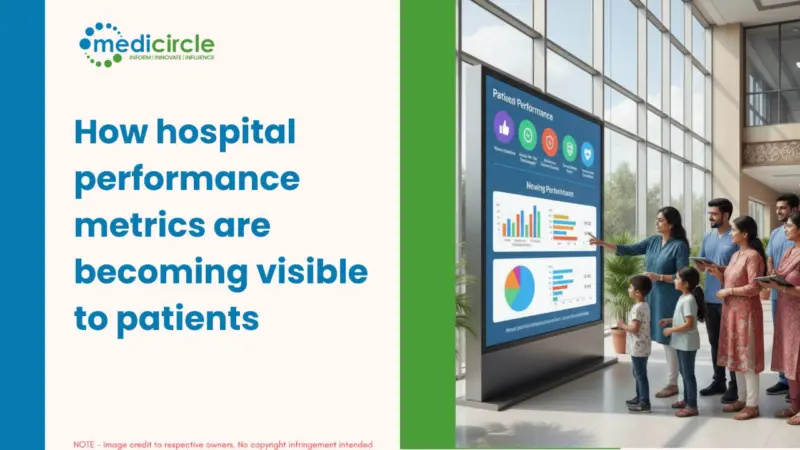

Choosing a hospital used to feel like a guessing game. Most of us would ask relatives for their experiences, follow a trusted doctor's name or pick the closest building with a blue H-sign.
What really happened inside, how clean it was, how often patients recovered without complications and whether people felt genuinely cared for remained a mystery. That is changing and fast. A new level of openness is emerging, placing real data about hospital performance directly in the hands of patients. This is not just about information; it is about power. It transforms a moment of vulnerability into one of informed choice.
A government led shift:
The biggest change agent is a national policy shift. Through the Ayushman Bharat PM JAY scheme, the National Health Authority is fundamentally altering the rules of the game. Hospitals are no longer paid only for performing more procedures. The focus is now firmly on the value of care delivered and how well the patient actually recovers.
Think of it as a school report card for hospitals. Performance is graded using clear, patient centric metrics. These include beneficiary satisfaction, readmission rates, unexpected out of pocket expenses, formal grievances, and measurable improvement in quality of life. This information is no longer intended to remain internal. The National Health Authority plans to publish these metrics on a public dashboard. Comparing hospitals using objective data rather than hearsay will soon become a reality for millions.
The digital window inside:
This push for transparency is not limited to public reporting. Inside modern hospitals, a quiet technological transformation supports it. Clinical dashboards are becoming common. These are not static spreadsheets but dynamic visual tools that integrate medical records, pharmacy systems, laboratory results and nursing documentation to present a clear picture of patient care.
For medical teams, this allows early identification of trends and deviations in recovery. For patients and their families, it provides clarity during anxious moments. Progress charts replace vague reassurances. This visibility reduces uncertainty, builds trust and positions the patient as an active partner in the recovery journey.
Safety under the spotlight:
While outcomes matter, safety remains the non-negotiable foundation of care. Transparency in this area is also increasing. The National Accreditation Board for Hospitals, along with industry bodies, conducted a large scale study evaluating patient safety across more than 1,100 hospitals. This resulted in a national safety score and highlighted critical areas such as infection control and medication safety that require improvement.
Assigning measurable scores to safety moves healthcare from verbal assurance to demonstrated commitment. For patients, awareness of a hospital's safety rating or its NABH accreditation status becomes a concrete and meaningful factor in decision making.
Becoming an informed patient:
This new era of visibility directly affects patients and families. Awareness is the first step. PM JAY beneficiaries should regularly check official Ayushman Bharat and National Health Authority platforms for the upcoming public performance dashboard. This tool will be invaluable when comparing hospitals.
Patients should also feel empowered to ask questions before admission. Inquiries about readmission rates, complication outcomes and NABH accreditation signal that quality matters. Hospitals that value transparency will welcome these conversations.
Accreditation certificates are often displayed in hospital premises or published online. NABH accreditation remains a reliable indicator that structured and safe processes are being followed.
The ultimate goal:
When performance becomes visible, a positive cycle begins. Hospitals are encouraged to compete on quality and safety rather than size or reputation alone. Their success becomes closely linked to patient outcomes. This drives better resource utilization, focused staff training, and a culture of continuous improvement.
India's journey toward fully transparent healthcare is still unfolding, but the direction is clear. The long standing walls of opacity are weakening. In their place, a foundation built on data is emerging, supporting better choices, better care and a deeper, well-earned trust between hospitals and the communities they serve.