
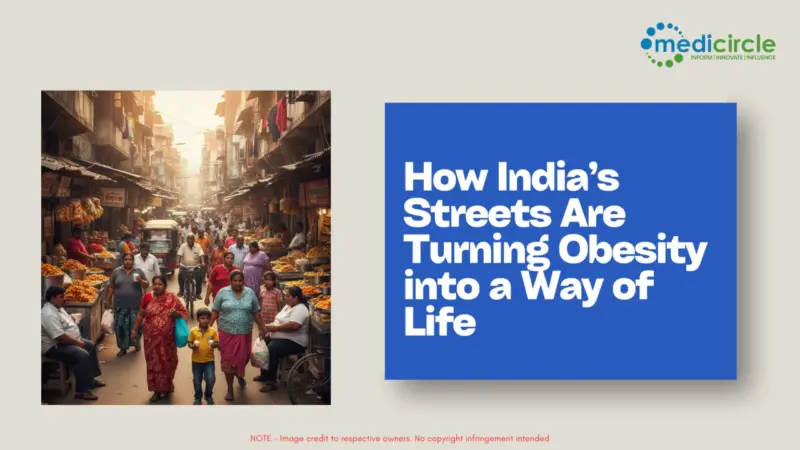

In Indian cities, food has always been woven into daily life, culture, and comfort. A plate of hot momos after work, a packet of fried snacks on the walk home, or a quick burger picked up between errands feels harmless, even deserved.
These foods are affordable, familiar, and everywhere. What is changing, however, is how deeply this everyday convenience is shaping our health. New research is now forcing doctors and urban planners to look beyond individual choices and examine the streets we live on, the stalls we pass each day, and ways in which they may be fuelling obesity and type 2 diabetes in urban India.
The idea is unsettling because it shifts the focus from willpower to environment. For years, obesity and diabetes have been discussed as lifestyle diseases, implying that individuals simply need to eat better and move more. The new findings suggest the story is more complicated. When homes are surrounded by clusters of street food vendors and fast-food outlets, unhealthy eating becomes less a conscious decision and more a default habit. The food environment, rather than personal intention, begins to guide daily behaviour.
In many urban neighbourhoods, stepping out of the house means being greeted by rows of fried snacks, sugary drinks, refined flour dishes, and calorie-heavy fast food. These options are often available within a few minutes walk. The research shows that when such outlets are present within roughly 400 metres of people's homes, consumption of high-fat, high-salt, and high-sugar food increases steadily. Over time, this easy access translates into weight gain and rising blood sugar levels, pushing people towards obesity and diabetes.
What makes this pattern more troubling is the imbalance between unhealthy and healthy food options. In several neighbourhoods studied, unhealthy outlets outnumbered fruit and vegetable sellers by nearly two to one. This skewed availability sends a message about what food is meant to be eaten. When fresh produce requires extra effort to find, while fried snacks sit at every corner, the path of least resistance often wins. Busy work schedules, long commutes, and family responsibilities further narrow food choices, making convenience the strongest deciding factor.
The research closely examined residents living in different parts of Chennai, a city that reflects the rapid urban transformation seen across India. More than a thousand adults participated, allowing researchers to go beyond assumptions and measure real health outcomes. Heights, weights, waist measurements, and fasting blood sugar levels were recorded to assess obesity and diabetes risk. What emerged was a clear pattern. People living near dense clusters of fast-food stalls and snack vendors showed higher rates of excess weight and early signs of disturbed glucose metabolism. The body, it seemed, was responding directly to the food landscape surrounding it.
Doctors are increasingly using the term "diabesity" to describe this dangerous overlap of obesity and type 2 diabetes. It is a word that captures how tightly these conditions are linked, particularly in urban settings. Excess weight increases insulin resistance, while high-calorie diets strain the body's ability to regulate sugar. When both develop together, the risk of heart disease, stroke, kidney problems, and nerve damage rises sharply. India, already known as the diabetes capital of the world, is now facing this dual burden at a scale that demands urgent attention.
What stands out in the research is how subtle the shift can be. No single meal causes diabetes. No one snack leads directly to obesity. The problem lies in repetition. When calorie-dense food is always within reach, small indulgences become daily habits. A fried snack after work becomes routine. Sugary drinks replace water. Portion sizes creep up without notice. Over months and years, these patterns settle into the body, altering metabolism and increasing fat storage. By the time symptoms appear, the damage is often well underway.
This link between neighbourhood food access and health is not unique to India. Studies from other countries have shown similar trends. Areas with a high concentration of fast-food outlets often report higher obesity rates, while neighbourhoods with easy access to supermarkets and fresh produce tend to fare better. What makes the Indian context distinct is the scale and informality of street food culture. Street vendors play an important economic and social role, offering affordable meals to millions. The challenge is not to demonise street food, but to recognise how its unchecked dominance in certain areas can shape public health outcomes.
Food, however, is only part of the picture. The same research highlights another contributor to diabesity which is the lack of accessible spaces for physical activity. Many residents studied lived more than a kilometre away from parks, playgrounds, gyms, or safe walking paths. In theory, a kilometre may not seem far. In practice, crowded roads, poor footpaths, traffic, and safety concerns turn this distance into a barrier. When exercise requires planning, travel, and extra time, it often gets postponed and eventually abandoned.
This combination of easy food access and limited opportunities for movement creates what researchers describe as a "passive lifestyle." It is not marked by deliberate inactivity, but by an environment that discourages movement. Elevators replace stairs. Motorbikes replace walking. Screens dominate leisure time. Without nearby green spaces or safe streets, even motivated individuals struggle to stay active. Over time, the body adapts to lower energy use, while calorie intake remains high, accelerating weight gain and metabolic problems.
What makes this situation particularly concerning is how normal it has become. Many urban residents accept fatigue, weight gain, and rising blood sugar as inevitable consequences of modern life. The research challenges this resignation. It suggests that health outcomes are being shaped long before individuals step into a clinic. Streets, stalls, shops, and sidewalks are quietly influencing daily choices in ways that accumulate over years.
Advising patients to eat healthy and exercise, while necessary, may not be sufficient if their surroundings work against these goals. When a patient leaves the clinic and walks straight past five fried snack stalls but no fruit vendor, the advice loses power. Understanding a patient's neighbourhood food environment can offer valuable insight into their struggles with weight and sugar control.
Urban planners and policymakers are also being drawn into the conversation. If cities continue to grow without considering health-friendly design, the burden of obesity and diabetes will only increase. Encouraging a better balance between healthy and unhealthy food outlets is one possible step. Supporting fruit and vegetable sellers, regulating the density of fast-food stalls near residential areas, and improving access to fresh produce markets could gradually reshape food choices without restricting livelihoods.
Equally important is the creation of safe, accessible spaces for physical activity. Parks, walking tracks, cycling paths, and open grounds are not luxuries. They are essential health infrastructure. When exercise becomes a natural part of daily life rather than a scheduled task, adherence improves. Children play more, adults walk more, and communities become more active without conscious effort.
There is also a cultural dimension to consider. Food in India is deeply emotional, tied to celebration, comfort, and identity. Public health messages that shame or moralise eating habits often fail. A more effective approach may lie in nudging choices gently, making healthier options more visible, affordable, and convenient. When fruit carts stand beside snack stalls, when water is easier to find than sugary drinks, and when walking feels safe and pleasant, behaviour begins to shift organically.
The rise of diabesity is not a sudden epidemic but a slow-burning crisis. It grows quietly, fed by routine and reinforced by environment. The new research serves as a reminder that health is shaped as much by streets and structures as by genes and habits. Obesity and diabetes are not just medical conditions to be treated with pills and advice. They are social outcomes that reflect how cities are built and how food is distributed.
For individuals, awareness is the first step. Recognising how surroundings influence eating and movement can empower small changes, such as seeking out healthier vendors, cooking more at home, or finding creative ways to stay active. For healthcare professionals, the findings expose the importance of empathy and context when counselling patients.
Rapid urbanisation has brought opportunity, mobility, and economic growth. It has also brought environments that promote excess and inactivity. Addressing obesity and diabetes will require more than clinics and campaigns. It will require rethinking neighbourhoods, supporting balanced food ecosystems, and designing cities where the healthy choice becomes the easy choice.
The street outside our homes may seem ordinary, even comforting. Yet it may be shaping our health more than we realise. If we want to curb the rising tide of diabesity, we must look beyond the plate and into the lanes, stalls, and spaces that define everyday urban life