
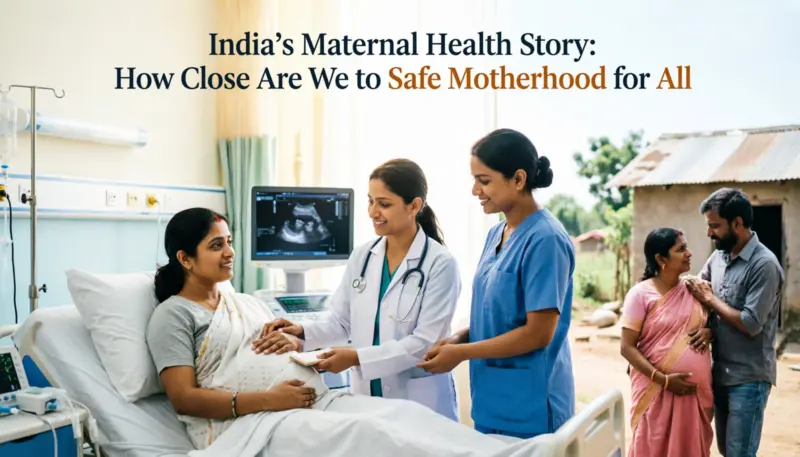

There was a time in India when childbirth carried a fear that families rarely spoke about openly. A journey meant to bring life often stood too close to the risk of losing it.
Over the past three decades, that reality has changed in ways that deserve both recognition and reflection. India's progress in maternal health has been significant, measurable, and widely acknowledged. But has this progress reached every woman, or are we still celebrating averages while inequalities persist?
According to recent data released by the Union Ministry of Health and Family Welfare, India's Maternal Mortality Ratio, often referred to as MMR, now stands at 88 deaths per one lakh live births, based on the latest Sample Registration System findings for 2021-23. For a country that once struggled with far higher numbers, this is not a small achievement. It reflects years of policy efforts, healthcare expansion, and growing awareness around safe pregnancy and childbirth. It also signals that maternal health in India is no longer a neglected conversation, but a central part of public health planning.
To understand the scale of this progress, it is important to look at where India started. In 1990, maternal mortality was alarmingly high, with hundreds of women dying for every one lakh live births. Over time, this number has steadily declined. Data from the The Lancet Global Burden of Disease study shows that the maternal mortality ratio fell from 508 in 1990 to nearly 116 in 2023. That represents a reduction of almost 80 percent over three decades. In absolute numbers, maternal deaths dropped sharply from over one lakh annually to less than a quarter of that figure.
This reflects lives saved, families protected, and communities strengthened. It means more women are surviving pregnancy and childbirth, returning home to raise their children, and continuing their lives with dignity. For a developing country with vast population diversity and healthcare challenges, such progress stands as evidence that sustained efforts can yield meaningful results.
India's achievements have also been recognised globally. Estimates from the United Nations Maternal Mortality Estimation Inter-Agency Group suggest that the country has reduced maternal mortality by around 86 percent since 1990. This is significantly higher than the global average decline, placing India among the countries that have made notable gains in maternal health. It also brings the country closer to achieving the Sustainable Development Goal of reducing maternal mortality below 70 per one lakh live births by 2030.
However, numbers, while important, do not tell the entire story. They provide direction, but they do not reveal the full depth of experience across different regions and communities. A national average can improve even while certain pockets continue to struggle. This is where the conversation becomes more complex and more important.
India is not a uniform healthcare landscape. It is a country where access to medical care can vary widely depending on geography, economic status, and social conditions. Urban centres often have better hospitals, trained specialists, and emergency services. Rural and remote areas may still face shortages of healthcare professionals, limited infrastructure, and delayed access to care. In such settings, the risks associated with pregnancy remain higher.
The progress in maternal health has been driven by several key factors. One of the most significant has been the increase in institutional deliveries. More women are now giving birth in hospitals or healthcare facilities rather than at home. This shift has played a critical role in reducing complications and ensuring that skilled medical support is available during childbirth. The presence of trained birth attendants can make the difference between life and death in emergency situations.
Antenatal care has also improved over the years. Regular check-ups during pregnancy allow doctors to monitor the health of both the mother and the baby. Conditions such as high blood pressure, anaemia, and gestational diabetes can be identified early and managed effectively. This reduces the likelihood of complications during delivery and improves overall outcomes.
Emergency obstetric care has been another area of progress. Timely access to surgical interventions, blood transfusions, and specialised care has saved countless lives. In the past, delays in reaching a hospital or receiving treatment often led to fatal outcomes. Today, better referral systems and improved infrastructure have reduced such delays in many parts of the country.
Public health programmes have played a crucial role in driving these changes. Government initiatives focused on maternal and child health have expanded access to services, increased awareness, and encouraged safer practices. Financial incentives for institutional deliveries, community health worker support, and improved primary healthcare systems have all contributed to the decline in maternal mortality.
Despite these advances, challenges remain. One of the most pressing issues is the uneven distribution of progress. While some states have achieved maternal mortality levels comparable to developed countries, others continue to report significantly higher rates. This disparity highlights the need for targeted interventions that address region-specific challenges.
Nutrition is another critical factor that continues to influence maternal health outcomes. Many women enter pregnancy with underlying nutritional deficiencies, particularly anaemia. Poor nutrition increases the risk of complications during pregnancy and childbirth. Addressing this issue requires a broader approach that goes beyond healthcare facilities and includes education, food security, and community support.
Quality of care is equally important. Access to healthcare is only one part of the equation. The standard of care provided at healthcare facilities plays a decisive role in outcomes. Overcrowded hospitals, limited resources, and gaps in training can affect the quality of maternal care. Ensuring that every woman receives respectful, timely, and effective treatment is essential for further progress.
There is also a need to focus on the timing of care. Many maternal deaths occur due to delays in recognising complications, delays in seeking care, and delays in receiving treatment. These delays can be influenced by a range of factors, including lack of awareness, financial constraints, and transportation challenges. Addressing these barriers requires coordinated efforts at multiple levels.
Another dimension that deserves attention is the role of awareness and education. Empowering women with knowledge about pregnancy, childbirth, and warning signs can make a significant difference. When women and their families understand when to seek medical help, they are more likely to act promptly. Community health workers and local outreach programmes play a vital role in spreading this awareness.
The progress in maternal health also reflects a broader shift in how healthcare is approached in India. There is increasing recognition that maternal health is not just a medical issue but a social and economic one. It is linked to education, gender equality, and access to resources. Improving maternal health outcomes contributes to the overall development of society.
For the general public, these developments carry an important message. Pregnancy should not be seen as a routine event that requires minimal attention. It is a critical period that demands proper care, monitoring, and support. Regular antenatal check-ups, balanced nutrition, and timely medical intervention are essential for ensuring safe outcomes.
Healthcare providers, too, play a central role in sustaining progress. Continuous training, adherence to protocols, and a patient-centred approach are key to improving maternal care. As the healthcare system evolves, there is a growing need to integrate technology, data, and innovation into maternal health services. Digital health records, telemedicine, and data-driven decision-making can enhance the quality and reach of care.
Looking ahead, India's goal of reducing maternal mortality below 70 per one lakh live births is within reach, but it will require sustained effort. The focus must shift from achieving targets to maintaining and improving quality. This includes addressing disparities, strengthening healthcare systems, and ensuring that no woman is left behind.
The story of maternal health in India is one of progress, but it is also a reminder of the work that remains. It is a journey that has moved from crisis to improvement, and now towards equity. The numbers show that change is possible. The challenge is to ensure that this change is inclusive and lasting.
In the end, maternal mortality is more than a statistic. It represents the loss of life at a moment that should bring joy. It reflects gaps in care that can and must be addressed. As India continues to make waves in healthcare, the true measure of success will not be how low the national average goes, but how evenly that progress is shared.