




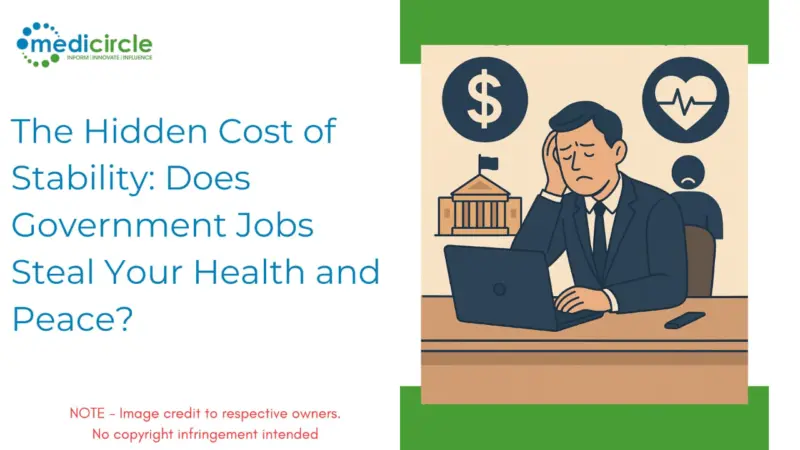

For decades, a government bank job in India was considered the ultimate dream. It promised stability, a fixed salary, respect in society, and a predictable future.
The very idea of working for a public sector bank conjured images of security of a home, a vehicle, a steady income, and a life that could be planned with certainty. But in today's changing work culture, this picture has become increasingly deceptive. Beneath the veneer of respect and routine lies a reality that few dare to discuss openly: stress, health deterioration, and a relentless pressure that chips away at personal dignity.
A story recently shared on Reddit has brought this issue into the public eye, revealing the struggles faced by those who were once the custodians of financial security for millions. The user, a bank employee with 15 years of service, recounted a journey from pride to exhaustion, from stability to anxiety. What started as a promising career gradually became a source of daily stress, leading to serious health problems, including high blood pressure, thyroid issues, and fatty liver disease. These conditions are not trivial, they are markers of chronic stress, compounded by long hours, sudden relocations, and an unending expectation to meet sales targets for products often unnecessary or even unwelcome by the public.
The post detailed the crushing work schedule that has now become the norm in many government banks: being available almost every day from 10 AM to 10 PM. This is not occasional overtime or a temporary crunch. For many employees, it has become a lifestyle, where work seeps into every corner of personal life, eroding rest, family time, and mental peace. For someone who joined the bank seeking a balanced life, this is an existential shock. Beyond the long hours, employees face an unrelenting demand to sell insurance and other financial products, sometimes of questionable utility. The pressure is not merely commercial, it is existential. Refusing or failing to meet targets can invite reprimand, hurt future promotions, or create a culture of fear that discourages even constructive dialogue.
What makes this situation particularly insidious is the way dignity is quietly stripped away. Bankers are expected to comply silently with the demands of management, to work on weekends, and to accept arbitrary transfers. They are cautioned against expressing discontent, even in safe digital spaces. The Reddit user's words resonate with anyone who has felt trapped in a role where obedience outweighs personal judgment: "It's like signing away your dignity." Here, stability is presented as a virtue, yet the personal cost is immense. The sense of control over one's own life is surrendered in exchange for a paycheck that can no longer compensate for the erosion of health and well-being.
After enduring years of relentless pressure, the Reddit user took a drastic step: he stopped reporting to work. The decision is fraught with consequences. Salary ceases, financial obligations mount, and questions about career sustainability loom large. Yet, the underlying sentiment is that some things, like mental health, peace of mind, and physical well-being, are non-negotiable. "Life is more precious than salary," he said, acknowledging that even the potential benefits of pension schemes, long considered a golden safety net, could not outweigh the need to reclaim his life.
The post struck a chord with many readers. Comments poured in, reflecting a range of experiences across sectors. Some reported similar health challenges, including high blood pressure and fatty liver, highlighting that chronic stress is not limited to banks but is pervasive across professions like IT, corporate offices, and service industries. Others pointed out the advantages of public sector roles, emphasizing old pension schemes as a valuable buffer against financial insecurity. Yet, the consensus was unmistakable: the benefits of stability cannot replace personal health.
One particularly insightful response noted the role of the National Pension System (NPS). Unlike employees in the old pension system, those in NPS do not enjoy guaranteed lifelong benefits. For employees under NPS, especially younger bankers, the dilemma is stark where secure employment exists, but it offers less certainty and fewer tangible rewards, making the personal toll even heavier. The Reddit user himself acknowledged this, saying that though his financial security might be compromised in the short term, preserving mental and physical health was paramount. This sentiment highlights a deeper crisis in public sector employment: benefits are no longer sufficient to offset the hidden costs of work-related stress.
The Reddit discussion also revealed a perception gap. Many citizens still equate government employment with comfort, stability, and minimal stress. But the reality is far more complex. Bank employees are often expected to fulfill sales targets with limited resources, manage customer grievances under intense scrutiny, and navigate bureaucratic hurdles that can delay decisions for months. Relocations, often sudden and far from family support systems, add to the strain. The stress is chronic, cumulative, and largely invisible to the public eye.
Health implications are significant and growing. High blood pressure, thyroid dysfunction, and fatty liver disease are classic examples of stress-induced conditions, exacerbated by sedentary work, long hours, and erratic meal patterns. Sleep deprivation, anxiety, and burnout are also common, yet often ignored in workplace policies. For a profession historically seen as low-risk, the rise in mental and physical health concerns signals a need for urgent systemic reforms. Employee assistance programs, counseling, flexible work arrangements, and reasonable targets are not luxuries they are necessities if these institutions aim to retain talent and ensure productivity.
The issue extends beyond individual employees to the broader society. When public sector employees are overworked and under-supported, the quality of services they provide inevitably suffers. Banks are at the forefront of financial inclusion, rural development, and economic policy implementation. A stressed workforce compromises efficiency, customer satisfaction, and the very stability that citizens rely upon. The hidden costs of burnout reflect through society, affecting families, communities, and economic productivity.
Many employees in private banks and other sectors face similar pressures, but government banks occupy a unique position in public perception. They are expected to combine efficiency with social responsibility, offering both financial services and ethical standards. When these institutions fail to protect the well-being of their employees, it erodes trust, not just internally but among the public they serve. The Reddit story amplifies this tension, offering a rare glimpse into the personal toll of systemic inefficiencies.
Interestingly, the post sparked discussions on solutions as well. Fellow Redditors debated whether the user could adjust working hours or find ways to mitigate stress without leaving the sector entirely. Some suggested internal transfers, part-time arrangements, or restructuring targets. While these measures may provide temporary relief, the broader challenge remains institutional. Unless work culture changes, workloads are rationalized, and employee welfare prioritized, individual interventions may only delay the inevitable.
This narrative also intersects with the ongoing discourse on labor policies and mental health in India. Historically, public sector jobs were shielded from market pressures, but modernization and privatization have gradually introduced corporate-style performance metrics. While accountability and productivity are important, their implementation often overlooks human factors. Stress management, workplace flexibility, and mental health support are seldom integrated into performance evaluations. The result is a workforce caught between traditional expectations of loyalty and modern demands for measurable outcomes.
Furthermore, the story highlights generational differences in perspective. Older employees may have tolerated long hours and bureaucratic pressures as part of a contract with the institution, confident in their pensions and social respect. Younger employees, especially those under NPS, are less willing to sacrifice health and personal life for uncertain long-term rewards. This shift challenges conventional assumptions about employee motivation and retention in government roles. Organizations must recognize that the calculus of career satisfaction has evolved.
The Reddit post is also a reminder of the broader societal issue of mental health stigma. Many employees internalize stress and avoid seeking help due to fear of judgment, professional repercussions, or cultural norms. Public conversations about burnout in high-responsibility sectors like banking are rare. By sharing his experience openly, the user catalyzed a discussion that validates the lived experiences of many who silently endure similar challenges. It encourages policymakers, HR professionals, and leadership teams to acknowledge stress as a legitimate occupational hazard, deserving structured support and intervention.
In essence, the story is not just about one individual. It is a cautionary tale about a system where stability masks silent suffering, where the promise of security comes at the expense of health, dignity, and peace of mind. Government bank employees, once the torchbearers of financial trust, now face a paradox: stability that undermines well-being. Families bear the indirect burden, as long hours and stress affect relationships and home life. Patients and customers experience the downstream effects of overworked staff, highlighting the societal stakes involved.
The conversation sparked by the Reddit post has opened a door to critical reflection. Citizens, policymakers, and bank management alike must confront the uncomfortable truth that job security is insufficient if it comes at the cost of human health. Mental well-being, physical health, and dignity are non-negotiable aspects of a sustainable career, even in public sector banks. Ignoring these dimensions risks not only workforce attrition but also the erosion of public confidence in institutions meant to uphold national financial stability.
In conclusion, the Reddit user's story is emblematic of a hidden crisis in India's government banking sector. It reminds us that behind the facade of prestige and stability lies a reality marked by stress, health issues, and compromised dignity. As the workforce evolves and younger employees increasingly value mental health and personal life, it becomes important for institutions to adapt. Job security, pensions, and respect in society are meaningful only if they coexist with well-being, reasonable workloads, and a supportive environment. The survival of public sector banks in India depends not only on financial prudence but on the human treatment of those who power them. The path forward requires systemic reform, empathy-driven leadership, and policies that prioritize the human at the center of every institution. Only then can government bank jobs truly fulfill the promise they once symbolized i.e. a life of security, dignity, and health.