
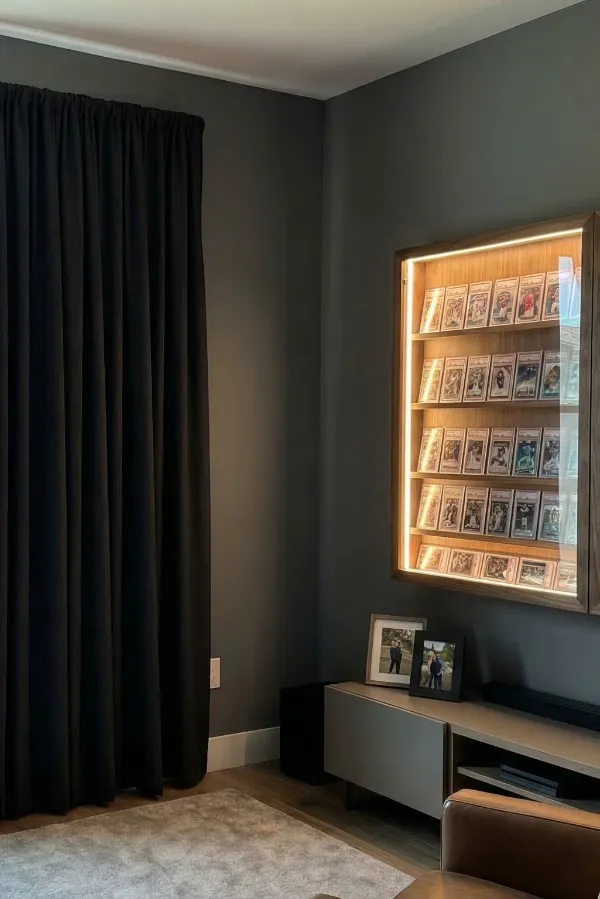

Collecting graded sports and trading cards is about more than amassing value; it's about enjoying the art on cardboard today while preserving it for tomorrow.
The tips below walk through display cases, lighting, climate control, and more so your grails stay vibrant every time you show off the wall.
UV-filtered display cases: your first line of defense
 Freepik
Start with the enclosure. If ultraviolet light never reaches cardboard, fading can't begin.
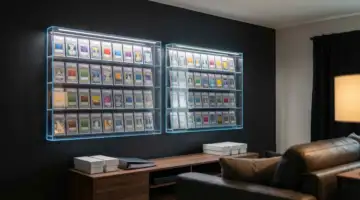
Look for acrylic or glass panels that block at least 95 % of UV (many museum-grade panes hit 99 % of rays shorter than 380 nm, according to the U.S. National Park Service). Acrylic stays crystal-clear, weighs less than glass, and won't shatter when a shelf gets bumped. It also avoids the green tint that cheap picture-frame glass throws over bright holofoil. For a high-value grail, mount it in a lockable, UV-tinted wall cabinet that keeps out dust and curious fingers.
On a starter budget, retrofit a curio cabinet: add UV-filter film or swap the door pane for conservation acrylic. The materials cost less than a single PSA submission yet guard your card indefinitely.
Match the case to the card. A slim single-slab holder spotlights one crown jewel; a multi-row cabinet creates a satisfying grid of graded slabs. Leave a sliver of breathing room so plastic slabs don't scrape and raw cards don't bow.
Choose the case that blocks the sun before it even kisses the ink, and every other preservation step gets easier.
One off-the-shelf answer is Vaulted's Card Display Plus frame.
Brand specs list a magnetic front panel with built-in UV protection and a Friction Fit™ EVA foam insert that locks nine PSA or CGC slabs so they can't rattle if the wall gets bumped. If nine slots isn't the right fit for your wall, Vaulted's catalog runs from single-slab stands to twenty-card gallery frames. You can browse the full selection to size up the perfect match.
 Feepik
Vaulted Card Display Plus 9-slab UV-protected card frame product screenshot.
The ultra-light unit ships ready to hang, letting collectors apply the museum-grade case advice without spending custom-frame money.
LED lighting: safe spotlighting for every slab
Even the best case needs smart illumination. Incandescent and halogen bulbs leak UV rays and heat-two quiet killers of cardboard. Quality LEDs solve both problems in one click.
 Freepik
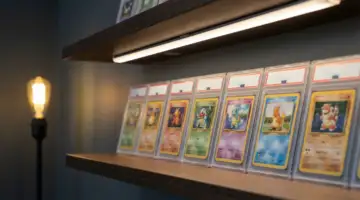
The U.S. Department of Energy notes that white LEDs give off "no ultraviolet or infrared emissions," making them ideal for preservation (see the department's LED basics overview). The American Alliance of Museums confirms the same benefit for exhibit lighting. Practical upshot: you can set your cabinet to 300 to 500 lux-bright enough to read card backs-while the ink stays as vivid as day one.
Mount LED strips under shelves or inside wall cases. Aim the beam so it grazes slab fronts and avoids direct glare. A neutral-white 4000 K strip with a Color Rendering Index above 90 mimics gallery light and lets holofoils pop without shifting colors.
Because LEDs run cool, they hold case temperature near room level and prevent slow plastic warp. Lower wattage also trims the electric bill, leaving budget for your next PSA submission.
Smart bulbs add flexibility. Game night? Wash the wall in team colors. Day-to-day? Tap back to neutral white. All the shine, none of the risk.
Block the outside world: curtains, films, and the perfect room
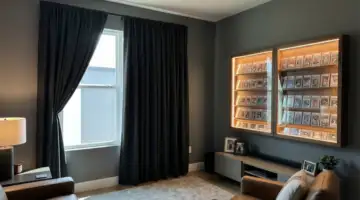
Sunlight can still spoil the party. Ultraviolet rays bounce off walls and floors, draining reds and blues before you notice.
 Freepik
Pick a room with the odds in your favor. A north-facing spare room or finished basement receives only indirect daylight, so you start ahead of the game. If windows are nearby, drop blackout curtains as soon as the game stream ends.
Want some natural light without the risk? Cover the glass with clear UV-control film. 3M data show its residential window films block up to 99 % of UVA and UVB radiation while leaving the view intact. The film goes on with soapy water and a squeegee, costs less than a blaster box, and keeps filtering rays for years.
At midday, scan the room. Any shiny décor that reflects sun onto shelves needs to move. One misplaced beer mirror can undo every other precaution.
After sunset, let the LEDs create the gallery mood. With daylight sealed out, your cards stay vibrant and the space feels like a private exhibition.
Control the light and you control the future of your collection.
Archival frames and shadow boxes: wall art without the worry
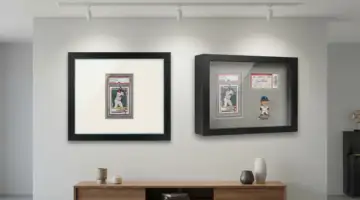
Wall space invites a showpiece, but an ordinary frame lets ultraviolet light and acidic boards attack the paper.
 Freepik
Swap those parts for preservation-grade materials. Guidelines from the Library of Congress call for UV-filter acrylic on the front and acid-free backing behind the item, with spacers so nothing touches the glazing. Conservation-grade acrylic from Tru Vue blocks at least 97 % of UV between 300 and 380 nm, meeting Professional Picture Framers Association standards. The upgrade costs a few extra dollars yet locks in both color and paper chemistry.
Keep the card floating, not pressed. Photo corners or a toploader create a slim air gap and stop condensation from lifting foil gloss during humidity swings.
Want more flair? A shadow box lets you pair a rookie card with a signed ticket stub or a mini figure, all behind the same archival barrier. Depth adds drama, but the rules stay simple: inert backing, UV shield, zero pressure.
Mount the finished frame away from heat vents and never above a radiator. Each glance at the wall feels like walking past Cooperstown, and the card inside keeps its grade for good.
Flexible shelves and rails: swap cards without breaking a sweat
Some days you want your 1989 Griffey front and center. Other weeks a first-edition Charizard deserves the spotlight. Open shelving makes that shuffle easy.
Install slim picture-ledge shelves or purpose-built card rails in a neat row. A popular option like the IKEA Mosslanda ledge is 12 cm (4 ¾ in) deep and rated for 5 kg (11 lb), plenty for a row of slabs. The shallow lip holds PSA holders upright, so you can slide today's hero in and yesterday's pull out without reaching for a screwdriver.
Protection still matters. Keep every card in a sleeve, toploader, or slab before it touches the shelf. The plastic blocks fingerprints and gives each card a rigid spine so gravity can't bow the paper over time.
Lighting pairs well here. Run an LED strip beneath the shelf above to wash soft light over the row below. Cards appear to float, and the cool LEDs protect the ink.
If you live where the ground shakes or kids sprint through the room, add an invisible guard. The Earthquake Country Alliance recommends clear quake gel or museum wax to keep breakables in place on open shelves. A thin acrylic strip screwed to the shelf front adds another layer of security while preserving the open-air look.
Shelving is about flexibility. Your grails rest in UV cases, while the bench players rotate onto the wall for fresh inspiration every time you rip a pack.
Climate control and maintenance: set-and-forget protection
Cards are still paper at heart. They swell, shrink, and mold when a room swings from steamy August to bone-dry January. A modest investment in climate control spares you heartache.
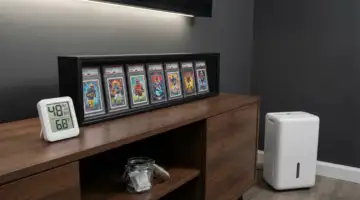
Aim for steady, middle-ground conditions-about 45-50 percent relative humidity and 65-70 °F (18-21 °C). Guidance from the Smithsonian and the Library of Congress lists that band as safe for paper while discouraging mold growth.
 Freepik
Park a ten-dollar digital hygrometer on the display shelf. If readings climb above 55 percent, run a compact dehumidifier or drop silica-gel packets into cases. When humidity dips below 40 percent, a tabletop humidifier keeps corners from curling.
Keep heat in check. Avoid mounting cases on walls that back a furnace closet or sit above a radiator. Even cool LEDs add a few degrees, so crack case doors every few months to let trapped warmth escape.
Dust still creeps in. Wipe acrylic with a lint-free microfiber cloth and brush mats gently with a soft sable brush. Skip paper towels; they scratch clear panels faster than you think.
Rotate showcased cards each season. Fresh faces keep the wall lively, and every card enjoys dark-storage downtime that doubles the life of fragile inks.
Final thoughts
A well-planned display protects both the look and the long-term value of every slab. Combine UV barriers, cool lighting, climate control, and flexible shelving, and you can admire your collection today without worrying about tomorrow.