




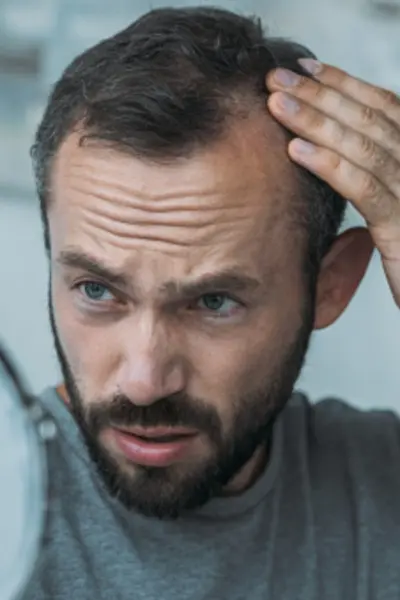

Hair loss at an advanced stage feels different from early thinning. The patches are more visible, the hairline has clearly shifted, and products that once seemed promising have stopped making any difference.
At this point, many people wonder whether topical treatments are even worth trying - or if they've simply waited too long. The truth is more nuanced than that, and understanding what these treatments actually do can help you make smarter decisions going forward.
Why Advanced Hair Loss Is a Different Problem
Early-stage hair loss is mostly about slowing down a process that's just beginning. Advanced hair loss means the follicles have been in a miniaturized state for a longer period, and some may be approaching the point where they stop producing hair altogether. This doesn't mean treatment is futile - but it does mean expectations need to be grounded in biology, not hope.
Androgenetic alopecia, the most common cause, involves a hormone called DHT (dihydrotestosterone) gradually shrinking hair follicles over years. The longer a follicle stays miniaturized, the harder it becomes to revive it. Topical treatments work best when there's still some follicle activity to support. So the question isn't just "does this treatment work?" but "does my scalp still have the capacity to respond?"
Minoxidil: Still the Most Widely Used Option
Minoxidil has been around for decades and remains one of the few topically applied ingredients with solid clinical backing. It works primarily by widening blood vessels near the scalp, which improves blood flow and extends the hair's growth phase (anagen). It doesn't block DHT, so it doesn't address the root hormonal cause - but it can meaningfully support follicles that are still partially active.
For advanced hair loss, minoxidil tends to show more visible results on the crown than at the temples. This is because crown follicles often respond better to improved circulation, while frontal hairline follicles may have been dormant longer. Consistent use - typically twice daily - is necessary to maintain any benefit. Stopping treatment usually leads to shedding within a few months.
Topical Finasteride: A Targeted Approach to DHT
Finasteride was originally developed as an oral medication, but concerns about systemic side effects led researchers to explore a topical version. The idea is straightforward: deliver the DHT-blocking effect directly to the scalp while limiting how much of the compound enters the bloodstream.
Studies looking at finasteride topical solution have shown promising results in reducing scalp DHT levels while keeping systemic absorption significantly lower compared to oral formulations. This makes it a meaningful option for people who want to address the hormonal driver of hair loss without the risks associated with oral finasteride. That said, it's not available over the counter, and it should always be used under medical supervision.
Combination Therapy: Why One Treatment Often Isn't Enough
Using minoxidil and topical finasteride together is increasingly common in clinical practice. The logic is sound: minoxidil improves scalp blood flow and follicle activity, while finasteride targets the hormonal cause. Together, they work on different parts of the same problem.
For someone with advanced hair loss, relying on a single topical ingredient is unlikely to produce meaningful results. Combination approaches tend to outperform monotherapy because they address multiple mechanisms rather than just one. Some dermatologists also include additional ingredients like tretinoin in low concentrations, which may improve minoxidil absorption.
What Topical Treatments Cannot Do
It's worth being honest here: topical treatments cannot fully restore a hairline that has significantly receded over many years. They can slow further loss, potentially thicken existing hair, and in some cases regrow hair in areas where follicles are still active. But areas where follicles have been completely dormant for a long time may not respond.
Managing this expectation is part of responsible treatment. Platforms like Traya, which combine medical and nutritional assessments, often emphasize this kind of root-cause thinking - the idea that hair loss solutions work better when the full picture is understood, not just the surface symptom.
Final Thoughts
Topical treatments for advanced hair loss are not a quick fix, and they're not a miracle. But they are among the most clinically supported tools available. The best outcomes come from choosing treatments that match your specific pattern and biology, using them consistently, and pairing them with guidance from a qualified professional. Understanding why hair loss happens is just as important as deciding what to apply to your scalp.