





For the past couple of years, Vivo has been giving one hit after the other, especially with the X series. The Vivo X300 and X300 Pro felt like confident, well-rounded devices when I used them.
They delivered reliable performance, genuinely strong camera systems, and batteries that didn't leave me hunting for a charger by evening. That consistency is what makes the X300 FE interesting, because on paper, it sticks to the same core formula while aiming to lower the barrier to entry into the X300 lineup.
 © Hook.Online
That said, the pricing caught me off guard. With a starting price of ₹70,000 for the base 12+256GB variant, the X300 FE sits uncomfortably close to the X300 itself. It also walks straight into the territory of the recently launched X200T, which is still fresh in everyone's mind.
After spending about 10 days with the X300 FE, I think I have a clearer picture of where it actually fits.
Vivo X300 FE pricing: How much does it actually cost?
The Vivo X300 FE starts at ₹79,999 for the 12GB RAM and 256GB storage variant. For those who want more storage and memory, the 12GB RAM and 512GB storage version sits higher in the lineup, though launch offers reduce its effective price to ₹89,999.
Vivo is also selling the telephoto extender kit separately, priced at ₹15,999, plus another ₹3,999 for additional accessories. The entire kit, with the 12+256GB unit can be picked up for ₹95,997, which includes a discount of ₹4,000
The Vivo X300 FE will officially go on sale starting 14th May 2026.
Vivo X300 FE design: What actually sets it apart?
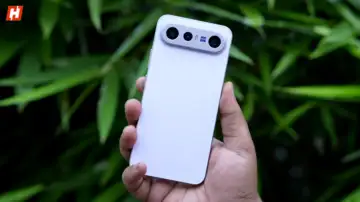
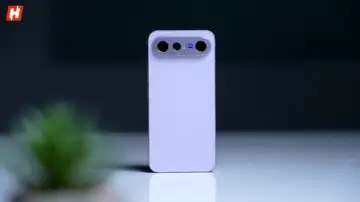
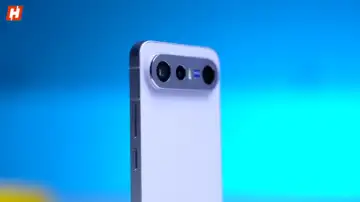
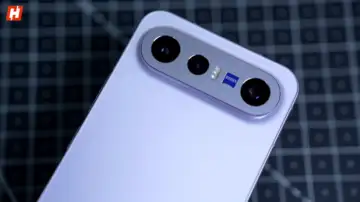
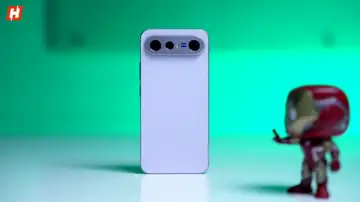
Coming from last year's X200 FE, I immediately noticed how differently the X300 FE approaches its design, especially around the cameras. Instead of the usual large, circular module that Vivo has made its signature, this one goes in a completely different direction. You get a horizontally placed, pill-shaped camera island that feels reminiscent of an iPhone Air-style layout. It neatly houses all three cameras, along with a subtle ZEISS logo and the flash. I actually like how clean it looks, and more importantly, how slim it is.
That slimmer module makes a real difference in day-to-day use. The phone does not feel top-heavy like the X300 Pro or Ultra, and even compared to the standard X300, it feels more balanced in the hand. It is one of those small changes that quietly improves usability.
 © Hook.Online
Beyond that, this still feels like a proper Vivo flagship. The build quality is solid, the materials feel premium, and nothing about it comes across as a compromise. The 6.31-inch display puts it in a comfortable middle ground. It is not exactly compact, but I found it easy enough to use one-handed without constantly readjusting my grip.
At 7.99mm and 191 grams, it strikes a sweet spot. It feels slim and light, yet reassuringly sturdy. The aluminium frame adds that rigidity, while the matte glass back keeps things grippy and clean.
The Lilac Purple unit we have looks fresh, but there are also Urban Olive and Noir Black options if you want something more understated.
 © Hook.Online
Up front, the flat display is surrounded by slim, even bezels, which gives it a clean, modern look. On the connectivity side, it is fully loaded with Wi-Fi 7, Bluetooth 6.0, NFC, an IR blaster, eSIM support, and a USB Type-C port running at USB 2.0 speeds.
Vivo X300 FE display and audio: Does it actually deliver the full package?
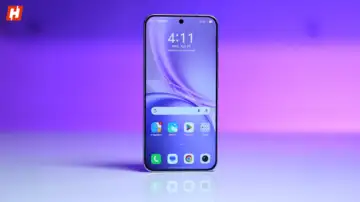
Using the Vivo X300 FE every day, the display quickly became one of my favourite parts of the experience. You are getting a 6.31-inch AMOLED panel with a 120Hz refresh rate and a resolution of 2640x1216 or about 1.5K. It is not quite 2K, but it is definitely sharp at 460PPI, and I could notice that extra crispness while reading text or watching high-quality videos.
What stood out to me more was the colour tuning. Vivo is using a ZEISS Master Color Display here, and instead of going for overly punchy visuals, it leans towards natural tones. I found photos, skin tones, and even HDR content looking more balanced and closer to real life, which is a nice change from the usual oversaturated panels.
 © Hook.Online
You also get support for the P3 wide colour gamut and HDR10+ on apps like Netflix, which makes streaming content look properly dynamic. The 2160Hz high-frequency PWM dimming is another thoughtful addition, especially during late-night scrolling sessions, as it noticeably reduces eye strain at lower brightness levels. Vivo claims over a billion colours, which likely means an 8-bit panel with FRC, but in real-world use, it still looks rich and well-graded.
Brightness has not been an issue either. I found the display hitting around 1800 nits in high brightness mode, which kept it perfectly readable even under harsh sunlight. The 5000 nits figure is reserved for HDR highlights, so bright elements in supported content really stand out without blowing out the entire screen.
 © Hook.Online
The LTPO panel dynamically adjusts between refresh rates, which keeps things smooth while also helping with battery efficiency. You also get an ultrasonic in-display fingerprint sensor, which I found to be quick and reliable.
On the audio front, the stereo speakers do a solid job. They are clear and loud enough for casual viewing, though they do not quite match the fuller, bass-heavy output you get from something like the X300 Pro.
Vivo X300 FE cameras: Can this setup still carry the X-series legacy?
If there is one area where Vivo usually flexes, it is cameras, and after spending time with the Vivo X300 FE, I can confidently say that this phone stays true to that reputation. On paper, the setup looks a bit mixed. You get a 50MP Sony IMX921 main sensor, a 50MP Sony IMX882 telephoto, and an 8MP ultrawide. That ultrawide might raise a few eyebrows at first glance, and I had the same reaction. But once I started shooting, the overall experience made a lot more sense.
 © Hook.Online
This is a ZEISS-backed system through and through, and the tuning really shows. The main camera focuses on delivering clean, natural-looking images rather than overly processed ones. In daylight, I found the X300 FE incredibly easy to shoot with. Photos come out sharp, colours look balanced, and exposure is handled well without blowing out highlights or crushing shadows. It is the kind of camera you can trust to just get the shot right without fiddling around too much.
 © Hook.Online
The telephoto camera is easily one of the highlights for me. The 50MP IMX882 sensor with OIS gives you a lot of flexibility, and when you start zooming in, the AI True Clarity Engine steps in to keep things usable. In real-world scenarios, whether I was shooting buildings, cityscapes, or subjects at a distance, the level of retained detail was genuinely impressive for a phone in this size category.
 © Hook.Online
 © Hook.Online
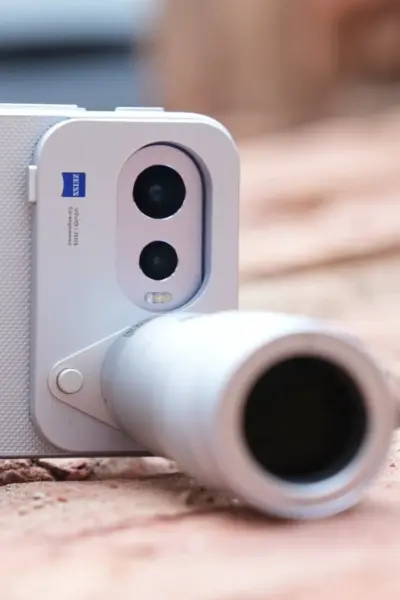
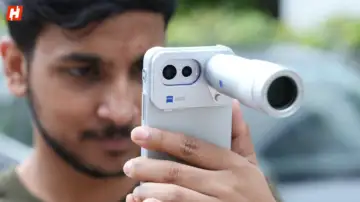
I also spent some time with the new Telephoto Extender Gen 2 kit, and it adds a surprising amount of reach without making the setup feel bulky. It pushes the focal length to roughly 200mm, which means you can pull in distant subjects with far better clarity. What I liked here is that the improvement is not just about zooming further.
 © Hook.Online
The image quality at long range actually holds up better, with details in things like text, structures, and far-off subjects looking more defined instead of turning into a soft mess. The optics do a good job of keeping images clean rather than artificially sharpening them.
 © Hook.Online
Coming back to the ultrawide, yes, it is the weaker link here. The 8MP sensor does not match the sharpness of the other two cameras, but in practical use, it is still fine for casual shots, landscapes, and group photos. It gets the job done without completely falling apart.
 © Hook.Online
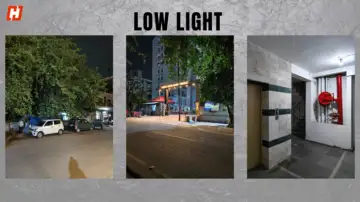
Low-light performance is quite solid on the main camera. I noticed that highlights are kept under control while shadows still retain detail, so images look usable without heavy noise or aggressive processing.
 © Hook.Online
Portraits are another strong area. You get ZEISS multifocal portrait modes ranging from 23mm to 100mm, and I really liked having that flexibility. It lets you frame shots differently depending on the scene, rather than being stuck with a single look.
For video, the phone covers all the bases. You get 4K at 60fps as standard, along with options for 4K at 120fps and even 8K at 30fps if you want more creative control. Whether it is casual vlogging or something more serious, there is enough here to work with.
 © Hook.Online
On the front, there is a 50MP selfie camera with autofocus, which is always a welcome addition for both photos and video.
Overall, after using it for a while, I feel the X300 FE delivers a very balanced camera experience. It is not trying to chase flashy gimmicks. Instead, it focuses on getting the fundamentals right with a strong main sensor, a genuinely useful telephoto, and enough versatility to handle almost anything I threw at it.
Vivo X300 FE performance: Does it actually feel flagship fast?
When I started using the Vivo X300 FE, performance was one area I was particularly curious about, and it did not take long to see what this phone is capable of. It runs on the Snapdragon 8 Gen 5, which is a proper flagship chipset, and in my usage, it handled everything I threw at it without feeling strained.
You also get LPDDR5X Ultra RAM and UFS 4.1 storage, and that combination really shows in everyday use. Apps open instantly, multitasking feels effortless, and even large files move around quickly. Whether I was switching between social apps, editing photos, or jumping into a game, the phone stayed consistently responsive.
 © Hook.Online
Benchmark numbers back that up as well. I recorded an AnTuTu score of around 2.7 million, which, while slightly lower than some larger flagships, still firmly sits in top-tier territory. More importantly, it translates well into real-world performance rather than just looking good on paper.
Gaming is where I pushed it the most. Titles like BGMI and Call of Duty Mobile ran at a stable 120FPS, and during my 1.5-hour gaming sessions, frame rates stayed consistent with barely any noticeable dips. What impressed me more was how well it managed heat. The large vapour chamber cooling system does a solid job of keeping temperatures in check, so the phone does not get uncomfortably warm, and performance does not drop off midway.
 © Hook.Online
Overall, I found the X300 FE to deliver proper flagship-level performance in a relatively compact form factor. It feels fast, reliable, and just as comfortable handling daily tasks as it is tackling more demanding workloads.
Vivo X300 FE software and AI: Does it actually feel smart and smooth?
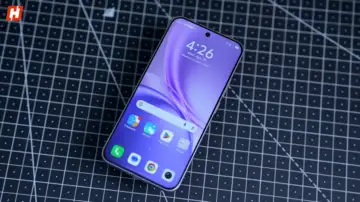
The Vivo X300 FE comes with OriginOS 6, based on Android 16, and it feels packed without feeling overwhelming. The entire UI is built around smoothness and flexibility. Animations are fluid, transitions feel consistent, and nothing feels out of place or clunky.
What I enjoyed most is the level of personalisation on offer. I could tweak lock screen styles like Text Vibe, play around with dynamic wallpapers, and rearrange widgets to suit how I actually use my phone. It does not feel rigid, and that makes a difference over time.
 © Hook.Online
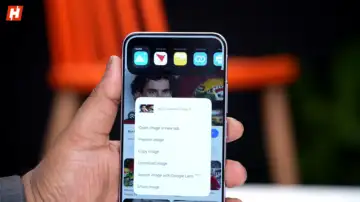
AI is a big part of the experience, especially when it comes to photography. Tools like AI Erase, AI Photo Enhance, and AI Reflection Erase are genuinely useful. I found myself using them more often than expected, whether it was cleaning up a shot or improving details quickly. Features like AI Image Expander and AI Magic Move also make edits feel intuitive rather than complicated.
There is also the AI True Clarity Engine working behind the scenes, helping improve textures, colours, and overall detail across different shooting conditions.
Outside of cameras, AI shows up in everyday features as well. Origin Island keeps things like notifications and actions easily accessible, while Drag & Go and Shake & Share make file transfers and multitasking feel seamless.
 © Hook.Online
Vivo is also promising long-term support with up to 5 years of OS updates and 7 years of security updates, which goes a long way in assuring a long, usable life.
Vivo X300 FE battery and charging: Can it actually last all day?
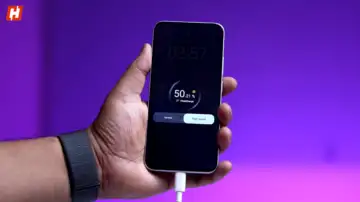
Battery life on the Vivo X300 FE has been genuinely impressive in my usage. You are getting a 6500mAh battery here, which is quite massive for a phone of this size, and it clearly shows in real-world performance. On most days, I could comfortably get through a full day of heavy use without worrying about reaching for a charger.
 © Hook.Online
When I really pushed it with a mix of camera usage, navigation, and a fair bit of YouTube, I was still seeing over 7 hours of screen-on time. That kind of consistency makes a big difference in daily use.
Charging is quick, too. The 90W wired FlashCharge gets the phone back up rapidly, so even short top-ups feel useful. You also get 40W wireless charging, which adds convenience if you prefer going cable-free.
Vivo X300 FE verdict: Where does it actually fit?
After using the Vivo X300 FE for about 10 days, I have a much clearer sense of where it fits in Vivo's lineup.
What really stands out about the X300 FE, is how well-balanced this phone feels. In my hand, it feels more premium than the X200T, and at the same time, it is slimmer and more pocket-friendly than the X300. That combination genuinely makes a difference in daily use.
 © Hook.Online
Even beyond that, it continues to be a pretty solid phone. The display is sharp and colour-accurate, performance is consistently flagship-grade, and the cameras, especially the main and telephoto, deliver reliable results across different scenarios. Battery life has also been a strong point for me, easily lasting through heavy usage.
Where I do hesitate slightly is the pricing. It sits very close to the X300, which makes the decision a bit tricky if I am looking purely at value.
 © Hook.Online
That said, if you are looking for a compact, well-rounded flagship that still delivers the core X-series experience, this makes a strong case.