





After the election to the Tamil Nadu Legislative Assembly, I made a fervent plea that voters have to watch the new government and its activities, and whenever it takes decisions to transform governance and administration to achieve development, people have to join hands with the government to ensure that the benefits reach the needy.
Unless people join the government in tracking the benefits, brokers will capture the programmes, and that is the practice we have seen so far in governance. The gap between the government and the people has to be narrowed. It can be done only by involving people with the government while implementing schemes and programmes. But now, in his Independence Day speech, after hoisting the national flag, the Chief Minister of Tamil Nadu has made an appeal to the people of Tamil Nadu to join the government in ending corruption. He is making an earnest effort to end corruption. It is almost a liberation struggle. In this struggle, eight crore people have to join hands with the government with a sense of commitment, as he has sensed that officials are in a mood to listen.
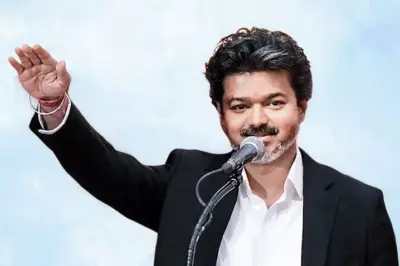
In the last fifty years, corruption has become a culture and a phenomenon in Tamil Nadu. Equally, the bureaucracy, from top to bottom, is involved in collection, and in this way, corruption has penetrated society very deeply. As a result, it has now become a value. If someone gives a bribe for a favour and it is done, it is considered honest. Who is dishonest, and what is dishonesty? If someone gets money by making a promise to a client but does not fulfil the promise as committed and does not return the money, he or she is considered dishonest. People never bother about the corrupt practices prevalent in public administration, even in the delivery of basic services to the poor. In one of the studies conducted by a leading research institution on household development, it was concluded that the per capita bribe is higher than the per capita tax. No political party took it up as an issue with the people. The present Chief Minister, Vijay, has not disputed the development paradigm of the Dravidian parties, and that is why he continues the programmes launched by both Dravidian parties. He took corruption as an issue in the electoral battle. It is an issue from the perspective of the youth, which has been rightly perceived by Vijay and taken up as an issue. When he took it up as an issue, he stood by it and succeeded in the electoral battle. The real work started only when he assumed charge of governance and administration.
In Tamil Nadu, governance leaders have argued that the elected government works not only for the people who voted for it but also for those who did not vote for it. Now, the Chief Minister has said that it is a government for all eight crore people. Vijay has categorically said that he can end corruption only when people join him in tackling this menace. He made a clear call for people to develop a new consciousness to oppose corrupt practices. People should not tolerate corruption. To liberate ourselves from corruption-ridden governance and administration, we have to wage a struggle jointly with the government and the people.
There is yet another vital message that he conveyed to the people during the speech. In order to achieve development and social justice for the people and to take the state to the next level, we have to coordinate with the Union Government, and there is no other alternative. On issues concerning the state, appropriate steps will be taken to protect its interests. This was the position of M.G.R. when he was the Chief Minister of Tamil Nadu. Vijay has taken the stand of M.G.R., which is perceived positively by many in the new context. After hearing this speech, I contacted a few villagers over the phone and elicited their reactions and responses. Many said that he is pursuing his own course of action and that people have to participate in the struggle against corruption like freedom fighters.
One youth said, "I will create awareness among the rustic folk that whenever they face a problem in government offices, they have to immediately raise their voices in front of the office and bring it to the notice of the public. They have to inform the appropriate authority." In this way, the youth decided to work with the government. His struggle will succeed as a large number of young people are with him. It is in the character of youth to struggle against injustice, unfairness and corruption. Now, the ball is in the court of the youth.
Views expressed are personal. The writer is a former Professor and Rajiv Gandhi Chair for Panchayati Raj Studies, Gandhigram Rural Institute