





"Price is what you pay.
Value is what you get."
- Warren Buffett
For years, India has been the market investors have wanted to own.
For years, the story seemed almost irresistible. The world's fastest-growing major economy, a booming consumer juggernaut, rising incomes, expanding infrastructure, a digital revolution and the promise of becoming the next great manufacturing hub. But investment stories, like markets, are never permanent; they have to keep earning their premium.
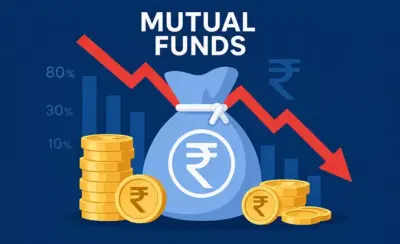
Two recent developments offer a reason to pause. The first is India's mutual fund industry, where the number of schemes posting negative annual returns in FY 2025-26 nearly tripled to 731 from 243 a year earlier. At the other end, schemes delivering more than 10 per cent returns fell from 304 to 198. The second comes from abroad. A Bank of America survey of 98 fund managers overseeing $272 billion says India has become Asia's 'least-preferred' stock market, with 32 per cent of respondents underweight. Indonesia, previously at the bottom of the preference table, has moved ahead of India.
By itself, neither development is cause for panic. Together, they raise a question worth asking: Is the India investment story beginning to encounter resistance?
Domestic Bet
The curious thing is that Indian investors do not appear to have lost faith. A pointer is the mutual fund assets under management, which rose 12.2 per cent to Rs 73.7 lakh crore by March 2026. The number of unique investors climbed by 13.2 per cent to 6.1 crore, while SIP accounts rose to 10.45 crore. Average monthly net SIP contributions jumped 25.8 per cent to Rs 16,413 crore.
That is an extraordinary vote of confidence from Indian households. Yet, a different picture is extremely uncomfortable. Schemes netting between 0 and -5 per cent rose to 492 from 172. Those losing between 5 and 10 per cent rose to 146 from 41, while schemes losing 10 per cent or more rose to 93 from 30. The lesson is not that MFs are suddenly bad. Markets rise and fall, and one year of returns proves little about long-term wealth creation.
The disquieting lesson is that India's financialization is running ahead of its returns. Lakhs of new investors are entering the markets, presumably because they believe in India's long-term economic prospects. They may soon discover that believing in the economy and earning strong market returns are not always the same thing.
Foreign Warning
The foreign-investor signal is disconcerting. Bank of America found that the leading concern about India is its lack of clear exposure to the artificial intelligence investment boom, followed by weak growth, high valuations and a perceived lack of reforms. That does not mean the world has suddenly written India off. More than US $4 billion has flowed into Indian equities this quarter. Nor should foreign fund managers be treated as oracles. They can (and often do) get markets spectacularly wrong.
But sentiment matters because capital is competitive. For years, India benefited from being seen as the obvious long-term destination for global investors seeking growth. Today, investors have more choices. Indonesia is one. Other emerging markets are competing for the same capital. And the question being asked is no longer whether India will grow, but how much growth is already priced into Indian assets. That is a very different question.
Growth Test
This is where the two stories meet. India is attracting enormous investment into electronics, renewable energy, semiconductors, infrastructure, digital services and manufacturing. Its infrastructure is improving rapidly. But markets ultimately demand more than investment announcements; they want productivity, earnings, innovation and scalable businesses that justify the valuations investors are asked to pay.
The AI question is the most revealing. India has built one of the world's most impressive digital ecosystems, but global capital is increasingly chasing the companies and countries positioned to capture the next wave of AI-driven investment. India cannot assume that its existing technology credentials automatically translate into leadership in the next technology cycle. Nor can high valuations remain indefinitely insulated from weaker-than-expected growth or earnings. This is not a case for pessimism. It is a case for urgency.
Pay Tomorrow
India remains among the world's most consequential economies. Its domestic market is enormous, its financial system is deepening and its infrastructure build-out is creating opportunities that would have seemed improbable a decade ago. But perhaps the most dangerous thing India can do right now is confuse a strong economic narrative with a guaranteed investment outcome. The domestic investor is still betting on India. The foreign investor is becoming selective. And the market is sending both messages at once.
The right response is neither complacency nor alarm. It is to make the underlying economy stronger: faster productivity growth, deeper reforms, more innovation, stronger companies, better earnings and a credible place in the technologies shaping the next investment cycle. India does not need to persuade the world that its story is not over. It needs to demonstrate that the next chapter will be worth paying for. After all, markets do not punish ambition. They punish complacency.
Views expressed are personal. The writer is a journalist & communications specialist