




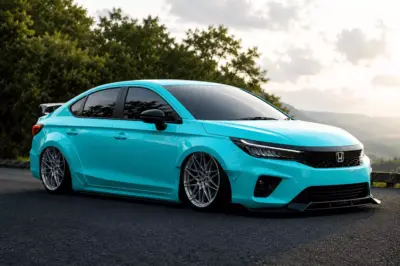

The first itch is never accidental. It begins innocently enough. A new set of alloy wheels. Slightly wider tyres. A throatier exhaust note.
Perhaps a subtle ambient light package glowing like a nightclub trapped inside a dashboard. Then comes the engine remap. The spoiler. The suspension lift. The custom wrap. The bigger intercooler. The obsession. The craziness. Before long, the owner is no longer driving an aftermarket modified machine. He is piloting a personality. Welcome to Kerala - India's automotive mods underground.
No other Indian state understands the emotional heart-pull of auto modification the way Kerala does. In the narrow roads of Kochi, the hills of Wayanad, the highways cutting through Malappuram and the coastal stretches of Kozhikode, cars are rarely treated as devices for transportation. They are statements. Rolling biographies. Mechanical vanity projects. And sometimes, questionable aftermarket modifications.
Neat Twilight Mods
For years, the mods culture existed in a twilight zone. Kerala had India's most vibrant modification scene, but also the country's most vigilant enforcement ecosystem. The state's Motor Vehicles Department became both feared and meme-d. Social media filled with videos of highly-modded SUVs being stopped, fined or impounded. Enthusiasts viewed the traffic police less as a regulator and more as a heartless villain in their automotive soap opera. Yet, the truth was always more complicated than the Internet outrage.
Under Section 52 of India's Motor Vehicles Act and the Central Motor Vehicles Rules, structural alterations that change the fundamental characteristics of any vehicle are regulated. Engine swaps, chassis alterations, lighting upgrades and modifications affecting homologation are restricted. Courts, including the Supreme Court, have reinforced that no state can casually override centrally-approved vehicle specifications.
Which is why the new Kerala Government's recent order on modifications matters - not because it legalises automotive anarchy, but because it acknowledges reality.
Small, But Significant
Leading up to the state elections, the United Democratic Front government had promised to legalise 'safe' modifications. Recently, it submitted a framework identifying 18 categories of alterations that may be permitted without special approval. These include accessories such as decals, ambient lighting, dash cameras, parking sensors, infotainment systems, roof carriers, TPMS units, reverse cameras and limited sun films.
To hardcore enthusiasts, this may sound comically modest. Kerala's social media exploded with sarcasm after the announcement. Automobile enthusiasts and mod-firms users joked that the government had essentially "legalised floor mats and seat covers". But the significance lies elsewhere. For the first time in years, the conversation around modification is shifting from criminality to regulation.
That distinction matters enormously.
Customization Culture
That's because the mods economy has always existed in India. It is vast, cash-rich and totally unorganised. From aftermarket alloy manufacturers to ECU tuners, detailing studios, wrap specialists, suspension workshops and premium audio installers, thousands of livelihoods already depend on this ecosystem. Kerala merely became the first state politically willing to acknowledge this reality in public.
And why not? Across the world, customization is not viewed as deviance. It is culture. America built billion-dollar industries around muscle-car tuning and pickup personalization. Japan turned compact hatchbacks into expressions of mechanical art. Germany turned precision tuning into engineering prestige. Even South-East Asian nations like Thailand and Indonesia have thriving, regulated aftermarket industries.
India, for some reason, continues to behave as though changing a steering wheel cover is the opening step towards societal annihilation.
Need to Be Watchful
Of course, there are some legitimate concerns. Badly-executed mods can kill. LED bars blind oncoming traffic. Poorly wired accessories can trigger electrical fires. Extreme suspension lifts alter vehicle dynamics. Fake performance parts sold without testing can compromise braking and stability. Kerala's court have raised alarm over hazardous lighting systems, unsafe electrical installations and excessive modifications.
This is precisely why regulation is necessary, but blanket hostility should be out. Because enthusiasts are not going away. Today's car-owner wants participation, not passive ownership. Carmakers themselves encourage this psychology. Manufacturers advertise sporty body kits, adventure editions, connected-car technology and lifestyle accessories directly from factory showrooms. Instagram and YouTube have also transformed cars into content machines. An SUV today is no longer an SUV. It is a reel backdrop, a road-trip statement and, sometimes, even a substitute personality.
The slippery slope is real. Every enthusiast knows it.
Pitch is Rising Too
One modification leads to another because the machine stops being generic. It becomes yours. The steering gets sharper. The stance is lower. The engine responds better. The cabin feels richer. Somewhere between practicality and irrationality, emotion wins. The owner is not just consuming engineering; he is creating it. That emotional dimension is something regulators have completely failed to understand.
India's auto laws were built around standardization, certification and enforcement. Those goals remain essential. But modern culture demands a more sophisticated framework; one that separates dangerous alterations from reliable personalization. Kerala may be nudging India into that conversation.
The current framework is cautious. Rightly so. Major structural modifications still require approvals. Engine and chassis alterations remain controlled. Kerala itself has clarified that safety cannot be compromised. Yet, the symbolism matters. The state government has effectively recognised that customization, in itself, is not criminal behaviour.
Will this Trigger Sense?
That could eventually open the doors to something larger - a certified aftermarket ecosystem. Imagine licensed modification workshops. State-approved performance parts. Standardised inspection systems. Insurance-linked certification. Tax-paying tuning shops operating transparently instead of in legal shadows. India's enormous youth demographic would embrace it instantly. Joyously.
For beneath the memes, the stickers and the booming subwoofers lies a deeper reality. The modification culture is about ownership in its purest form. In an age of algorithmic sameness and staleness, people want their machines to reflect individuality. Kerala simply said aloud what millions of enthusiasts quietly feel.
A car should not always remain exactly as it left the factory. Sometimes, it should evolve with its owner, like partners in any good relationship. Perhaps that is the road India must now decide whether to open, albeit cautiously, intelligently and safely. I say this door has to be opened regardless of all considerations.