
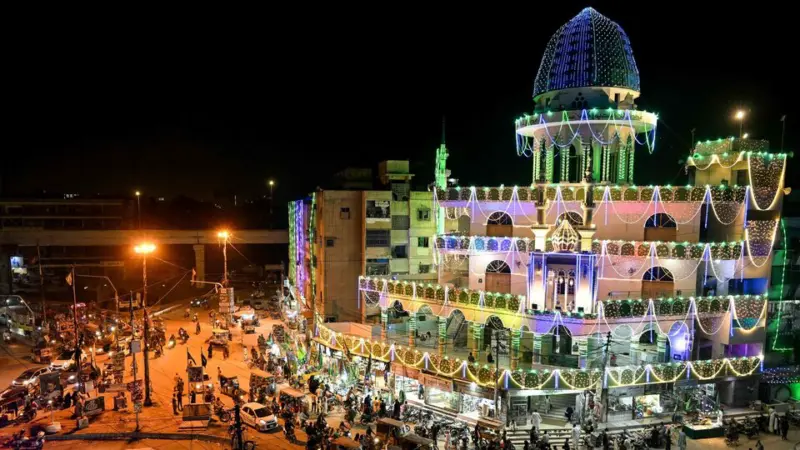

Yes, Eid-e-Milad is used interchangeably with Eid Milad-un-Nabi, which refers to the festival celebrated by Muslims across the world. One of the most revered festivals is celebrated in the third month of the Islamic lunar calendar called the Rabi' al-Awwal.
Widely celebrated by the Sufi and Barelvi sects, this day marks the birth anniversary of Prophet Muhammad. While Sunnis observe it on the 12th of Rabi al-awwal, Shi'as mark it on the 17th day of the month.
When is Eid Milad-un-Nabi holiday?
According to list of Gazetted holidays, the festival will be observed on September 5 this year. Hence, this Friday will be a holiday for government and private schools and offices. Globally, Eid Milad-un-Nabi celebration will commence on the evening of September 4 and conclude on the evening of September 5.
According to holidays listed in the Reserve Bank of India's (RBI's) calendar, banks across India will remain closed on this day across several states. Banks will remain closed in Andhra Pradesh, Haryana, Jharkhand, Karnataka, Madhya Pradesh, Kerala, Maharashtra, Mizoram, Nagaland, Odisha, Punjab, Rajasthan, Sikkim, Tamil Nadu, Telangana, Tripura and Uttarakhand.
What is the historical significance of Eid Milad-un-Nabi?
Also known as Mawlid al-Nabi al-Sharif, the exact date of the festival that commemorates the birth anniversary of Prophet Mohammed depends on the sighting of the moon.
The celebration dates back to the early Islamic period as many followers of the religion believe that the Prophet was born in Mecca on the 12th of Rabi' al-Awwal in 570 CE. It is believed that the Fatimids were the first to officially mark the occasion.
The term "Mawlid" refers to "birth" in Arabic. However, Eid-e-Milad is also mourned by some and is regarded as the Prophet's death anniversary.
As per reports, the first official celebration was observed in Egypt. During the initial days, the ruling Shia tribe in the region marked the festival but by the 12th century, other countries like Syria, Morocco, Turkey and Spain began celebrating it.
What happens on Eid-e-Milad - rituals, customs and celebrations
Followers of the Islam celebrate this day by wearing new clothes, praying and exchanging greetings. The day begins with offering morning prayers which is followed by processions. From recalling stories of the Prophet's life to preaching teachings from the Quran, on this day devotees donate alms.