
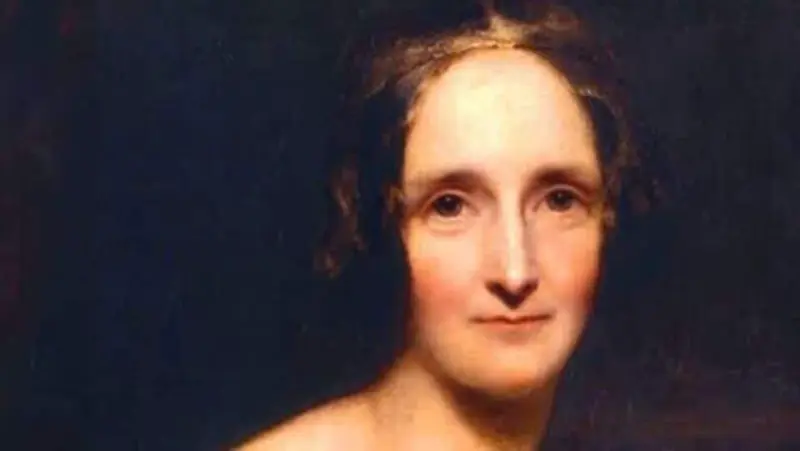

"No man chooses evil because it is evil; he only mistakes it for happiness, the good he seeks."
The quote, frequently linked to Mary Shelley, reflects a core philosophical idea: that human beings tend to rationalise their actions as justified, even when those actions produce harmful outcomes.
However, the attribution is often debated. The idea aligns more closely with the work of Mary Wollstonecraft, whose writings explored how flawed reasoning and social conditioning shape human behaviour.
According to the Stanford Encyclopedia of Philosophy, Wollstonecraft (1759-1797) was a moral and political philosopher whose analysis of women's position in society remains influential. Her work formed part of a broader effort to understand human relationships within a civilisation increasingly shaped by acquisitiveness and consumption.
Her first publication focused on the education of daughters, and she went on to write extensively on politics, history and philosophy across multiple genres, including reviews, translations, pamphlets and novels. Best known for A Vindication of the Rights of Woman (1792), Wollstonecraft's influence extended beyond feminist thought. Her travel writing, particularly her account of a journey through Scandinavia, and her reflections on imagination also contributed to shaping the Romantic movement.
Within this intellectual framework, the quote underscores a critical idea: that people do not typically choose "evil" knowingly. Instead, they act under the belief that their choices will bring fulfilment, justice or happiness-revealing how perception can distort moral judgement.
The notion that individuals mistake harmful actions for good is a recurring theme in moral philosophy. It intersects with ideas around cognitive bias, ethical reasoning and moral relativism.
From a psychological perspective, individuals often construct justifications that align their actions with their values. This process-commonly described as moral rationalisation-allows people to maintain a sense of integrity even when their actions may conflict with broader ethical standards.
The quote, therefore, functions as both an explanation of human behaviour and a caution against unchecked certainty. It highlights how easily conviction can blur the line between right and wrong.
The quote resonates strongly in light of recent developments in West Asia. A day after US President Donald Trump announced a 10-day ceasefire between Israel and Hezbollah in Lebanon, Iran said the Strait of Hormuz would remain open for commercial vessels during the truce.
Iran's Foreign Minister Abbas Araghchi stated that the key maritime route would be "completely open", a move welcomed by the US. Trump acknowledged the announcement, describing the passage as "fully open".
Meanwhile, the International Energy Agency has indicated that energy production in the region could take up to two years to return to pre-war levels. Its Executive Director Fatih Birol noted that recovery timelines would vary across countries depending on infrastructure and capacity.
These developments illustrate how actions in conflict situations are often justified as necessary or beneficial by those involved. Whether framed as strategic, defensive or stabilising, such decisions are typically rooted in a perceived "good".
The quote provides a way to interpret this dynamic, highlighting how intent and outcome can diverge-and how competing beliefs about what is right can sustain conflict.