
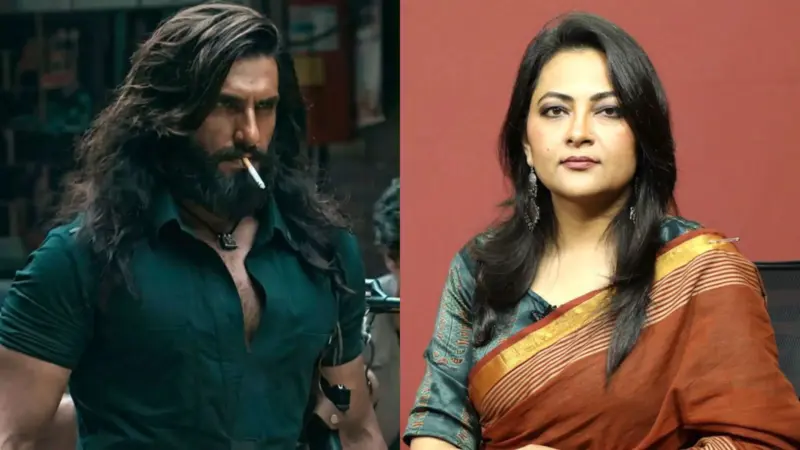

The hype around Dhurandhar continues to dominate conversations among film audiences. For the past few weeks, fans have focused on its cinematic quality, performances, music, and storyline, along with claims that it has moved Bollywood away from what some call "Urduwood."
In a recent interview, journalist Arfa Khanum Sherwani addressed this growing narrative. She explained that many social media users believe Bollywood has long been influenced by Urdu culture, leading to the popular use of the term "Urduwood."
According to her, a section of viewers feels that Dhurandhar has broken away from this influence. Some even claim the film introduces a different cultural voice and represents a shift in storytelling within mainstream Hindi cinema.
However, she highlighted what she described as an irony in this perception. She noted that several elements in the film, including visuals, settings, food, dialogues, and music styles, still reflect strong Urdu and Muslim cultural influences.
She argued that these aspects play a key role in the film's appeal and overall impact. Without them, she believes the film may not have achieved the same level of engagement among audiences.
Arfa further pointed out that the film seems to benefit from these cultural elements, even as some viewers interpret it as moving away from them. This contrast, she said, raises questions about how audiences perceive cinema and its influences.
The discussion has now sparked broader debate among viewers. Some feel it shows how quickly narratives form online, while others believe it reflects deeper biases that can shape how films are understood.
Overall, the conversation highlights the complexity of cultural influences in cinema and how different interpretations can emerge among audiences.