




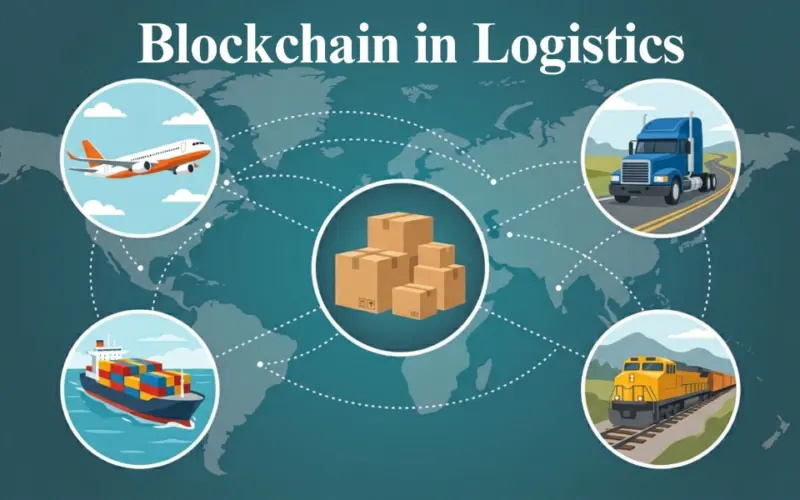

The logistics industry runs on trust, timing, and transparency. When any of those three elements breaks down, the consequences ripple across entire supply chains.
Businesses suffer. End customers feel it too. Furthermore, delays pile up and disputes become costly. The lack of reliable data makes it hard to pinpoint where things went wrong. That is exactly why so many forward thinking logistics companies are turning to blockchain technology. They want to reimagine how they track, verify, and manage their operations. Ultimately, partnering with a skilled blockchain development company is quickly becoming one of the smartest strategic decisions a logistics business can make.
Why Blockchain Is Transforming the Logistics Landscape
Traditional logistics systems rely on fragmented records spread across multiple parties. Carriers, warehouses, freight brokers, customs agents, and retailers all maintain their own documentation. As a result, getting a clear picture of what is happening at any point can feel nearly impossible. Information gets lost in email threads. Spreadsheets go out of date. Moreover, reconciling records across different systems takes time that nobody in a fast moving supply chain can afford to waste.
Blockchain solves this by creating a single shared ledger that every authorized party can access and verify in real time. The technology records every transaction or event permanently and in sequence. No one can alter data once it enters the chain without network consensus. Therefore, this immutability is a game changer for an industry where disputes over cargo conditions, delivery timelines, and payment terms happen far too often.
How a Blockchain Development Company Solves Visibility Problems
Visibility is the holy grail of logistics. Shippers want to know where their goods are. Retailers want accurate arrival estimates. Additionally, customers want proof that their products traveled safely throughout the journey.
A professional blockchain development company builds systems that deliver real time visibility across every stage of the supply chain. Sensors and tracking devices feed data directly into the blockchain. Consequently, every entry becomes part of a permanent, tamper proof record. The system logs every handoff, every storage condition change, and every delivery confirmation automatically.
This level of transparency cuts the need for manual check ins and status calls. As a result, teams spend less time chasing updates and more time solving real problems. All parties gain the confidence to make faster decisions because they trust the data in front of them. Indeed, in a world where delays cascade quickly, that confidence carries real commercial value.
Smart Contracts and Automated Operations
One of the most powerful tools a blockchain development company brings to logistics clients is smart contract functionality. Smart contracts are self-executing agreements that live directly on the blockchain. They fire automatically when predefined conditions are met, so no manual intervention is needed and no processing delays occur.
In logistics, this creates enormous practical value. The system releases payments the moment a delivery clears confirmation. Furthermore, penalties apply automatically when service levels fall short. Insurance claims move forward without lengthy back and forth communication. Compliance certificates go out as soon as goods clear the required inspection checkpoints. Overall, none of this requires anyone to review documents or send approval emails.
The result is a leaner, faster operation. Administrative tasks stop slowing down the flow of goods and money. Consequently, businesses can redirect the time they save into improving core services and building stronger client relationships.
Reducing Fraud and Improving Data Integrity
Cargo fraud is a persistent and costly problem in the logistics world. Bad actors use counterfeit documents, misrepresent goods, and falsify delivery confirmations. Because blockchain records are permanent and visible to all authorized participants, manipulating data without detection becomes extremely difficult.
A blockchain development company designing a logistics solution builds in verification layers that flag inconsistencies automatically. When a document does not match information already on the chain, the system raises an alert right away. As a result, this builds a culture of accountability across every node in the supply chain.
Beyond fraud prevention, blockchain also strengthens compliance. Logistics companies must often prove that goods traveled and stayed under strict standards. Fortunately, blockchain generates that proof automatically. Teams can therefore access it on demand without digging through filing cabinets or chasing down paper records.
Streamlining Multi Party Collaboration
Logistics rarely involves just two parties. A single shipment might pass through freight forwarders, customs brokers, port operators, and final mile delivery providers. Each party runs its own systems and follows its own processes. Consequently, getting everyone to communicate clearly and consistently is one of the biggest operational challenges in the industry.
Blockchain creates a common infrastructure that all parties can connect to. Instead of sending emails, making calls, or waiting for portal updates, everyone works from the same source of truth. A reputable blockchain development company knows how to design these multi stakeholder environments well. They set permissions correctly, protect privacy where needed, and make collaboration feel natural rather than cumbersome.
This integration cuts delays that miscommunication causes. It also eliminates duplicate data entry, one of the biggest sources of error in logistics. Therefore, when everyone sees the same verified information, conversations shift from debating what happened to deciding what to do next.
Inventory Management and Demand Forecasting
Blockchain does not just improve how goods move. It also transforms how businesses manage what they have on hand. When the shared ledger captures inventory data, every warehouse update and stock movement becomes part of a reliable, verifiable history.
Logistics companies that manage fulfillment or storage services give their clients a powerful advantage. Clients can access accurate inventory counts at any time without waiting for manual audits. Moreover, the system catches discrepancies immediately because it logs every movement as it happens. Data driven clarity ultimately replaces the guesswork that once caused overstocking and shortages.
This accurate real time data also sharpens demand forecasting. Businesses that trust their inventory records can predict what they need and when with much greater confidence. Furthermore, a blockchain development company with deep logistics expertise builds these systems to fit smoothly into existing warehouse and order management workflows. The transition does not disrupt daily operations. Instead, it improves them consistently over the long run.
Building Customer Trust Through Transparent Logistics
Modern customers expect more than just delivery. They want proof that their product is genuine, proof that it stayed under the right conditions, and proof that it came from the right source. As consumer awareness grows, verifying a product journey shifts from a nice feature to a real expectation.
Blockchain makes all of this provable. Logistics companies and the brands they serve give end customers access to a verified trail of the product journey. As a result, that builds a level of trust that marketing alone cannot create.
A skilled blockchain development company builds consumer facing interfaces that turn complex chain data into simple, readable summaries. Customers can see where their product has been, what conditions it experienced, and who handled it along the way. This transparency becomes a strong competitive advantage. Moreover, competitors running on traditional systems cannot easily replicate it. It also holds every party in the supply chain to a higher standard of accountability.
Conclusion
The logistics industry faces growing pressure to become faster, leaner, and more transparent. Blockchain technology offers a direct path to all three. Real time visibility, fraud prevention, smart contract automation, and multi party collaboration all come together in one powerful solution. Therefore, businesses that embrace this shift move ahead of competitors still relying on outdated, fragmented systems.
Choosing the right blockchain development company is the most important step in this journey. The right partner does more than write code. They understand logistics deeply, design systems that grow with your business, and build solutions that create lasting value for everyone in your supply chain.
If your logistics operation is ready to move beyond fragmented systems and manual processes, this is the time to explore what blockchain can do for you. Reach out to a trusted blockchain development company and take the first step toward a more connected, efficient, and transparent future.
Blockchain
Disclaimer
This content is a community contribution. The views and data expressed are solely those of the author and do not reflect the official position or endorsement of nasscom.
That the contents of third-party articles/blogs published here on the website, and the interpretation of all information in the article/blogs such as data, maps, numbers, opinions etc. displayed in the article/blogs and views or the opinions expressed within the content are solely of the author's; and do not reflect the opinions and beliefs of NASSCOM or its affiliates in any manner. NASSCOM does not take any liability w.r.t. content in any manner and will not be liable in any manner whatsoever for any kind of liability arising out of any act, error or omission. The contents of third-party article/blogs published, are provided solely as convenience; and the presence of these articles/blogs should not, under any circumstances, be considered as an endorsement of the contents by NASSCOM in any manner; and if you chose to access these articles/blogs , you do so at your own risk.