





As India's digital infrastructure expands across sectors-from fintech and e-commerce to real-time trading and SaaS platforms-the expectation for uninterrupted service has never been higher.
High availability (HA) is no longer a luxury but a necessity for ensuring seamless user experiences and operational continuity.
In environments where applications such as vps hosting for forex rely on real-time data processing, even minor downtime can result in significant operational or financial impact. Designing systems that remain resilient under India's unique infrastructure conditions is therefore a key priority for technology leaders.
Evolving Infrastructure Needs: The Push Toward Always-On Systems
India's rapid digital adoption is placing increased pressure on IT systems to operate continuously without failure. Key developments shaping this demand include:
- Growth of digital payment platforms and 24/7 services
- Expansion of cloud-native applications and microservices
- Rising user expectations for low latency and zero downtime
- Increased reliance on automation and real-time analytics
Industry insights suggest that even a single hour of downtime can cost enterprises thousands of dollars, depending on scale and sector. This makes high availability a fundamental component of modern infrastructure planning.
Key Challenges: Addressing India-Specific Operational Constraints
Designing high-availability systems in India involves overcoming a range of unique challenges influenced by geography, infrastructure variability, and scale.
Common challenges include:
- Power and Network Instability
In some regions, inconsistent power supply and network reliability can disrupt operations. - Latency Variability Across Regions
Serving users across metro and non-metro areas can introduce performance inconsistencies. - Infrastructure Fragmentation
Hybrid and multi-cloud environments can complicate system design and monitoring. - Scalability Under Sudden Demand
Traffic spikes during events or peak usage periods can overwhelm systems. - Disaster Recovery Limitations
Inadequate backup strategies can delay recovery during outages.
Best Practices: Building Resilient and Fault-Tolerant Systems
To address these challenges, organizations are adopting proven strategies that enhance system resilience and minimize downtime.
Key approaches include:
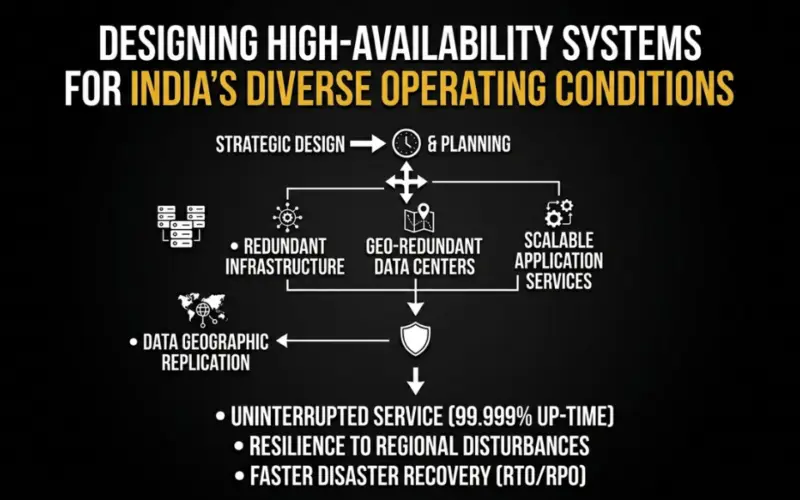
- Redundant Architecture Design
Deploying multiple instances of critical components across different zones ensures failover capability. - Load Balancing Mechanisms
Distributing traffic across servers prevents overload and improves response times. - Geographic Distribution of Data Centers
Hosting applications closer to users reduces latency and enhances reliability. - Automated Monitoring and Alerts
Real-time monitoring helps identify and resolve issues before they escalate. - Disaster Recovery Planning
Implementing backup and failover strategies ensures quick restoration of services. - Optimized Hosting Environments
Infrastructure models such as vps hosting for forex are often designed to deliver consistent uptime and low latency, supporting critical workloads.
Impact on Innovation & Business Continuity
High-availability systems play a crucial role in enabling innovation while ensuring uninterrupted operations.
Key benefits include:
- Improved User Trust and Experience
Consistent uptime enhances customer satisfaction and retention. - Business Continuity Assurance
Systems remain operational even during failures or disruptions. - Faster Incident Response
Automated systems reduce downtime and recovery time. - Scalable Infrastructure Growth
Organizations can handle increased demand without performance degradation. - Support for Real-Time Applications
High availability is essential for applications requiring continuous data processing.
For India's startups and enterprises, these benefits directly contribute to sustainable growth and competitive advantage.
Conclusion: Building for Reliability in a Dynamic Environment
Designing for high availability requires a combination of robust architecture, proactive monitoring, and strategic infrastructure planning. In India's diverse and rapidly evolving digital landscape, organizations must account for regional challenges while maintaining global standards of reliability.
By prioritizing resilience and adopting best practices, businesses can ensure uninterrupted service delivery and position themselves for long-term success in an increasingly digital economy.
High Availability IT Infrastructure India System Reliability
Disclaimer
This content is a community contribution. The views and data expressed are solely those of the author and do not reflect the official position or endorsement of nasscom.
That the contents of third-party articles/blogs published here on the website, and the interpretation of all information in the article/blogs such as data, maps, numbers, opinions etc. displayed in the article/blogs and views or the opinions expressed within the content are solely of the author's; and do not reflect the opinions and beliefs of NASSCOM or its affiliates in any manner. NASSCOM does not take any liability w.r.t. content in any manner and will not be liable in any manner whatsoever for any kind of liability arising out of any act, error or omission. The contents of third-party article/blogs published, are provided solely as convenience; and the presence of these articles/blogs should not, under any circumstances, be considered as an endorsement of the contents by NASSCOM in any manner; and if you chose to access these articles/blogs , you do so at your own risk.
Co-Founder and CMO
Technology thrives at the intersection of innovation and infrastructure. My dual role is my commitment to both: fueling innovation at my company and strengthening the industry's infrastructure through NASSCOM's council. Together, we're not just navigating change; we're laying down the tracks for progress.