
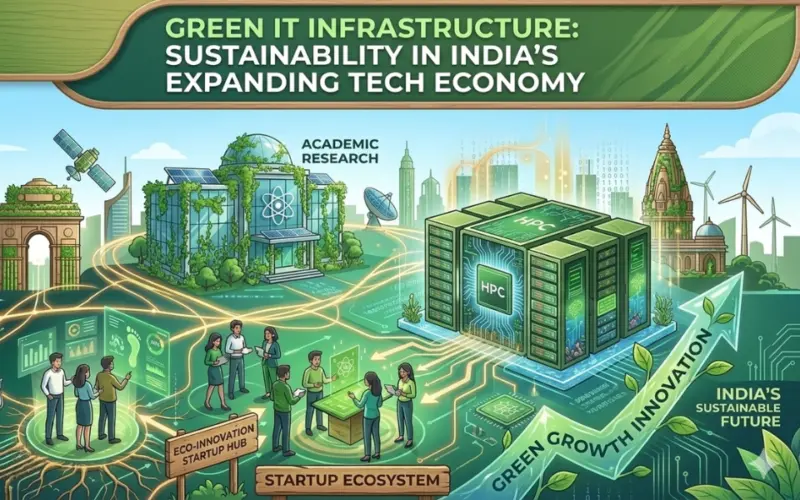

India's technology sector has become one of the most dynamic drivers of economic growth. With thousands of startups, rapidly expanding digital services, and increased cloud adoption, the country's digital infrastructure footprint continues to grow.
While this growth supports innovation and economic development, it also raises important questions about environmental sustainability.
Data centers, computing infrastructure, and digital platforms consume significant energy resources. As organizations expand their digital capabilities, integrating sustainable practices into IT infrastructure is becoming increasingly important. Green IT infrastructure focuses on reducing environmental impact through efficient energy use, optimized computing systems, and responsible technology deployment.
For Indian enterprises and startups, sustainability is no longer only a corporate social responsibility initiative-it is gradually becoming a strategic priority within the broader digital transformation agenda.
The Expanding Digital Infrastructure Landscape in India
Over the past ten years, India's digital ecosystem has expanded quickly.. Industry estimates suggest that the country's data center capacity could triple by 2030, driven by cloud adoption, AI applications, and large-scale digital services.
Key drivers of infrastructure expansion include:
- Growth in cloud computing platforms
- Increasing use of artificial intelligence and data analytics
- Expansion of e-commerce and fintech services
- Increased demand for enterprise digital platforms
Behind these services lies a large network of servers, storage systems, and networking equipment. Technologies such as dedicated hosting server environments often support high-performance workloads, particularly for enterprises managing complex applications or large datasets.
While such infrastructure supports business growth, it also increases electricity consumption and carbon emissions if not managed efficiently.
Environmental Challenges in IT Infrastructure
As digital systems expand, several sustainability challenges emerge.
1. High Energy Consumption
Data centers require continuous power for servers, cooling systems, and networking equipment. Globally, data centers are estimated to consume around 1-1.5% of total electricity demand, and this share is expected to increase as digital services expand.
2. Cooling and Thermal Management
Maintaining optimal temperatures for computing equipment requires extensive cooling infrastructure. Traditional cooling systems can significantly increase energy consumption in large facilities.
3. Hardware Lifecycle and E-Waste
Rapid technology upgrades lead to frequent hardware replacements. Without responsible recycling or reuse practices, outdated servers and devices contribute to growing electronic waste.
4. Infrastructure Inefficiency
Underutilized servers and inefficient system configurations can result in unnecessary energy consumption. Many organizations operate infrastructure that is not optimized for workload distribution.
Strategies for Building Sustainable IT Infrastructure
To address these challenges, organizations are increasingly adopting green IT practices that improve efficiency while supporting digital growth.
Energy-Efficient Data Center Design
Modern data centers incorporate advanced design principles to reduce energy consumption. These include:
- Optimized airflow management
- Liquid cooling systems
- Use of renewable energy sources
- Energy-efficient server hardware
These innovations help reduce the carbon footprint of computing environments.
Infrastructure Consolidation and Virtualization
Virtualization technologies allow multiple workloads to run on fewer physical machines. Benefits include:
- Reduced hardware requirements
- Lower energy consumption
- Improved resource utilization
Virtualized infrastructure helps organizations maintain performance while minimizing environmental impact.
Intelligent Resource Monitoring
Advanced monitoring systems track energy usage and system performance in real time. Organizations can use these insights to:
- Identify underutilized infrastructure
- Optimize server workloads
- Reduce unnecessary energy consumption
For organizations operating dedicated hosting server environments, monitoring tools can improve operational efficiency and sustainability.
Responsible Hardware Lifecycle Management
Sustainable IT practices also include responsible management of hardware assets. This involves:
- Extending equipment lifecycle through upgrades
- Recycling outdated hardware responsibly
- Partnering with certified e-waste management providers
These practices reduce environmental impact while maintaining infrastructure reliability.
Supporting Sustainable Innovation in India
Green IT infrastructure contributes not only to environmental goals but also to long-term business sustainability. Efficient infrastructure environments help organizations reduce operational costs while improving resilience.
In India's technology ecosystem, sustainable infrastructure practices can:
- Support responsible growth of digital platforms
- Strengthen global competitiveness for Indian tech companies
- Encourage innovation in energy-efficient computing technologies
- Align with national sustainability and climate commitments
Startups and enterprises that adopt environmentally responsible infrastructure strategies early are better prepared for evolving global expectations around sustainability and corporate accountability.
Conclusion: Building a Responsible Digital Future
India's digital economy continues to expand, powered by innovation, entrepreneurship, and technological advancement. However, as digital infrastructure grows, sustainability must become a core part of infrastructure planning.
Green IT infrastructure provides a pathway to balance technological progress with environmental responsibility. By adopting energy-efficient data center designs, optimizing resource utilization, and managing hardware lifecycles responsibly, organizations can significantly reduce the environmental footprint of digital operations.
As the technology ecosystem evolves, sustainability-driven infrastructure strategies will play a crucial role in shaping a resilient and environmentally responsible digital future for India.
Green IT Infrastructure sustainable technology Data Center Efficiency Dedicated Hosting Server Digital Transformation India Cloud Infrastructure Environmental Sustainability IT Infrastructure Strategy Indian Tech Ecosystem
Disclaimer
This content is a community contribution. The views and data expressed are solely those of the author and do not reflect the official position or endorsement of nasscom.
That the contents of third-party articles/blogs published here on the website, and the interpretation of all information in the article/blogs such as data, maps, numbers, opinions etc. displayed in the article/blogs and views or the opinions expressed within the content are solely of the author's; and do not reflect the opinions and beliefs of NASSCOM or its affiliates in any manner. NASSCOM does not take any liability w.r.t. content in any manner and will not be liable in any manner whatsoever for any kind of liability arising out of any act, error or omission. The contents of third-party article/blogs published, are provided solely as convenience; and the presence of these articles/blogs should not, under any circumstances, be considered as an endorsement of the contents by NASSCOM in any manner; and if you chose to access these articles/blogs , you do so at your own risk.
Hi, I'm Kartik Sen, a Digital Marketer at CloudMinister the web hosting provider . I specialize in promoting web hosting, cloud VPS, dedicated servers, and Linux hosting solutions. With a strong passion for technology and server infrastructure, I focus on SEO-driven strategies that boost brand visibility, generate quality leads, and support long-term business growth.