




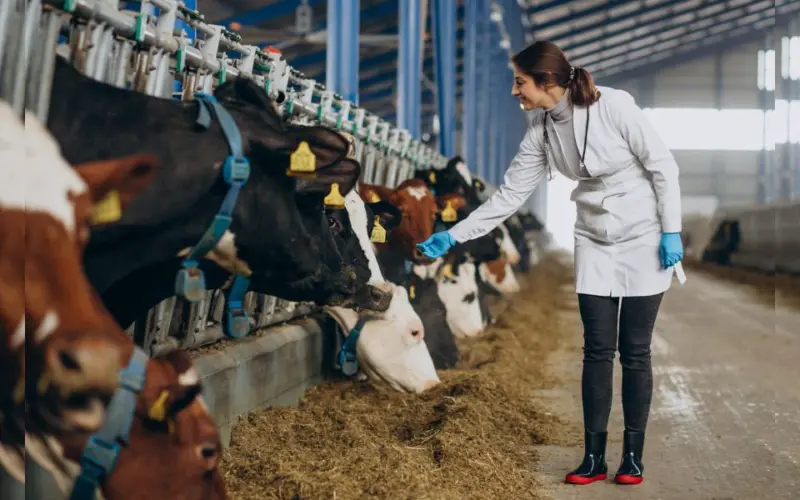

The dairy industry operates on one of the most complex and time-sensitive supply chains in the food sector. Unlike many other industries, dairy products are highly perishable, heavily regulated, and dependent on multiple stakeholders-from farmers and procurement teams to processing units and distribution networks.
Yet despite technological advancements, dairy supply chain issues continue to create operational bottlenecks, financial losses, and compliance risks. The question isn't whether these challenges exist-it's how effectively businesses can manage them.
This article breaks down the key risk areas in modern dairy supply chains and explores how companies can build resilient, compliant, and efficient operations.
Understanding Dairy Supply Chain Complexity
A typical dairy supply chain involves:
- Milk collection from farms
- Quality testing and procurement
- Transportation under controlled conditions
- Processing and packaging
- Cold storage and distribution
- Retail or direct delivery
Each stage introduces its own risks, and even a small disruption can cascade into larger issues like product spoilage, compliance violations, or customer dissatisfaction.
Key Dairy Supply Chain Issues
1. Perishability and Shelf-Life Constraints
Milk and dairy products have limited shelf life. Delays in transportation, storage failures, or poor demand forecasting can quickly lead to spoilage.
Impact:
- Revenue loss
- Inventory wastage
- Customer dissatisfaction
2. Cold Chain Management Failures
Maintaining temperature-controlled logistics is critical. Even minor fluctuations can compromise product quality and safety.
Common challenges:
- Lack of real-time monitoring
- Equipment failures
- Poor route planning
3. Fragmented Procurement Systems
Many dairy businesses still rely on manual or semi-digital processes for milk collection and supplier management.
Risks include:
- Inaccurate data
- Payment disputes
- Lack of transparency with farmers
4. Regulatory Compliance Pressure
Dairy is one of the most regulated sectors globally. Businesses must comply with food safety, labeling, and traceability standards.
Challenges:
- Managing documentation
- Keeping up with changing regulations
- Ensuring audit readiness
5. Lack of End-to-End Traceability
In case of contamination or quality issues, companies must trace products back to their source quickly.
Without proper systems, this becomes nearly impossible.
6. Demand Volatility
Seasonal fluctuations, consumer trends, and external disruptions can create demand uncertainty.
Result:
- Overstocking or stockouts
- Inefficient production planning
7. Inefficient Logistics and Distribution
Manual route planning and lack of coordination between warehouses and delivery teams often lead to delays and increased costs.
Risk Management in Dairy Supply Chains
Addressing these issues requires a structured risk management approach.
Identify Critical Risk Points
Businesses must map their supply chain and identify high-risk areas such as:
- Procurement
- Transportation
- Storage
- Processing
Implement Real-Time Monitoring
Real-time visibility is essential for managing perishable goods.
Examples:
- Temperature tracking
- Vehicle tracking
- Inventory monitoring
Standardize Processes
Standard operating procedures (SOPs) reduce variability and improve compliance.
Build Supplier Accountability
Strong relationships with farmers and suppliers help reduce inconsistencies in quality and supply.
The Role of Compliance in Dairy Operations
Compliance is not just a regulatory requirement-it's a business necessity.
Why Compliance Matters
- Ensures product safety
- Builds consumer trust
- Avoids legal penalties
- Enables market expansion
Key Compliance Areas
- Food safety standards
- Quality testing protocols
- Labeling and packaging regulations
- Traceability requirements
Challenges in Compliance Management
- Manual documentation
- Disconnected systems
- Lack of audit trails
How Technology Solves Dairy Supply Chain Issues
Modern dairy businesses are increasingly turning to ERP systems to address these challenges.
An integrated system provides visibility, control, and automation across the entire supply chain.
Centralized Data Management
All operations-from procurement to sales-are managed in a single system.
End-to-End Traceability
ERP systems enable tracking of products from farm to consumer.
Automated Compliance
Digital records, audit trails, and reporting tools simplify compliance.
Improved Forecasting
Advanced analytics help predict demand and optimize production.
Optimized Logistics
Route planning and delivery tracking improve efficiency and reduce costs.
Why Dairy ERP is Becoming Essential
Traditional systems cannot keep up with the complexity of modern dairy operations.
A dedicated solution like dairy ERPprovides industry-specific features such as:
- Milk procurement management
- Quality testing integration
- Cold chain monitoring
- Subscription and distribution management
- Financial and settlement automation
Instead of managing disconnected tools, businesses can operate through a unified platform designed specifically for dairy workflows.
Best Practices for Building a Resilient Dairy Supply Chain
1. Digitize Procurement and Collection
Move away from manual processes to ensure transparency and accuracy.
2. Invest in Cold Chain Visibility
Real-time monitoring helps prevent losses and maintain quality.
3. Enable Full Traceability
Be prepared for recalls and audits with complete product tracking.
4. Automate Compliance Workflows
Reduce human error and improve audit readiness.
5. Use Data for Decision-Making
Leverage analytics to optimize inventory, pricing, and production.
6. Integrate Systems Across Operations
Avoid silos by connecting procurement, production, and distribution.
7. Continuously Train Teams
Technology adoption is only successful when teams know how to use it effectively.
The Future of Dairy Supply Chains
The dairy industry is moving toward:
- AI-driven forecasting
- IoT-enabled cold chains
- Blockchain-based traceability
- Sustainable and transparent sourcing
Businesses that adapt early will gain a competitive advantage, while others risk falling behind.
Conclusion
Dairy supply chain issues are not new-but the scale and complexity of modern operations have made them more challenging than ever.
From perishability and logistics to compliance and traceability, every stage requires precision, visibility, and control.
The real question is not whether these challenges can be solved-but whether businesses are equipped with the right systems to solve them efficiently.
Adopting the right technology, particularly a purpose-built ERP solution, can transform dairy operations from reactive to proactive-ensuring not just survival, but long-term growth in an increasingly competitive landscape.
Disclaimer
This content is a community contribution. The views and data expressed are solely those of the author and do not reflect the official position or endorsement of nasscom.
That the contents of third-party articles/blogs published here on the website, and the interpretation of all information in the article/blogs such as data, maps, numbers, opinions etc. displayed in the article/blogs and views or the opinions expressed within the content are solely of the author's; and do not reflect the opinions and beliefs of NASSCOM or its affiliates in any manner. NASSCOM does not take any liability w.r.t. content in any manner and will not be liable in any manner whatsoever for any kind of liability arising out of any act, error or omission. The contents of third-party article/blogs published, are provided solely as convenience; and the presence of these articles/blogs should not, under any circumstances, be considered as an endorsement of the contents by NASSCOM in any manner; and if you chose to access these articles/blogs , you do so at your own risk.