
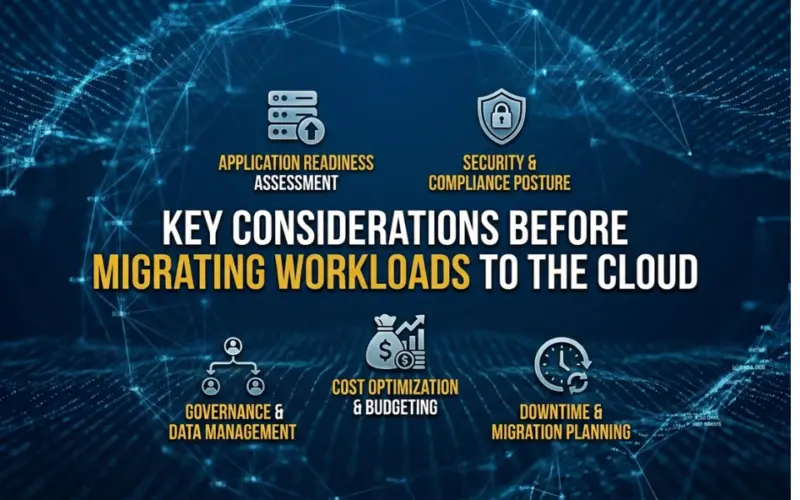

Cloud adoption has become a defining shift in India's digital transformation journey. From startups scaling rapidly to enterprises modernizing legacy systems, organizations are increasingly moving workloads to cloud environments.
While the benefits-such as flexibility, scalability, and cost efficiency-are widely recognized, cloud migration is not a one-size-fits-all process.
Careful planning and evaluation are essential before adopting cloud hosting services in India, as poorly executed migrations can lead to performance issues, cost overruns, and operational disruptions.
Industry Context: Accelerating Cloud Adoption in India
India's cloud market has witnessed significant growth over the past few years, driven by digital-first business models, remote work adoption, and increasing data consumption. Industry insights suggest:
- India's public cloud market is expected to grow at a compound annual growth rate (CAGR) of over 20%
- Over 70% of Indian enterprises are exploring hybrid or multi-cloud strategies
- Startups are increasingly building cloud-native applications from the outset
Despite this momentum, many organizations still face challenges in aligning cloud strategies with business objectives.
Key Challenges in Cloud Migration
Migrating workloads to the cloud involves more than just shifting applications from on-premises systems. Common challenges include:
- Application Compatibility Issues
Legacy applications may not be optimized for cloud environments, requiring re-architecture or refactoring. - Data Migration Complexity
Transferring large volumes of data securely and efficiently can be time-consuming and resource-intensive. - Cost Management Uncertainty
Without proper planning, cloud costs can escalate due to inefficient resource usage. - Security and Compliance Concerns
Ensuring data protection, especially in regulated industries, remains a top priority. - Skill Gaps and Training Needs
Organizations often lack in-house expertise to manage cloud-native environments effectively.
Strategic Approaches and Best Practices
To address these challenges, organizations are adopting structured approaches that prioritize long-term sustainability and performance.
1. Workload Assessment and Prioritization
Not all workloads can be moved right away. Categorizing applications based on complexity, criticality, and dependencies helps in creating a phased migration roadmap.
2. Choosing the Right Migration Strategy
Different approaches-such as rehosting (lift-and-shift), replatforming, or refactoring-should be selected based on application requirements and business goals.
3. Cost Optimization Planning
Implementing cost monitoring tools and defining resource usage policies helps maintain financial control in cloud environments.
4. Security and Compliance Integration
Security should be embedded into the migration process, including encryption, access control, and adherence to regulatory standards.
5. Leveraging Virtualization and Scalable Environments
Technologies supporting cloud hosting services in India enable businesses to scale resources dynamically while maintaining performance consistency.
6. Building a Skilled Workforce
Upskilling IT teams and adopting DevOps practices ensures smoother cloud operations and better resource management.
Practical Best Practices for Smooth Migration
Organizations can enhance migration success by following these practical guidelines:
- Conduct a detailed pre-migration audit of applications and infrastructure
- Develop a clear rollback strategy to handle unexpected issues
- Test workloads in staging environments before full deployment
- Monitor performance continuously during and after migration
- Establish governance policies for resource usage and access control
These steps help reduce risks and improve overall migration outcomes.
Impact on Innovation and Business Growth
Effective cloud migration enables organizations to unlock new opportunities for innovation. By leveraging scalable infrastructure, businesses can:
- Accelerate product development and deployment cycles
- Improve system reliability and uptime
- Enhance customer experience through faster applications
- Support advanced technologies such as AI, analytics, and automation
For India's growing startup ecosystem, cloud readiness provides a strong foundation for experimentation and rapid scaling.
Conclusion: Building a Future-Ready Cloud Strategy
Migrating workloads to the cloud is a transformative step, but its success depends on thoughtful planning and execution. Organizations must evaluate technical, operational, and financial factors before making the transition.
By adopting a structured approach, addressing potential challenges, and leveraging modern infrastructure practices, businesses can maximize the benefits of cloud adoption. As cloud hosting services in India continue to evolve, organizations that prioritize readiness and strategy will be better positioned to thrive in a competitive digital landscape.
Digitaltransformation ITInfrastructure
Disclaimer
This content is a community contribution. The views and data expressed are solely those of the author and do not reflect the official position or endorsement of nasscom.
That the contents of third-party articles/blogs published here on the website, and the interpretation of all information in the article/blogs such as data, maps, numbers, opinions etc. displayed in the article/blogs and views or the opinions expressed within the content are solely of the author's; and do not reflect the opinions and beliefs of NASSCOM or its affiliates in any manner. NASSCOM does not take any liability w.r.t. content in any manner and will not be liable in any manner whatsoever for any kind of liability arising out of any act, error or omission. The contents of third-party article/blogs published, are provided solely as convenience; and the presence of these articles/blogs should not, under any circumstances, be considered as an endorsement of the contents by NASSCOM in any manner; and if you chose to access these articles/blogs , you do so at your own risk.
Senior Digital Marketing Executive
I'm a Senior Digital Marketing Executive at CloudMinister Technologies, working closely with cloud and technology-driven businesses to improve their online presence and digital growth. My experience includes SEO, content strategy, campaign planning, and performance optimization, with a strong focus on measurable results. I enjoy staying updated with the latest digital marketing trends and tech innovations, and I'm always keen to learn, share insights, and connect with professionals across the startup and technology ecosystem.