
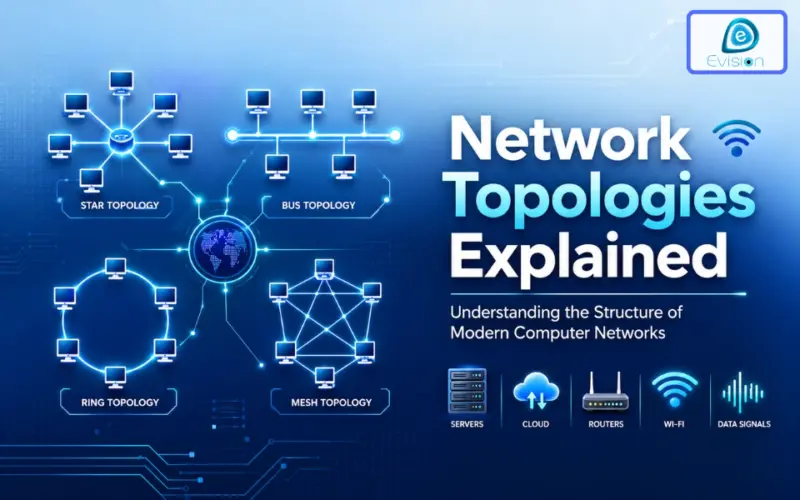

In the world of computer networking, the way devices are connected plays a crucial role in determining the efficiency, reliability, and scalability of a network.
This arrangement of devices and connections is known as network topology. Understanding network topologies is essential for anyone involved in IT, networking, or technology-related fields, as it forms the foundation of how data flows between systems.
A network topology refers to the physical or logical layout of a network, defining how nodes such as computers, servers, and other devices are interconnected. Different topologies are designed to meet specific needs, and each comes with its own advantages and limitations. The most common types of network topologies include bus, star, ring, mesh, tree, and hybrid topologies.
The bus topology is one of the simplest forms, where all devices are connected to a single central cable known as the backbone. While it is easy to implement and cost-effective, it can become inefficient as the number of devices increases, and a failure in the main cable can disrupt the entire network. In contrast, the star topology connects all devices to a central hub or switch. This design improves performance and makes troubleshooting easier, but it depends heavily on the central device-if it fails, the whole network goes down.
Ring topology connects devices in a circular format, where data travels in one direction around the ring. It offers equal access to resources but can be disrupted if any single connection breaks. Mesh topology, on the other hand, provides high reliability by connecting devices with multiple paths, ensuring data can travel even if one route fails. However, it is more complex and expensive to implement. Tree topology combines characteristics of bus and star topologies, creating a hierarchical structure, while hybrid topology integrates two or more different topologies to optimize performance and flexibility.
Choosing the right network topology depends on various factors such as network size, budget, required performance, and fault tolerance. For example, small home networks often use star topology, while large organizations may rely on mesh or hybrid designs for better redundancy and scalability.
In conclusion, network topologies are a vital aspect of designing and managing networks. They directly influence how efficiently data is transmitted, how easily networks can be expanded, and how resilient they are to failures. By understanding different types of network topologies, you can make informed decisions when building or analyzing network systems. Whether you are a student, IT professional, or tech enthusiast, having a solid grasp of network topology concepts is essential in today's digitally connected world.
Disclaimer
This content is a community contribution. The views and data expressed are solely those of the author and do not reflect the official position or endorsement of nasscom.
That the contents of third-party articles/blogs published here on the website, and the interpretation of all information in the article/blogs such as data, maps, numbers, opinions etc. displayed in the article/blogs and views or the opinions expressed within the content are solely of the author's; and do not reflect the opinions and beliefs of NASSCOM or its affiliates in any manner. NASSCOM does not take any liability w.r.t. content in any manner and will not be liable in any manner whatsoever for any kind of liability arising out of any act, error or omission. The contents of third-party article/blogs published, are provided solely as convenience; and the presence of these articles/blogs should not, under any circumstances, be considered as an endorsement of the contents by NASSCOM in any manner; and if you chose to access these articles/blogs , you do so at your own risk.