
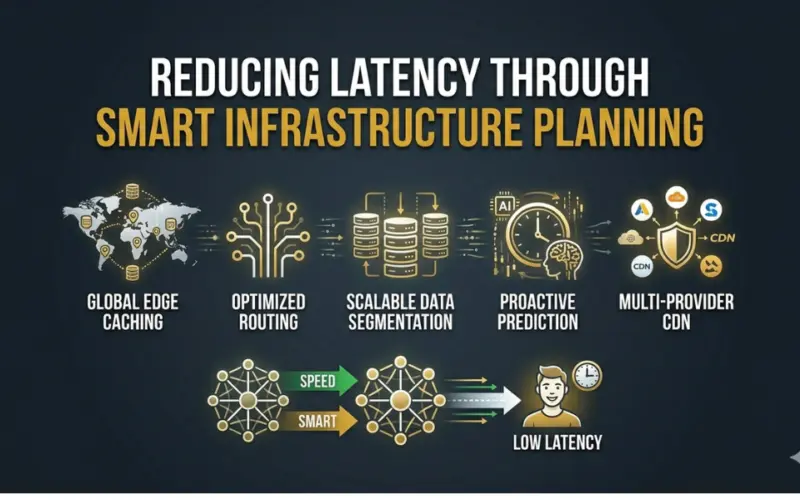

As India's digital presence grows, users expect things to be faster and more responsive than ever. Whether it is an e-commerce platform, fintech application, or SaaS product, latency-the delay between a user's request and system response-directly impacts user satisfaction and engagement.
For startups and enterprises alike, reducing latency is no longer just a technical goal but a business priority. Strategic infrastructure planning, including decisions involving a hosting service provider in India, plays a critical role in ensuring faster and more reliable digital experiences.
Industry Context: Increasing Demand for Real-Time Performance
India's rapidly growing internet ecosystem is characterized by mobile-first users, regional diversity, and high data consumption. This environment creates unique challenges for maintaining low latency across applications.
Key trends shaping latency expectations include:
- Rise of real-time applications such as UPI payments, live streaming, and online gaming
- Expansion of tier-2 and tier-3 user bases, requiring geographically optimized delivery
- Increasing reliance on cloud-native architectures
- Growing importance of user experience in competitive markets
Studies indicate that even a 100-millisecond delay can impact conversion rates and engagement, making latency optimization essential for digital success.
Key Challenges in Managing Latency
Organizations often face several barriers when trying to reduce latency:
- Geographical Distance from Users
Hosting infrastructure located far from end users increases response time. - Network Congestion and Bandwidth Limitations
High traffic volumes can slow down data transmission. - Inefficient Application Design
Poorly optimized code and excessive API calls add to processing delays. - Lack of Distributed Infrastructure
Centralized systems struggle to serve users across diverse regions efficiently. - Limited Visibility into Performance Metrics
Without monitoring tools, identifying latency bottlenecks becomes difficult.
Smart Infrastructure Strategies for Latency Optimization
Reducing latency requires a combination of architectural planning and operational efficiency. Organizations are adopting the following approaches:
1. Edge and Distributed Computing
Deploying infrastructure closer to users through edge locations reduces the distance data must travel, improving response times.
2. Content Delivery Networks (CDNs)
CDNs cache and deliver content from geographically distributed servers, ensuring faster access for users across regions.
3. Optimized Hosting Environments
Choosing a reliable hosting service provider in India allows organizations to leverage local data centers and reduce latency for domestic users.
4. Efficient Load Balancing
Distributing traffic across several servers stops overload and keeps performance steady.
5. Network Optimization Techniques
Minimizing packet loss, optimizing routing paths, and improving bandwidth utilization contribute to lower latency.
6. Application-Level Optimization
Reducing unnecessary API calls, compressing data, and optimizing code execution improve overall responsiveness.
Practical Best Practices for Organizations
To effectively manage and reduce latency, organizations can implement the following practices:
- Deploy applications in multiple geographic regions to serve diverse user bases
- Use caching mechanisms to reduce repeated data processing
- Monitor real-time performance metrics such as response time and latency
- Optimize database queries and backend processes
- Implement auto-scaling infrastructure to handle traffic spikes efficiently
These measures help ensure consistent performance even under varying workloads.
Impact on Innovation and Business Growth
Low-latency systems enable organizations to deliver seamless digital experiences, which directly influence growth and innovation. Benefits include:
- Improved user engagement and retention
- Faster transaction processing in critical applications like fintech
- Enhanced reliability of real-time services
- Greater competitiveness in crowded digital markets
For India's startup ecosystem, the ability to deliver fast and responsive applications can be a key differentiator.
Conclusion: Building Latency-Optimized Digital Systems
Latency is a crucial factor that shapes user perception and business outcomes in today's digital economy. Addressing it requires more than isolated optimizations-it demands a comprehensive approach to infrastructure planning.
By leveraging distributed architectures, optimizing application performance, and making informed infrastructure decisions, organizations can significantly reduce latency and improve user experiences. As India's digital landscape continues to evolve, latency optimization will remain central to building scalable and future-ready platforms.
LatencyOptimization DigitalInfrastructure CloudComputing UserExperience ITStrategy erformanceEngineering StartupEcosystem
Disclaimer
This content is a community contribution. The views and data expressed are solely those of the author and do not reflect the official position or endorsement of nasscom.
That the contents of third-party articles/blogs published here on the website, and the interpretation of all information in the article/blogs such as data, maps, numbers, opinions etc. displayed in the article/blogs and views or the opinions expressed within the content are solely of the author's; and do not reflect the opinions and beliefs of NASSCOM or its affiliates in any manner. NASSCOM does not take any liability w.r.t. content in any manner and will not be liable in any manner whatsoever for any kind of liability arising out of any act, error or omission. The contents of third-party article/blogs published, are provided solely as convenience; and the presence of these articles/blogs should not, under any circumstances, be considered as an endorsement of the contents by NASSCOM in any manner; and if you chose to access these articles/blogs , you do so at your own risk.
Senior Digital Marketing Executive
I'm a Senior Digital Marketing Executive at CloudMinister Technologies, working closely with cloud and technology-driven businesses to improve their online presence and digital growth. My experience includes SEO, content strategy, campaign planning, and performance optimization, with a strong focus on measurable results. I enjoy staying updated with the latest digital marketing trends and tech innovations, and I'm always keen to learn, share insights, and connect with professionals across the startup and technology ecosystem.