




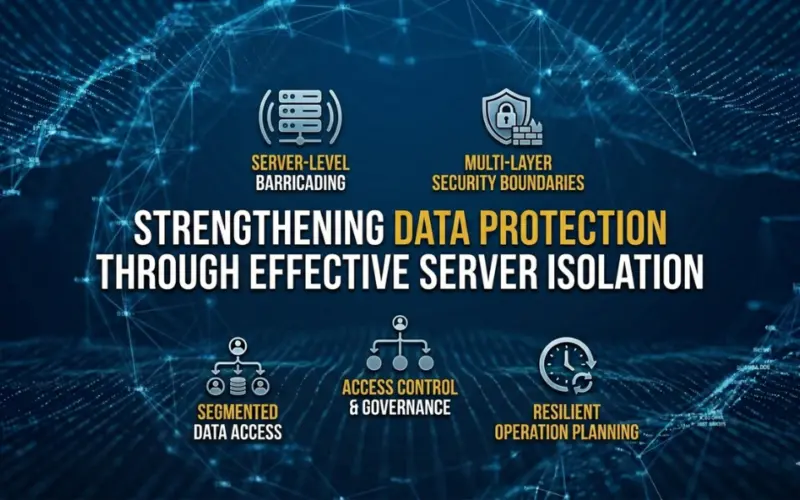

As India's digital ecosystem expands, data protection has become a central concern for organizations of all sizes. From startups handling customer information to enterprises managing sensitive business data, the need for secure infrastructure is more critical than ever.
Server isolation plays a foundational role in safeguarding digital environments by ensuring that applications and workloads operate independently. Whether implemented through virtualization technologies or dedicated environments like a Linux VPS server, isolation helps minimize risks associated with shared resources and unauthorized access.
Industry Context: Increasing Data Risks and Regulatory Awareness
India's rapid digital adoption has led to a surge in data generation and storage. With this growth comes increased exposure to cybersecurity threats and stricter regulatory expectations. Key industry observations include:
- India reports millions of cybersecurity incidents annually, with a significant portion targeting small and mid-sized organizations
- Increased adoption of cloud and virtualized environments across startups and enterprises
- Growing emphasis on data privacy regulations and compliance frameworks
As organizations shift toward distributed and cloud-based architectures, maintaining strong isolation between workloads has become a critical requirement.
Key Challenges in Maintaining Data Security
Despite advancements in infrastructure, organizations continue to face challenges related to data protection:
- Shared Resource Vulnerabilities
In multi-tenant environments, inadequate isolation can lead to data leakage or cross-application interference. - Misconfigured Environments
Incorrect setup of virtual machines or containers can expose systems to unauthorized access. - Insider Threats and Access Control Issues
Poor access management increases the risk of internal data misuse. - Scalability vs Security Trade-offs
Rapid scaling without proper security controls can create gaps in isolation. - Lack of Visibility Across Systems
Limited monitoring capabilities make it difficult to detect breaches in isolated environments.
Core Concepts Behind Server Isolation
Understanding how server isolation works is essential for implementing it effectively:
- Process Isolation
Ensures that applications run independently without interfering with each other's memory or resources. - Virtual Machine Isolation
Each virtual machine operates as a separate environment, with its own operating system and resources. - Container-Based Isolation
Containers share the host OS but maintain logical separation, enabling efficient resource utilization. - Network Segmentation
Dividing networks into smaller segments reduces the attack surface and limits lateral movement.
Technologies such as a Linux VPS server leverage virtualization to provide a balance between performance, control, and isolation.
Emerging Practices for Strengthening Isolation
Organizations are adopting modern strategies to enhance server isolation and data protection:
1. Multi-Layered Security Architecture
Combining isolation with firewalls, intrusion detection systems, and encryption ensures comprehensive protection.
2. Role-Based Access Control (RBAC)
Restricting user access based on roles minimizes the risk of unauthorized data exposure.
3. Regular Security Audits and Penetration Testing
Routine assessments help identify and address vulnerabilities in isolated environments.
4. Automation in Configuration Management
Automated tools reduce human error and ensure consistent security configurations across systems.
5. Integration with DevSecOps Practices
Embedding security into development and deployment pipelines ensures isolation is maintained throughout the lifecycle.
Practical Best Practices for Organizations
To effectively implement server isolation, organizations can follow these best practices:
- Deploy workloads in segmented environments based on sensitivity levels
- Use strong authentication mechanisms and enforce least-privilege access
- Keep operating systems and apps up to date and patched.
- Monitor system logs and network activity for unusual behavior
- Backup data frequently and test recovery processes
These measures help create a secure and resilient infrastructure foundation.
Impact on Innovation and Business Growth
Strong server isolation not only enhances security but also supports innovation. When systems are properly isolated, organizations can:
- Safely test and deploy new applications
- Reduce the risk of system-wide failures
- Improve compliance with regulatory requirements
- Build trust among customers and stakeholders
For startups and enterprises in India, secure infrastructure enables faster experimentation and scalability without compromising data integrity.
Conclusion: Building Secure and Resilient Infrastructure
In today's interconnected digital environment, server isolation is no longer optional-it is a critical component of effective data protection strategies. By implementing robust isolation mechanisms and aligning them with modern security practices, organizations can significantly reduce risk exposure.
As India's technology ecosystem continues to grow, businesses that prioritize secure infrastructure design will be better positioned to navigate evolving cybersecurity challenges and sustain long-term growth.
DataProtection CyberSecurity CloudSecurity
Disclaimer
This content is a community contribution. The views and data expressed are solely those of the author and do not reflect the official position or endorsement of nasscom.
That the contents of third-party articles/blogs published here on the website, and the interpretation of all information in the article/blogs such as data, maps, numbers, opinions etc. displayed in the article/blogs and views or the opinions expressed within the content are solely of the author's; and do not reflect the opinions and beliefs of NASSCOM or its affiliates in any manner. NASSCOM does not take any liability w.r.t. content in any manner and will not be liable in any manner whatsoever for any kind of liability arising out of any act, error or omission. The contents of third-party article/blogs published, are provided solely as convenience; and the presence of these articles/blogs should not, under any circumstances, be considered as an endorsement of the contents by NASSCOM in any manner; and if you chose to access these articles/blogs , you do so at your own risk.
Co-Founder and CMO
Technology thrives at the intersection of innovation and infrastructure. My dual role is my commitment to both: fueling innovation at my company and strengthening the industry's infrastructure through NASSCOM's council. Together, we're not just navigating change; we're laying down the tracks for progress.