





India's Global Capability Centres (GCCs) are undergoing a significant transformation. What began as a model focused on operational efficiency and large-scale delivery has steadily evolved into a network of strategic innovation hubs supporting global enterprises.
Today, GCCs in India are playing a much larger role in areas such as product development, AI, advanced analytics, digital engineering, cybersecurity, and platform innovation. As their strategic importance grows, the expectations from talent are changing as well.
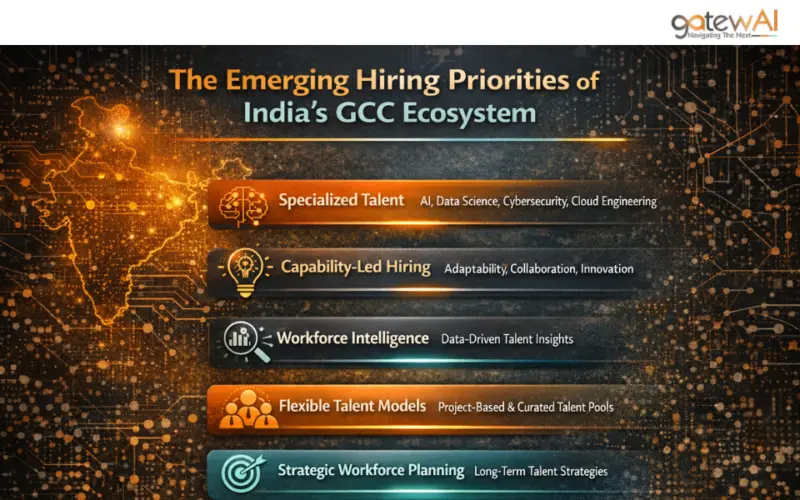
This shift is reshaping how organizations approach hiring. Instead of focusing primarily on expanding headcount, GCC leaders are now prioritizing capabilities, specialization, and long-term impact. The hiring conversation is no longer just about filling roles-it is about building teams that can drive innovation and deliver global value.
GCC Hiring Trends: The Shift to Specialized Tech Talent in India
In the early phases of GCC growth, organizations often built large teams to support IT services, finance operations, and business process management. Speed and scale were key priorities.
However, the current phase of GCC evolution is defined by specialization.
Organizations are increasingly seeking talent in areas such as:
Artificial intelligence and machine learning
Data science and advanced analytics
Cloud and platform engineering
Cybersecurity and digital risk management
Product development and digital architecture
These roles require deep technical expertise and problem-solving capabilities, making them fundamentally different from traditional volume hiring models.
As a result, GCCs are placing greater emphasis on quality, expertise, and innovation potential when building their teams.
What Is Capability-Led Hiring? Why India's GCCs Are Adopting It
Another important change in GCC hiring priorities is the move toward capability-led hiring.
Rather than focusing solely on predefined job descriptions, organizations are increasingly evaluating candidates based on broader capabilities such as:
Analytical thinking
Cross-functional collaboration
Adaptability in fast-changing environments
Innovation and problem-solving ability
This reflects the reality of modern business environments, where roles evolve quickly and professionals are expected to contribute across multiple areas.
For GCC leaders, this approach helps create agile teams capable of responding to new business challenges and technological advancements.
How Workforce Intelligence Is Reshaping GCC Talent Strategy
As GCCs expand their mandates, talent decisions are becoming more strategic. Leaders are now relying more heavily on data and market intelligence to guide hiring and workforce planning.
Workforce intelligence enables organizations to understand:
Where specialized talent pools are emerging across India
Which cities are becoming strong hubs for specific capabilities
How talent demand and supply are evolving across industries
What skills will become critical in the next few years
These insights help organizations make informed decisions about hiring, expansion, and capability development.
In an increasingly competitive talent market, data-driven workforce planning is becoming a critical advantage.
Flexible Talent Models in GCC Ecosystem
As GCC roles become more specialized and project-driven, traditional hiring approaches are also evolving.
Many organizations are exploring more flexible talent models, including access to curated talent pools, project-based hiring, and partnerships that provide specialized expertise when needed.
This allows GCCs to respond quickly to new priorities while maintaining operational efficiency.
Flexible talent strategies also help organizations manage rapidly changing technology requirements, particularly in areas such as AI, digital transformation, and cloud engineering.
The Future of GCC Talent in India: What Leaders Need to Know
India's GCC ecosystem is entering a new phase of maturity. As organizations take on more complex global mandates, the expectations from talent will continue to evolve.
Hiring priorities are shifting toward specialized expertise, adaptability, and innovation-driven capabilities.
For GCC leaders, the focus is no longer simply on building large teams, but on creating high-impact talent ecosystems that support long-term business growth.
As this transformation continues, the organizations that succeed will be those that combine strategic workforce planning, capability-focused hiring, and data-driven talent insights to build the teams that power the next generation of global innovation.
By Ankur Goel, Co-founder & CEO, GatewAI
GlobalCapabilityCenters GCCinIndia Talent acquisition futureofwork WorkforceTransformation Digital capabilities artificialintelligence MachineLearning datascience CloudComputing Cybersecurity & Privacy Digital accelaration tech and talent Leadership Development futureskills businessstrategies Global AI TechHubs
Disclaimer
This content is a community contribution. The views and data expressed are solely those of the author and do not reflect the official position or endorsement of nasscom.
That the contents of third-party articles/blogs published here on the website, and the interpretation of all information in the article/blogs such as data, maps, numbers, opinions etc. displayed in the article/blogs and views or the opinions expressed within the content are solely of the author's; and do not reflect the opinions and beliefs of NASSCOM or its affiliates in any manner. NASSCOM does not take any liability w.r.t. content in any manner and will not be liable in any manner whatsoever for any kind of liability arising out of any act, error or omission. The contents of third-party article/blogs published, are provided solely as convenience; and the presence of these articles/blogs should not, under any circumstances, be considered as an endorsement of the contents by NASSCOM in any manner; and if you chose to access these articles/blogs , you do so at your own risk.