




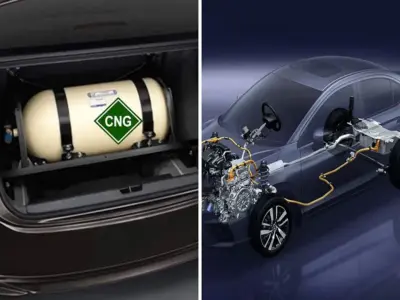

With rising petrol prices and growing awareness of clean mobility, many Indian car buyers are turning to CNG and hybrid vehicles. Both options promise better fuel efficiency and lower running costs, but which is more economical?
CNG Cars: Low Running Costs, Affordable Pricing
CNG vehicles are popular for their low fuel costs and modest price increase over petrol variants-typically around ₹1 lakh more. They are ideal for urban commuters and long-distance travelers, though they may have limited boot space and occasionally face long queues at refueling stations. Modern CNG models with improved space are now available.
Example Calculation:
Using the Maruti Grand Vitara CNG variant:
- Mileage: 26.6 km/kg
- Price of CNG: ₹80/kg
- For a 1,500 km trip, gas required: 56.4 kg
- Total cost: ₹4,500, translating to approximately ₹3 per km
This makes CNG cars the most economical option for frequent travelers.
Hybrid Cars: Higher Mileage with Semi-Electric Advantage
Hybrid vehicles combine a petrol engine with an electric motor and regenerative battery system, offering better mileage than petrol cars. Unlike fully electric vehicles, hybrids do not require separate charging. These cars cost roughly ₹3-4 lakh more than petrol variants but provide a smoother driving experience.
Example Calculation:
Using the Maruti Grand Vitara Strong Hybrid variant:
- Mileage: 27.97 km/l
- Petrol price: ₹100/litre
- For a 1,500 km trip, petrol required: 53.6 litres
- Total cost: ₹5,300-5,400, or approximately ₹3.5 per km
Verdict: Cost vs Comfort
While CNG cars remain cheaper per kilometre, hybrid vehicles offer enhanced comfort, better mileage than petrol cars, and a semi-electric experience. Buyers prioritizing fuel savings may prefer CNG, whereas those seeking a premium driving experience with moderate savings might opt for a hybrid.